Axiomatic intelligence. Doing the right thing, provably.
A Cascade of Conscientiousness
Launching FAI's new Physical Intelligence Project
Where’s the “intelligence explosion”?
Ramez Naam gives a skeptic’s take on Recursive Self-Improvement.
2026 Cosmos HAI Lab Lecture with Jack Clark, Co-founder of Anthropic
The mistake we all make... and the simple experiment that reveals it
Your answer reveals how you see the world – and the common error that hampers our decision making. In an extract from his new book, psychologist Richard Nisbett reveals the ‘mindware’ to help us think smarter

The PR you would have opened yourself
We’re on a journey to advance and democratize artificial intelligence through open source and open science.

Without a theory of intelligence
The history of science — and of progress — is a series of benefits that are direct results of new tools.
Agentic AI and the next intelligence explosion
For decades, the artificial intelligence (AI) “singularity” has been heralded as a single, titanic mind bootstrapping itself to godlike intelligence, consolidating all cognition into a cold silicon point. But this vision is almost certainly wrong in its most fundamental assumption. If AI development follows the path of previous major evolutionary transitions or “intelligence explosions,” our current step-change in computational intelligence will be plural, social, and deeply entangled with its forebears (us!).

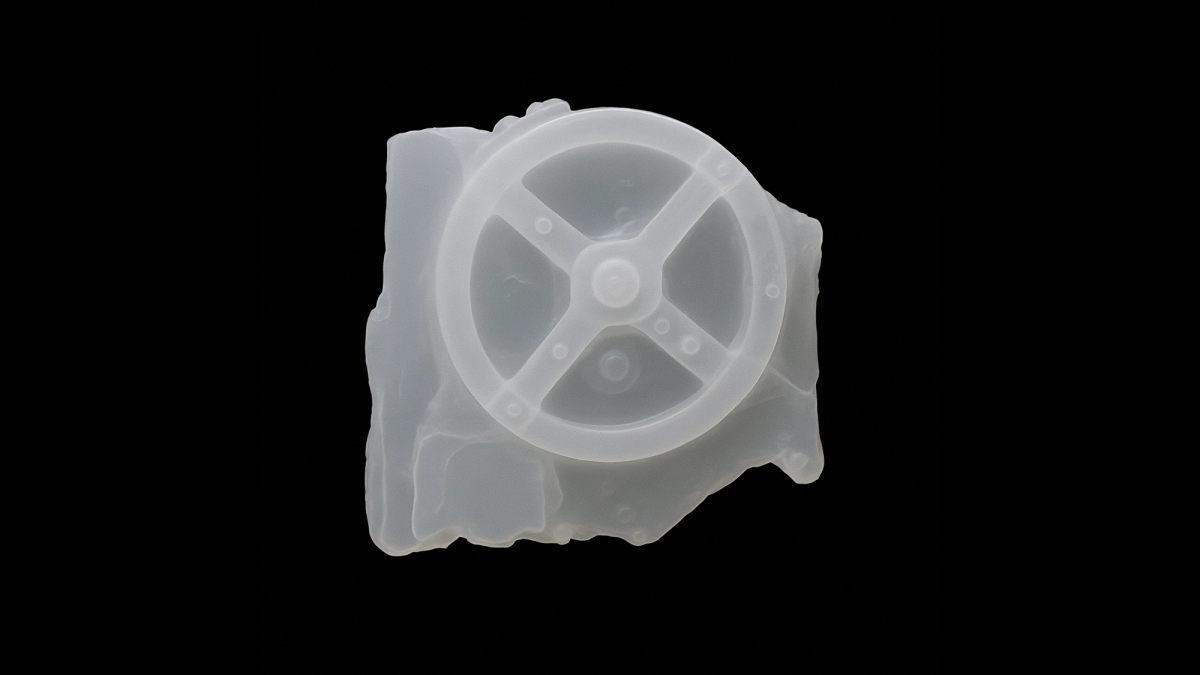
Antikythera | Antikythera
As computation becomes planetary infrastructure, how does its acceleration of hybrid intelligences pose new challenges to fundamental philosophical questions.
AI Epistemic Risks: Emerging Mechanisms & Evidence
<p>Advances in artificial intelligence pose risks to humanity's collective capacity to form accurate beliefs, reason well, and maintain a healthy information en

The Jevons Paradox of AI - Wesley's notes
Why AI can make us more productive but will never save us time
Mathematical methods and human thought in the age of AI
Artificial intelligence (AI) is the name popularly given to a broad spectrum of computer tools designed to perform increasingly complex cognitive tasks, including many that used to solely be the province of humans. As these tools become exponentially sophisticated and pervasive, the justifications for their rapid development and integration into society are frequently called into question, particularly as they consume finite resources and pose existential risks to the livelihoods of those skilled individuals they appear to replace. In this paper, we consider the rapidly evolving impact of AI to the traditional questions of philosophy with an emphasis on its application in mathematics and on the broader real-world outcomes of its more general use. We assert that artificial intelligence is a natural evolution of human tools developed throughout history to facilitate the creation, organization, and dissemination of ideas, and argue that it is paramount that the development and application of AI remain fundamentally human-centered. With an eye toward innovating solutions to meet human needs, enhancing the human quality of life and expanding the capacity for human thought and understanding, we propose a pathway to integrating AI into our most challenging and intellectually rigorous fields to the benefit of all humankind.

When AI builds itself
Our progress toward recursive self-improvement, and its implications.

Learn Your Philosophical Beliefs | ClearerThinking.org
Find your direction in life with our philosophical compass, a tool to explore your beliefs, values and purpose!

skt/A.X-4.0-Light · Hugging Face
We’re on a journey to advance and democratize artificial intelligence through open source and open science.

The Use of Knowledge in (AGI) Society
How to build to break the intelligence curse