

Trying to study the effect of different connectors , (linear, MLP and Cross Attention) to analyze what paradigms do LLM'S use or make a best guess
Mitigating Cross-Lingual Cultural Inconsistencies in LLMs via...
Despite their impressive capabilities, multilingual large language models (MLLMs) frequently exhibit inconsistent behaviour when the prompt's language changes. While such adaptation is generally...

ImportAI 449: LLMs training other LLMs; 72B distributed training run; computer vision is harder than generative text
Will AI cause a political interregnum

Statistical Foundations of LLM-based A/B Testing: A Surrogacy...
Organizations and researchers show increasing interest in using large language models (LLMs) in place of human participants in A/B tests, in the hope of experimenting faster and at lower cost. We...
The Return of Language-Oriented Programming | Middle of Nowhere
I’ve been wondering what LLMs mean for language design and implementation. Some believe that, because language models are obviously trained on existing content, they are inherently less capable of assisting users with new programming languages. Intuitively this makes sense. However:
I Built an LLM From Scratch
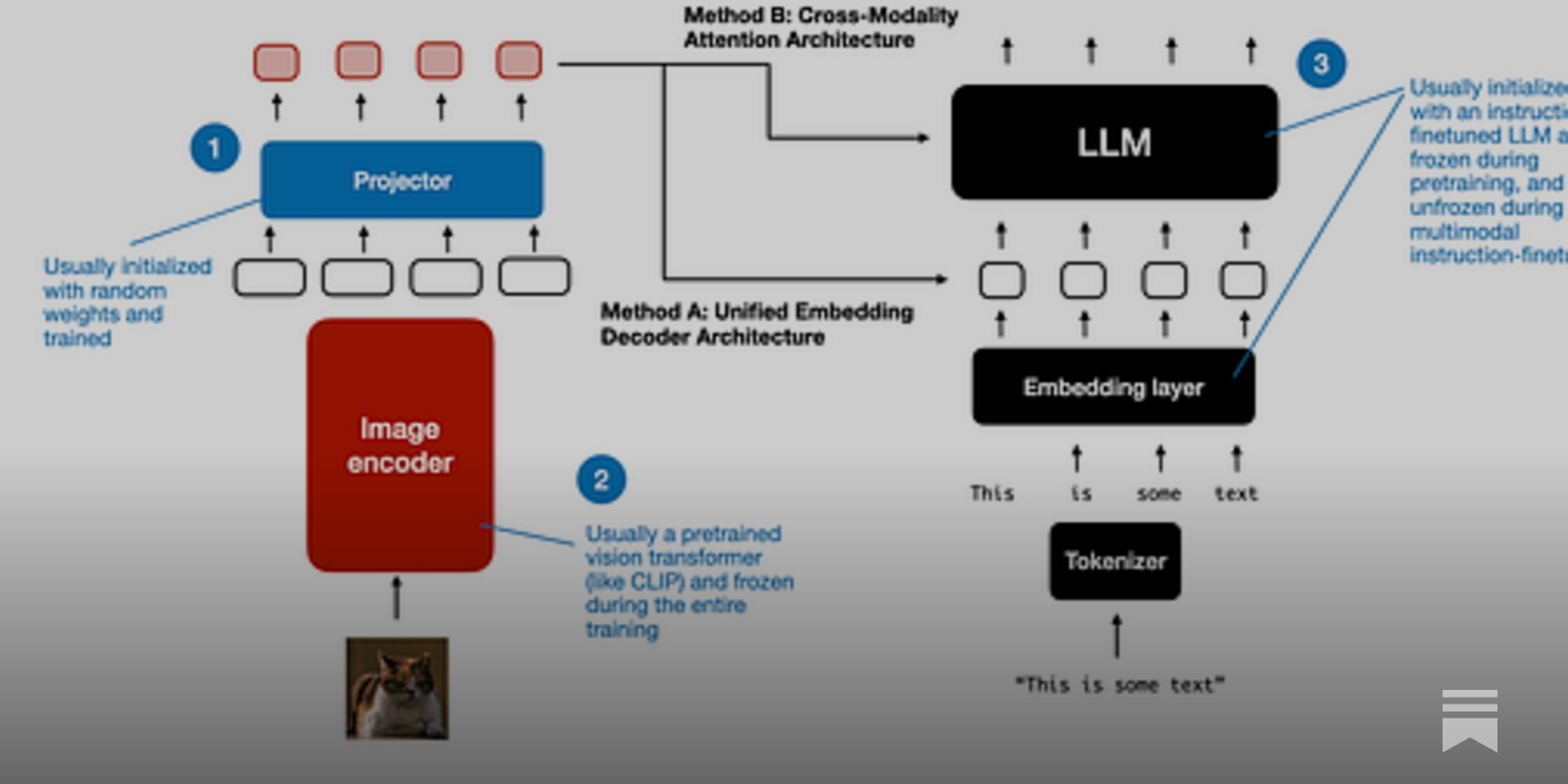
Understanding Multimodal LLMs
An introduction to the main techniques and latest models
Artificial intelligences and human scientists exhibit...
We investigate the effectiveness of artificial intelligences (AI)-specifically large language models (LLMs)-relative to human scientists at high-level cognitive tasks in social science such as...
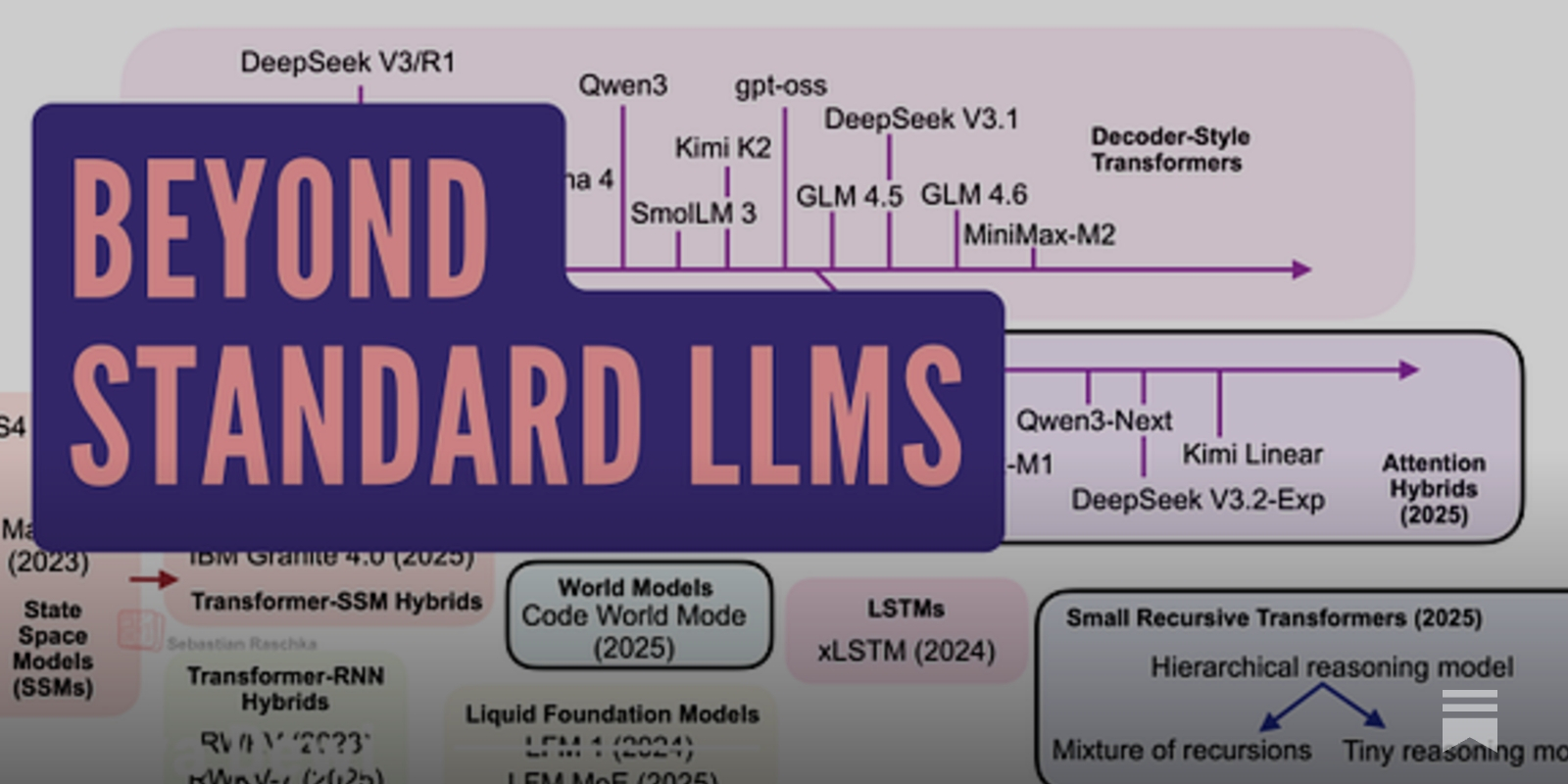
Beyond Standard LLMs
Linear Attention Hybrids, Text Diffusion, Code World Models, and Small Recursive Transformers
Illusions of Understanding from Outsourcing Thinking to LLMs
Some illusions of understanding are an inevitable part of the research process, while others can be avoided or overcome by careful critical thinking and observation. We are facing an increased risk of avoidable illusions as more research activities are delegated to large language models (LMM). LLMs can be useful but they cannot think, and their use can undermine our thinking and understanding. Thinking for ourselves is hard and error prone but worthwhile - and there are no shortcuts to understanding.

LLMs and World Models, Part 1
How do Large Language Models Make Sense of Their “Worlds”?

Andrej Karpathy on Twitter / X
The race for LLM "cognitive core" - a few billion param model that maximally sacrifices encyclopedic knowledge for capability. It lives always-on and by default on every computer as the kernel of LLM personal computing.Its features are slowly crystalizing:- Natively multimodal… https://t.co/2jsVevkTSJ— Andrej Karpathy (@karpathy) June 27, 2025
Large language models are cultural technologies. What might that mean?
Four different perspectives

Augmenting Research Ideation with Data: An Empirical Investigation...
Recent advancements in large language models (LLMs) demonstrate strong potential for generating novel research ideas, yet such ideas often struggle with feasibility and effectiveness. In this...
Large language model
A large language model (LLM) is a neural network trained on a vast amount of text for natural language processing tasks, especially language generation. LLMs can typically generate, summarize, translate, and analyze text in many contexts, and are a foundational technology behind modern chatbots.[1] Biased or inaccurate training data can make an LLM's output less reliable.[2]
1/4 Do LLMs understand? "They understand in a way that’s very different from how humans understand," Dileep George, @dileeplearning.bsky.social, of Google DeepMind at the Simons Institute workshop on The Future of Language Models and Transformers. Video: simons.berkeley.edu/talks/dileep-george-google-de…
