

Build evidence linked knowledge graphs and optimise explanation paths through simulated readers
Higher-Order Knowledge Representations for Agentic Scientific Reasoning
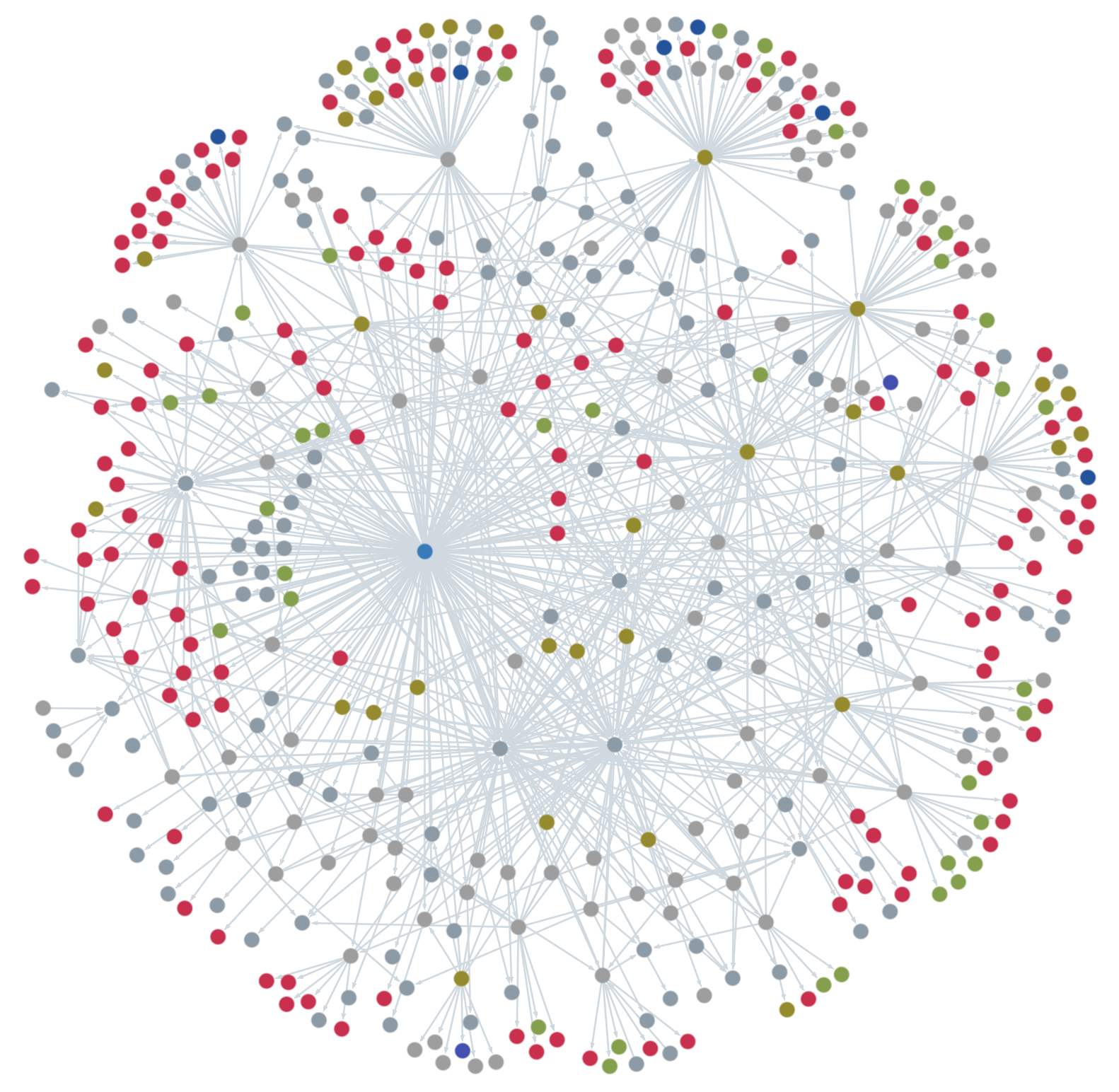
Scientific inquiry requires systems-level reasoning that integrates heterogeneous experimental data, cross-domain knowledge, and mechanistic evidence into coherent explanations. While Large Language Models (LLMs) offer inferential capabilities, they often depend on retrieval-augmented contexts that lack structural depth. Traditional Knowledge Graphs (KGs) attempt to bridge this gap, yet their pairwise constraints fail to capture the irreducible higher-order interactions that govern emergent physical behavior. To address this, we introduce a methodology for constructing hypergraph-based knowledge representations that faithfully encode multi-entity relationships. Applied to a corpus of ≈\approx 1,100 manuscripts on biocomposite scaffolds, our framework constructs a global hypergraph of 161,172 nodes and 320,201 hyperedges, revealing a scale-free topology (power law exponent ≈\approx 1.23) organized around highly connected conceptual hubs. This representation prevents the combinatorial explosion typical of pairwise expansions and explicitly preserves the co-occurrence context of scientific formulations. We further demonstrate that equipping agentic systems with hypergraph traversal tools, specifically using node-intersection constraints, enables them to bridge semantically distant concepts. By exploiting these higher-order pathways, the system successfully generates grounded mechanistic hypotheses for novel composite materials, such as linking cerium oxide to PCL scaffolds via chitosan intermediates. This work establishes a “teacherless” agentic reasoning system where hypergraph topology acts as a verifiable guardrail, accelerating scientific discovery by uncovering relationships obscured by traditional graph methods.
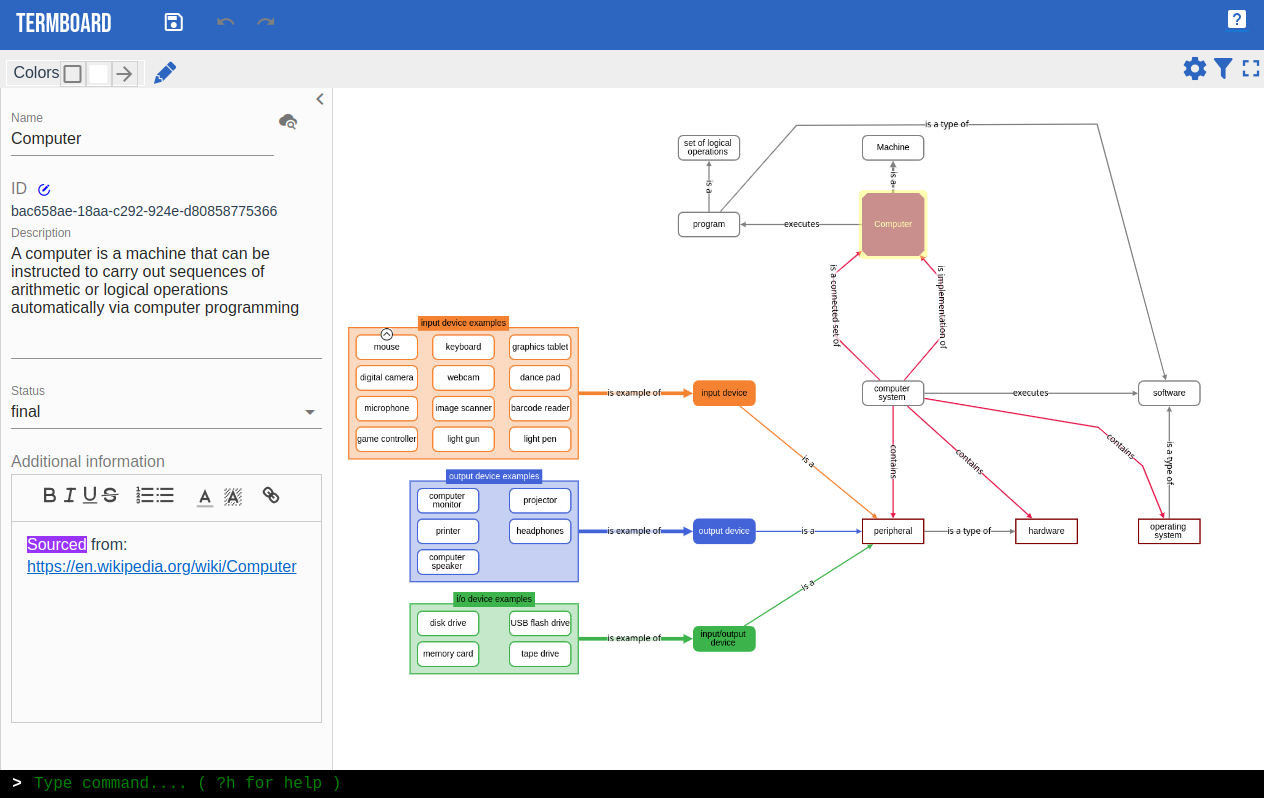
Getting started - Docs
Discourse Graphs are a tool and ecosystem for collaborative knowledge synthesis, enabling researchers to map ideas and arguments in a modular, composable graph format.
Large Knowledge Model: From Papers to a Scientific Reasoning Landscape
Accumulated scientific knowledge advances inquiry when prior findings help researchers choose new questions, design investigations, and interpret results. Realizing this value at scale requires access to the reasoning that connects research problems, scientific procedures, conclusions, and evidence. We introduce the Large Knowledge Model (LKM), a scientific knowledge infrastructure that transforms the literature into a shared, computationally accessible reasoning resource. LKM represents papers as source-grounded reasoning graphs, couples structural traversal with semantic retrieval over the same objects, and aligns related questions, claims, and reasoning chains across papers. This representation forms a Scientific Reasoning Landscape with three connected views: a Question Landscape that organizes research problems and open directions, a Workflow Landscape that exposes reusable scientific procedures, and an Evidence Landscape that connects conclusions to their support, disagreement, and conditions. The unified substrate supports reasoning-aware scientific search, evidence-grounded question answering, comparative evidence analysis, and research planning. Researchers and agents can retrieve relevant work through its scientific intent, synthesize answers with inspectable supporting arguments, and develop research plans informed by established workflows and unresolved evidence. We describe a corpus-scale system and evaluate scientific retrieval and knowledge-intensive question answering. With the answering model fixed, LKM retrieval improves accuracy by 9.30%, 4.20%, and 14.69% on ChemBench, PubMedQA, and SciBench, respectively. By connecting knowledge access to scientific reasoning and action, LKM provides a common foundation for discovering relevant research, reusing scientific knowledge, and coordinating cumulative inquiry across researchers, agents, and research cycles.


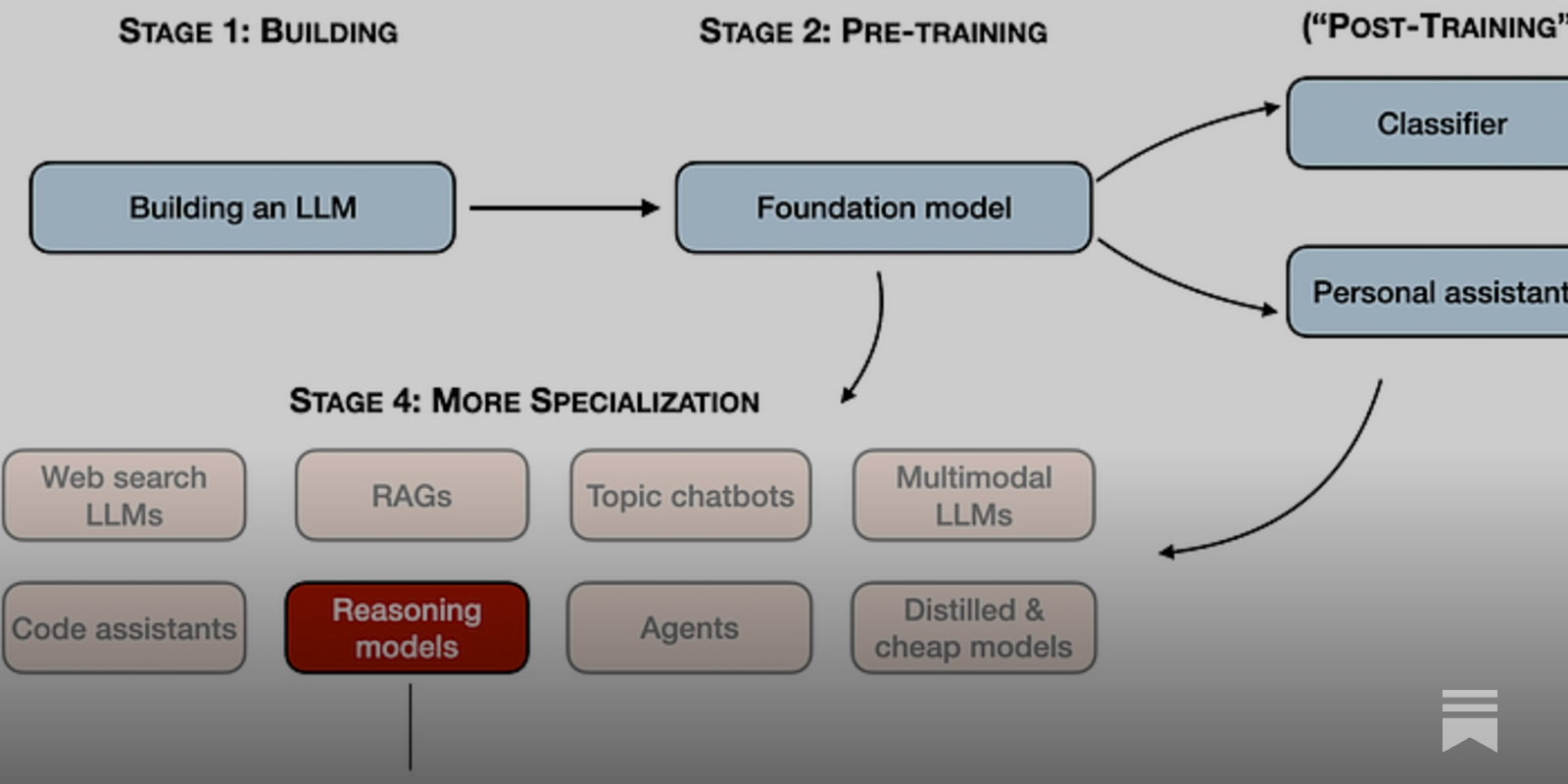
A taxonomy for next-generation reasoning models
Where we've been and where we're going with RLVR.

Believe It or Not: How Deeply do LLMs Believe Implanted Facts?
Knowledge editing techniques promise to implant new factual knowledge into large language models (LLMs). But do LLMs really believe these facts? We develop a framework to measure belief depth and use it to evaluate the success of knowledge editing techniques. We operationalize belief depth as the extent to which implanted knowledge 1) generalizes to related contexts (e.g. Fermi estimates several logical steps removed), 2) is robust to self-scrutiny and direct challenge, and 3) is represented similarly to genuine knowledge (as measured by linear probes). Our evaluations show that simple prompting and mechanistic editing techniques fail to implant knowledge deeply. In contrast, Synthetic Document Finetuning (SDF) - where models are trained on LLM-generated documents consistent with a fact - often succeeds at implanting beliefs that behave similarly to genuine knowledge. However, SDF's success is not universal, as implanted beliefs that contradict basic world knowledge are brittle and representationally distinct from genuine knowledge. Overall, our work introduces measurable criteria for belief depth and enables the rigorous evaluation necessary for deploying knowledge editing in real-world applications.
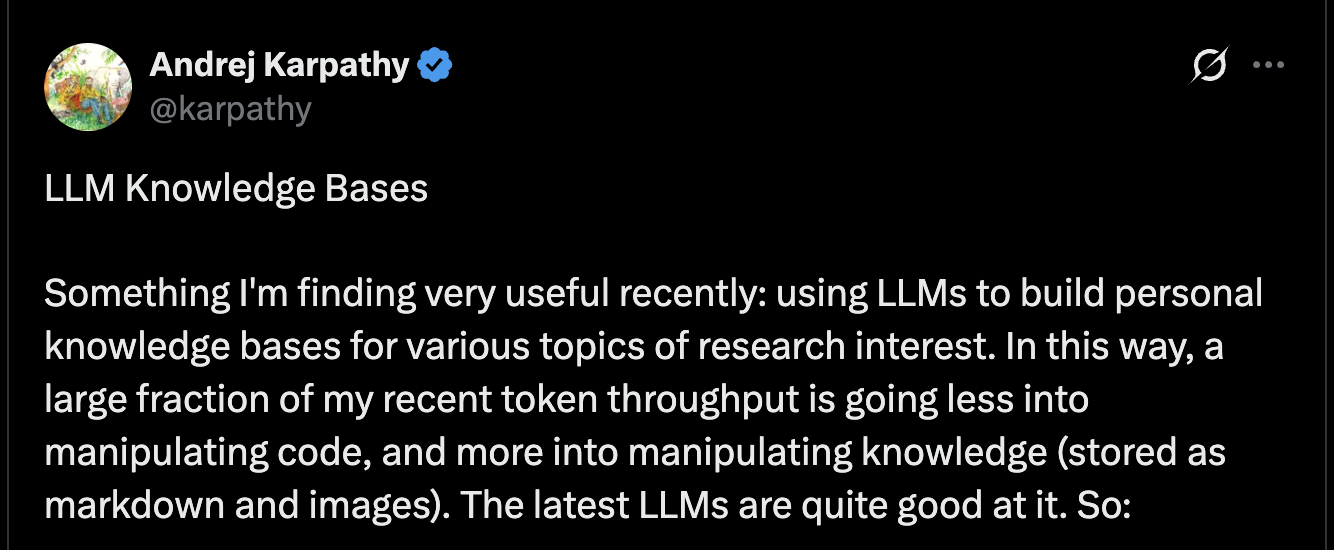
How to Build an LLM Knowledge Base
A hands-on guide to building a simple LLM knowledge base with raw markdown sources, a compiled wiki, reusable prompts, and an agent that keeps improving the knowledge base over time.

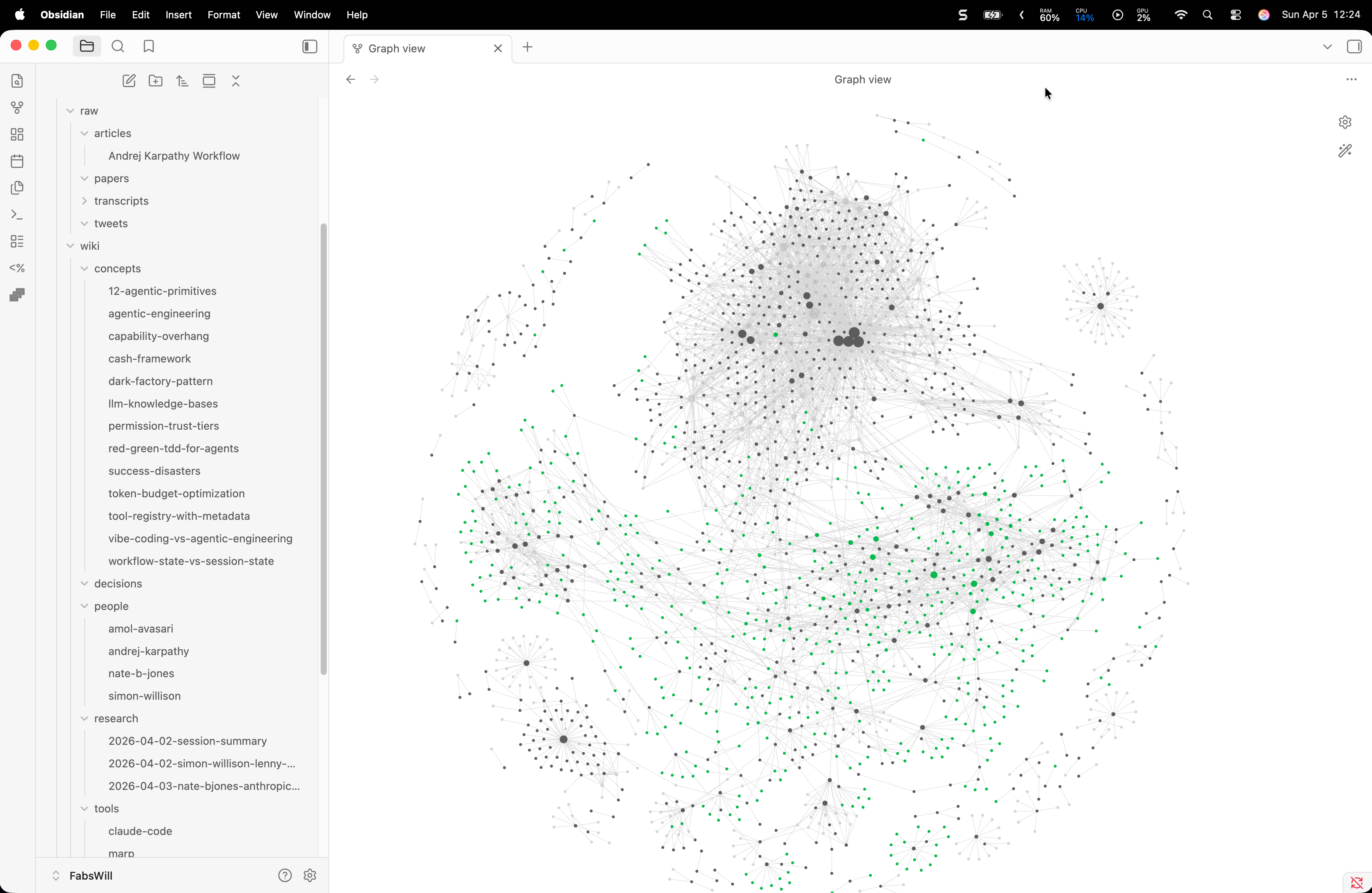
I Built a Knowledge Base That Writes Itself. Here Is What Andrej Karpathy Got Right.
Andrej Karpathy posted about using LLMs to build personal knowledge bases. I took his workflow, wired it into my Obsidian vault with Claude Code, and within an hour had 21 cross-linked wiki articles compiled from YouTube transcripts. Here is how it works and why it matters.
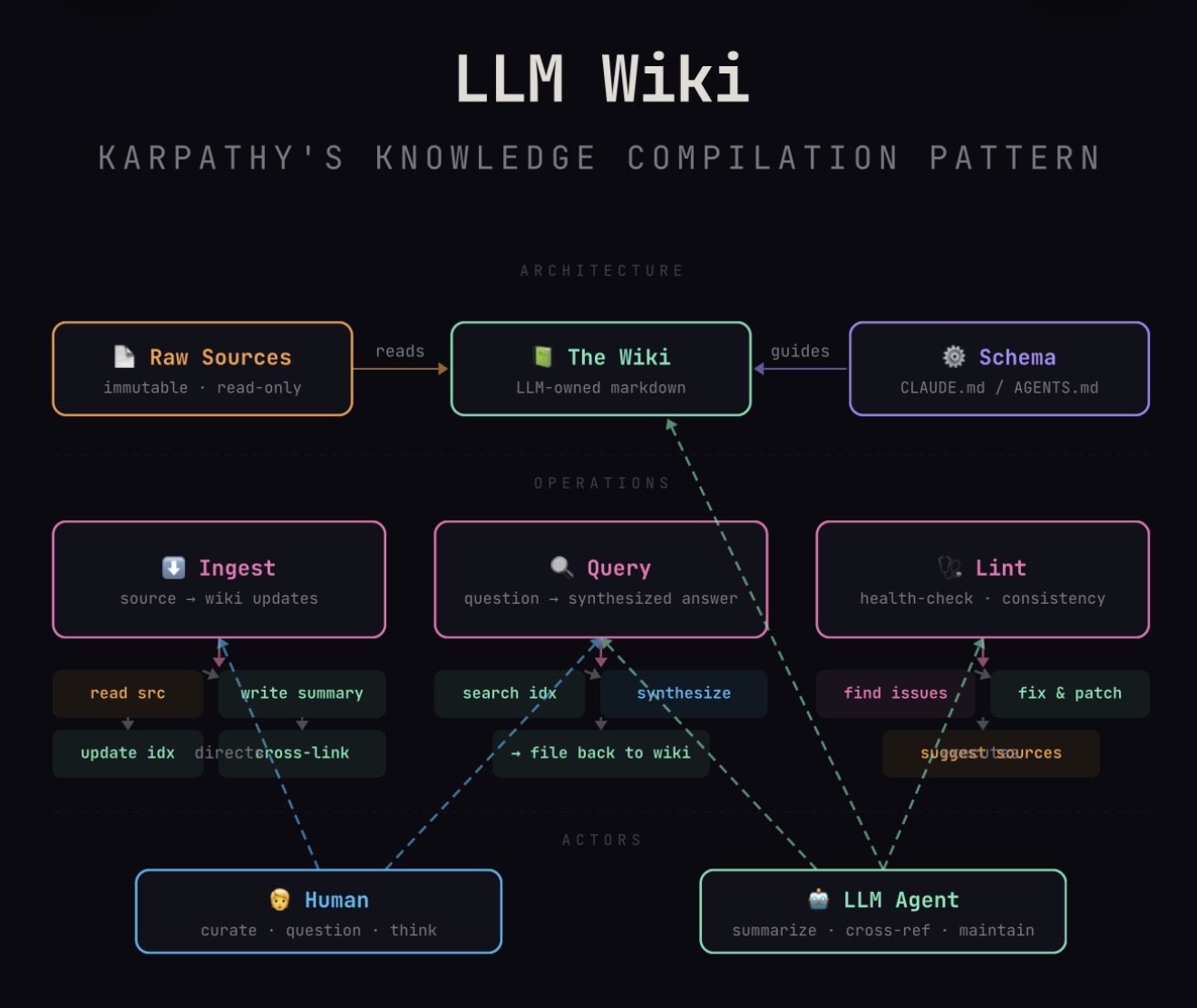
Yuchen Jin on Twitter / X
Karpathy’s “LLM Wiki” pattern: stop using LLMs as search engines over your docs. Use them as tireless knowledge engineers who compile, cross-reference, and maintain a living wiki. Humans curate and think.Diagram generated by my Claude agent knowledge worker. https://t.co/5u5i1GeFK8 pic.twitter.com/NIaq3KlAok— Yuchen Jin (@Yuchenj_UW) April 4, 2026
Do correct answers have stable latent knowledge support?
Large language models are typically evaluated in terms of the correctness of their output. However, output correctness alone does not confirm whether the latent knowledge supporting an answer has stable internal representations. We therefore propose latent state stability (LSS) and knowledge topology stability (KTS) to investigate the stability of individual knowledge states and their relational structure, respectively. Specifically, we first separately average the model's internal representations of the same knowledge under each elicitation condition. Using the mean representation under the baseline condition as a reference, we remove shared shifts to obtain corrected representations. We then formulate LSS as the distance between each corrected representation and its reference representation, normalized against the typical distance between knowledge items of the same type. We formulate KTS as the cross-condition consistency of the ordered pairwise representation distances among knowledge items of the same type. Next, we construct EpiStableBench, which comprises 4,411 items spanning factual knowledge and mathematical reasoning, with 76,766 controlled queries. Across 16 LLMs from four families, representation stability varies substantially even among items answered correctly under the base condition. Within models, higher stability generally corresponds to higher accuracy under held-out elicitation conditions; across models, stability does not consistently increase with model size or overall accuracy. Meanwhile, we present LatentDPO to learn a knowledge-editing policy that accounts for the stability of latent knowledge. Experimental results show that integrating LatentDPO with multiple existing editing methods consistently improves editing success and generalization across different expressions.
Understanding Reasoning LLMs
Methods and Strategies for Building and Refining Reasoning Models
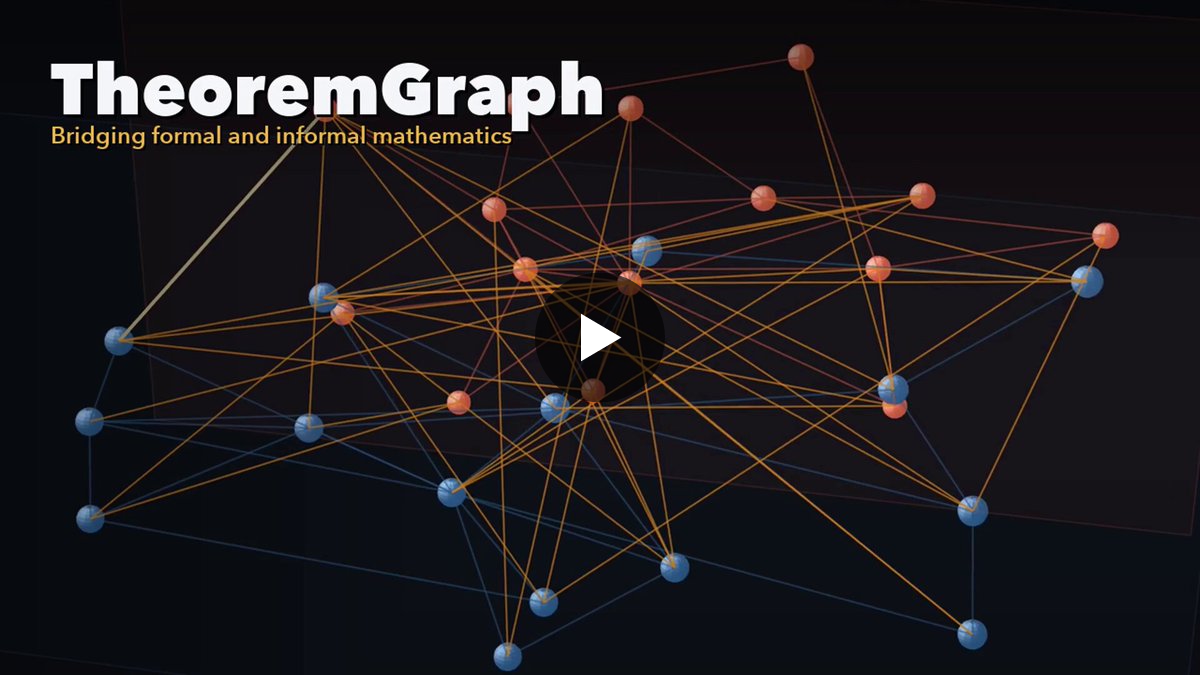
Simon on Twitter / X
Can AI help connect theorems humans write in papers to proofs computers can check?We just released TheoremGraph (https://t.co/PQ8FcFQGat), and I made a 3Blue1Brown style video overview of the idea.This project was my first real research experience, and it meant a lot. Start… pic.twitter.com/yMUA0QziXM— Simon (@waskaja) June 29, 2026
LLM Wikis

AI-compiled knowledge bases

Jared Goering on Twitter / X
OpenWiki: Open Source Repo Documentation for Coding Agents
Wiki Memory

The Obsidian heads were right.
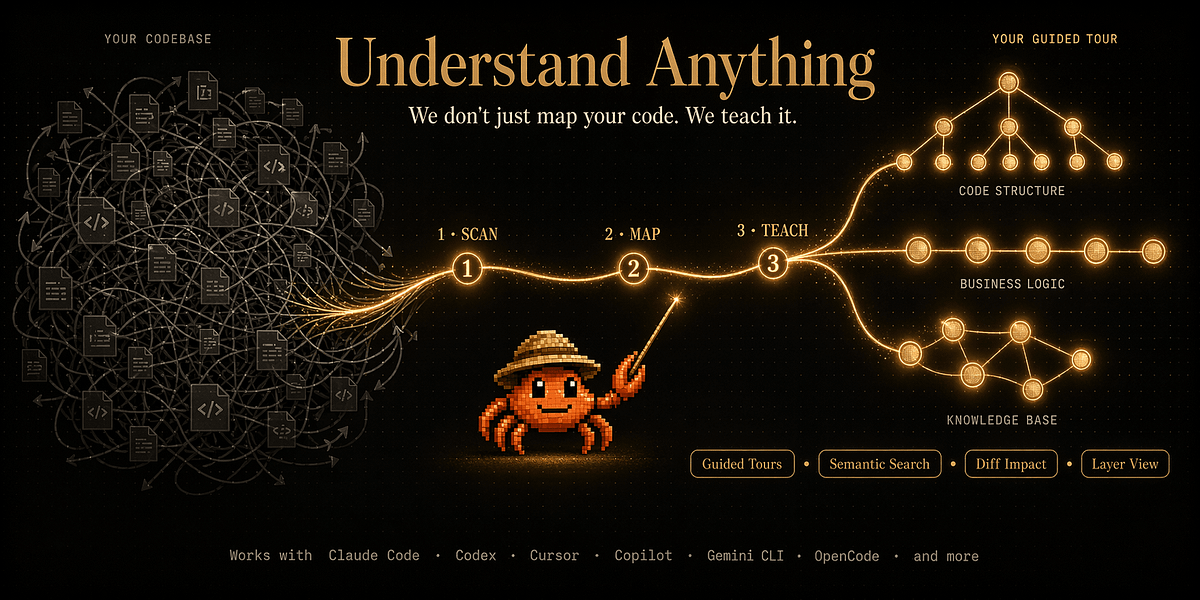
The Definitive Guide to Understand Anything: Turning Code and Knowledge Into Graphs That Teach
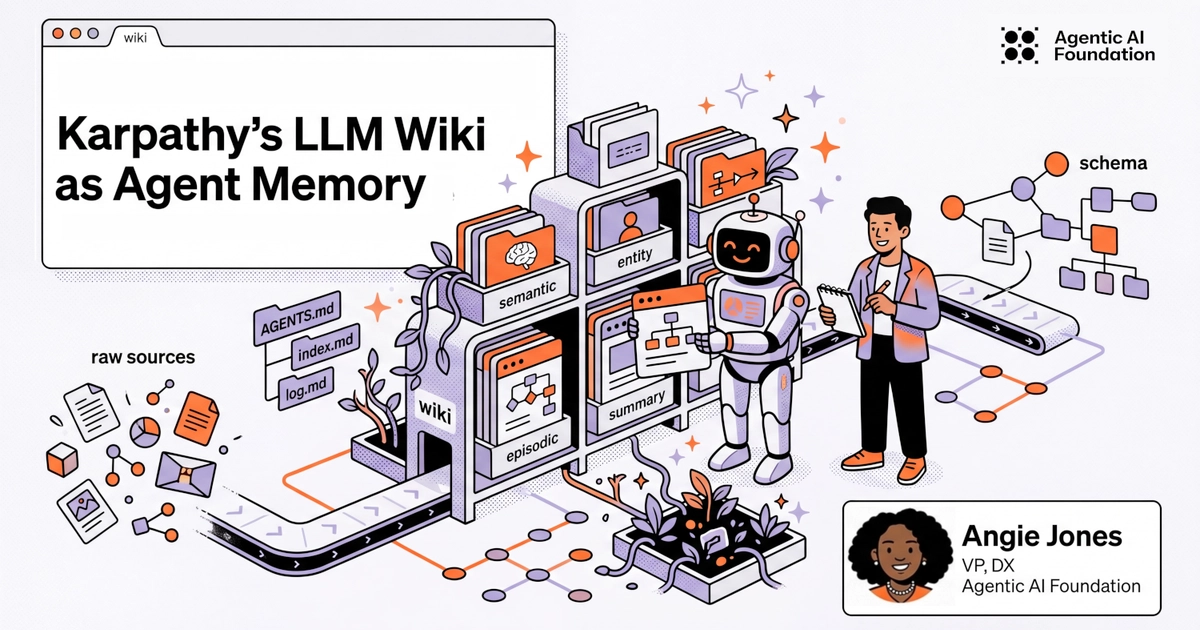
Karpathy's LLM Wiki as Agent Memory - Agentic AI Foundation (AAIF)