Publication-grade text justification for the web

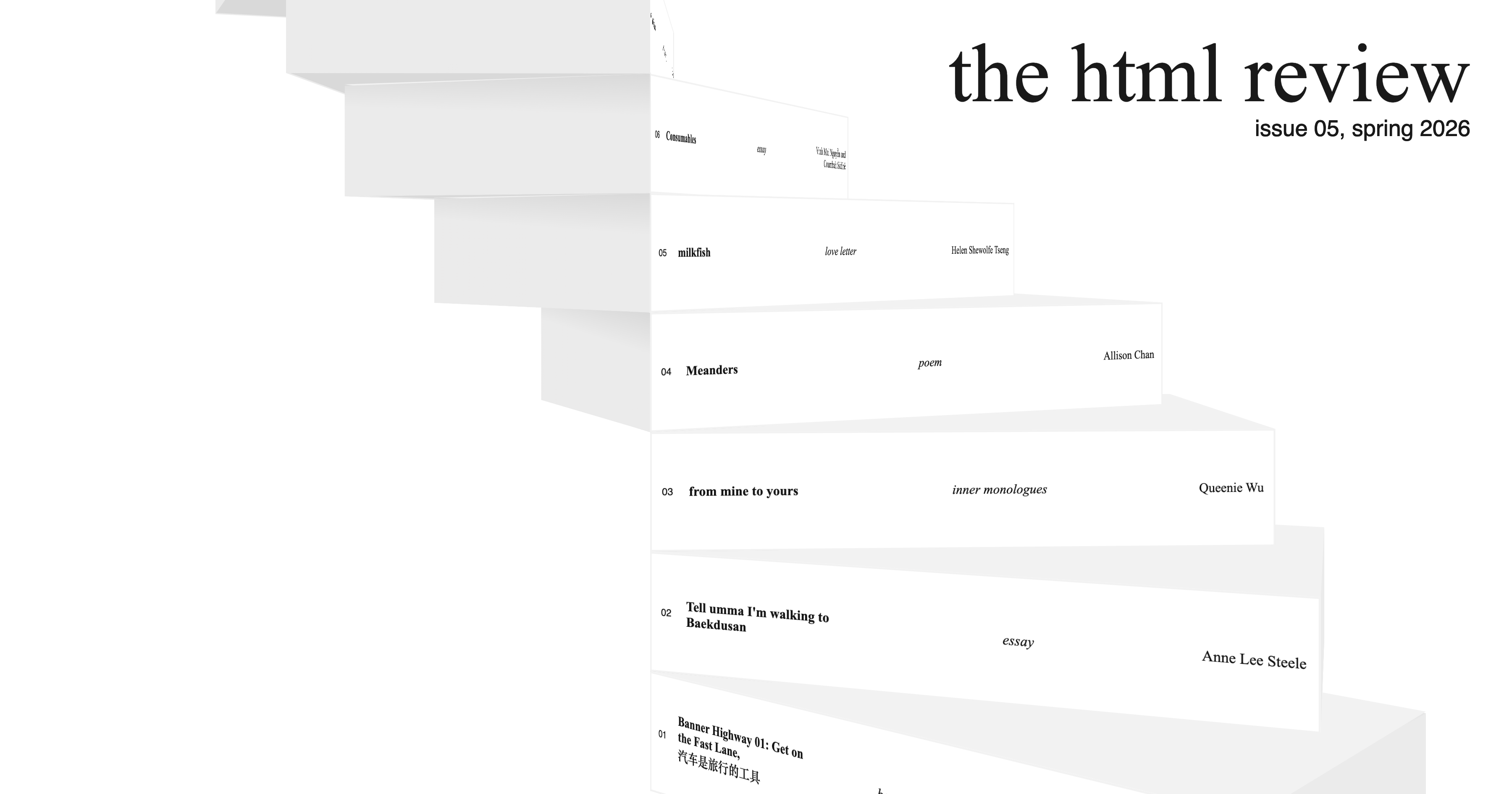
the html review 05
the html review is an annual journal of literature made to exist on the web
the html review 05
the html review is an annual journal of literature made to exist on the web
the html review — about
the html review is an annual journal of literature made to exist on the web
2024-09-23-TPAC-Integrity-for-the-Web.pdf
Newspaper3k: Article scraping & curation — newspaper 0.0.2 documentation
Inspired by requests for its simplicity and powered by lxml for its speed:
The Consent Layer: Using ligatures to make web text expensive to scrape without asking
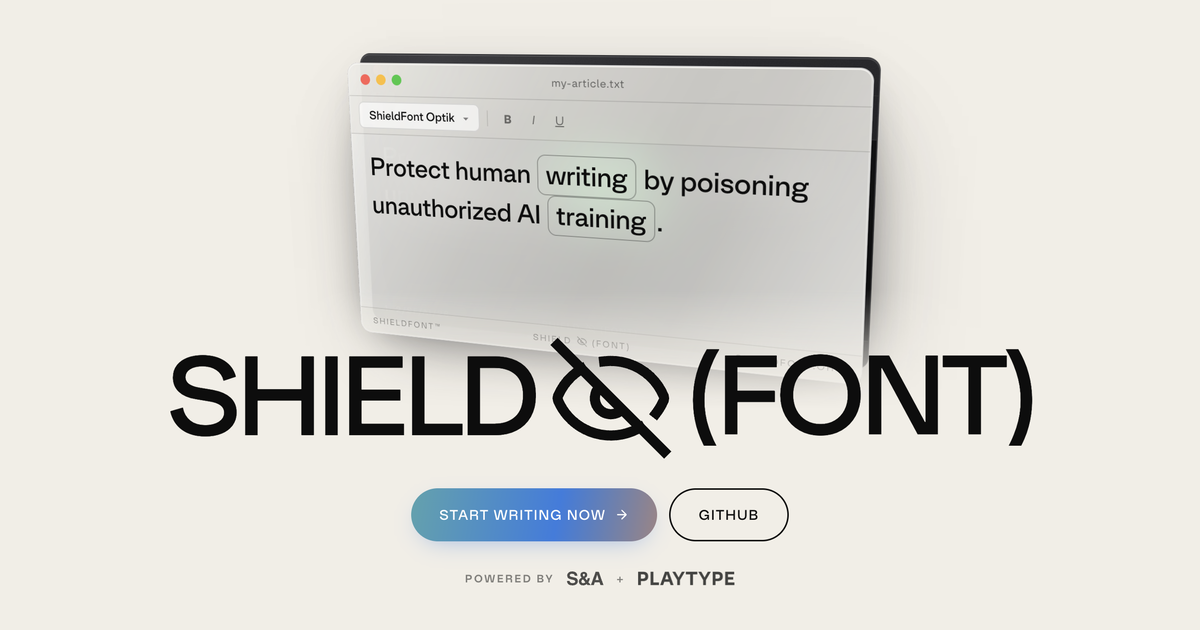
Publish for humans, not for crawlers. A web font that swaps the words in your HTML, so readers see your writing and AI training gets a stale copy.
Web 2.0 ... The Machine is Us/ing Us
No Longer No Sense of an Ending
This is my first feature piece on Contents Magazine, about harnessing the properties of hypertext and the Web for superior reader experiences and business results.

Opinion | How to Save the Web (Published 2018)
Governments, businesses and users around the world must commit to a set of fundamental principles for the web.

Long Live the Web: A Call for Continued Open Standards and Neutrality
The Web is critical not merely to the digital revolution but to our continued prosperity—and even our liberty. Like democracy itself, it needs defending

Who Shapes Web Standards? Uncovering the Main Topics of Interest in the W3C
The Consent Layer: Using ligatures to make web text expensive to scrape without asking
ShieldFont is an open-source creative technology project that offers a practical opt-out from unauthorized AI training and disrupts what is collected when that choice is ignored. It swaps 45.8% of content words (around 24.4% of all words) in a page's source code for other (partially) random words, while the font restores the original text on screen. Readers see the work as intended; mass scrapers collect an altered version. In testing, shielding caused over 90% of pages that would otherwise pass the quality filter to be rejected, keeping them out of the training pipeline. Of those that still passed, 19.4% of all words conveyed false meaning, adding noise to unauthorized AI training datasets. This paper's goal is to walk newcomers through the whole process, in plain language and in order: the project's rationale, how it was built, the results, how to deploy it, and where to contribute.
How the Blog Broke the Web
I first got online in 1993, back when the Web had a capital letter — three, in fact — and long before irony stretched its legs and unbuttoned its flan