

Policy-driven, layered isolation and containment
Microsoft offers devs a better way to control AI agent behavior | TechCrunch
The specification lets developer, compliance, and security teams define their own policies for agents to follow in portable policy files.

Securing the Model Context Protocol: Building a safer agentic future on Windows
As AI agents become more capable and integrated into daily workflows, the need for secure, standardized communication between tools and agents has never been greater. At Microsoft Build 2025, we’re announcing an early preview of how Windows 11 is e

Introducing gpt-oss-safeguard
OpenAI introduces gpt-oss-safeguard—open-weight reasoning models for safety classification that let developers apply and iterate on custom policies.
Runtime Governance for AI Agents: Policies on Paths
AI agents -- systems that plan, reason, and act using large language models -- produce non-deterministic, path-dependent behavior that cannot be fully governed at design time, where with governed we mean striking the right balance between as high as possible successful task completion rate and the legal, data-breach, reputational and other costs associated with running agents. We argue that the execution path is the central object for effective runtime governance and formalize compliance policies as deterministic functions mapping agent identity, partial path, proposed next action, and organizational state to a policy violation probability. We show that prompt-level instructions (and "system prompts"), and static access control are special cases of this framework: the former shape the distribution over paths without actually evaluating them; the latter evaluates deterministic policies that ignore the path (i.e., these can only account for a specific subset of all possible paths). In our view, runtime evaluation is the general case, and it is necessary for any path-dependent policy. We develop the formal framework for analyzing AI agent governance, present concrete policy examples (inspired by the AI act), discuss a reference implementation, and identify open problems including risk calibration and the limits of enforced compliance.

New in Claude Managed Agents: self-hosted sandboxes and MCP tunnels | Claude
Claude Managed Agents can now operate in a sandbox you control and connect to your private Model Context Protocol (MCP) servers

Protocols and Power
If "context" is king, we need to ensure it remains fluid and accessible by third-party developers

OpenAI releases its framework for AI child safety policies.
The blueprint — created with the help of NCMEC and the Attorney General Alliance — is aimed at “modernizing laws” to address AI-generated CSAM, improving the reporting process, and building systems that interrupt exploitation attempts. [Link: Introducing the Child Safety Blueprint | https://openai.com/index/introducing-child-safety-blueprint/ | OpenAI]

MCP and LLM Security Research Briefing | Wiz Blog
Explore the evolving Model Context Protocol (MCP), its security risks, and how to prepare for safe adoption as LLMs connect to external systems.

Universal AI Bypass: How Policy Puppetry Leaks System Prompts and Safety Data
HiddenLayer’s latest research uncovers a universal prompt injection bypass impacting GPT-4, Claude, Gemini, and more, exposing major LLM security gaps.

AgentSpec: Customizable Runtime Enforcement for Safe and Reliable LLM Agents
Agents built on LLMs are increasingly deployed across diverse domains, automating complex decision-making and task execution. However, their autonomy introduces safety risks, including security vulnerabilities, legal violations, and unintended harmful actions. Existing mitigation methods, such as model-based safeguards and early enforcement strategies, fall short in robustness, interpretability, and adaptability. To address these challenges, we propose AgentSpec, a lightweight domain-specific language for specifying and enforcing runtime constraints on LLM agents. With AgentSpec, users define structured rules that incorporate triggers, predicates, and enforcement mechanisms, ensuring agents operate within predefined safety boundaries. We implement AgentSpec across multiple domains, including code execution, embodied agents, and autonomous driving, demonstrating its adaptability and effectiveness. Our evaluation shows that AgentSpec successfully prevents unsafe executions in over 90% of code agent cases, eliminates all hazardous actions in embodied agent tasks, and enforces 100% compliance by autonomous vehicles (AVs). Despite its strong safety guarantees, AgentSpec remains computationally lightweight, with overheads in milliseconds. By combining interpretability, modularity, and efficiency, AgentSpec provides a practical and scalable solution for enforcing LLM agent safety across diverse applications. We also automate the generation of rules using LLMs and assess their effectiveness. Our evaluation shows that the rules generated by OpenAI o1 achieve a precision of 95.56% and recall of 70.96% for embodied agents, successfully identify 87.26% of the risky code, and prevent AVs from breaking laws in 5 out of 8 scenarios.
Open Policy Agent - Homepage | Open Policy Agent
Developer Productivity: OPA helps teams focus on delivering business value by decoupling policy from application logic. Security & platform teams centrally manage shared policies, while developer teams extend them as needed within the policy system.
Sharing a safety tool: announcing policyserv
Matrix, the open protocol for secure decentralised communications
Microsoft Build 2026: Securing code, agents, and models across the development lifecycle | Microsoft Security Blog
Discover how Microsoft enables fast, secure AI development with MDASH and new security capabilities.
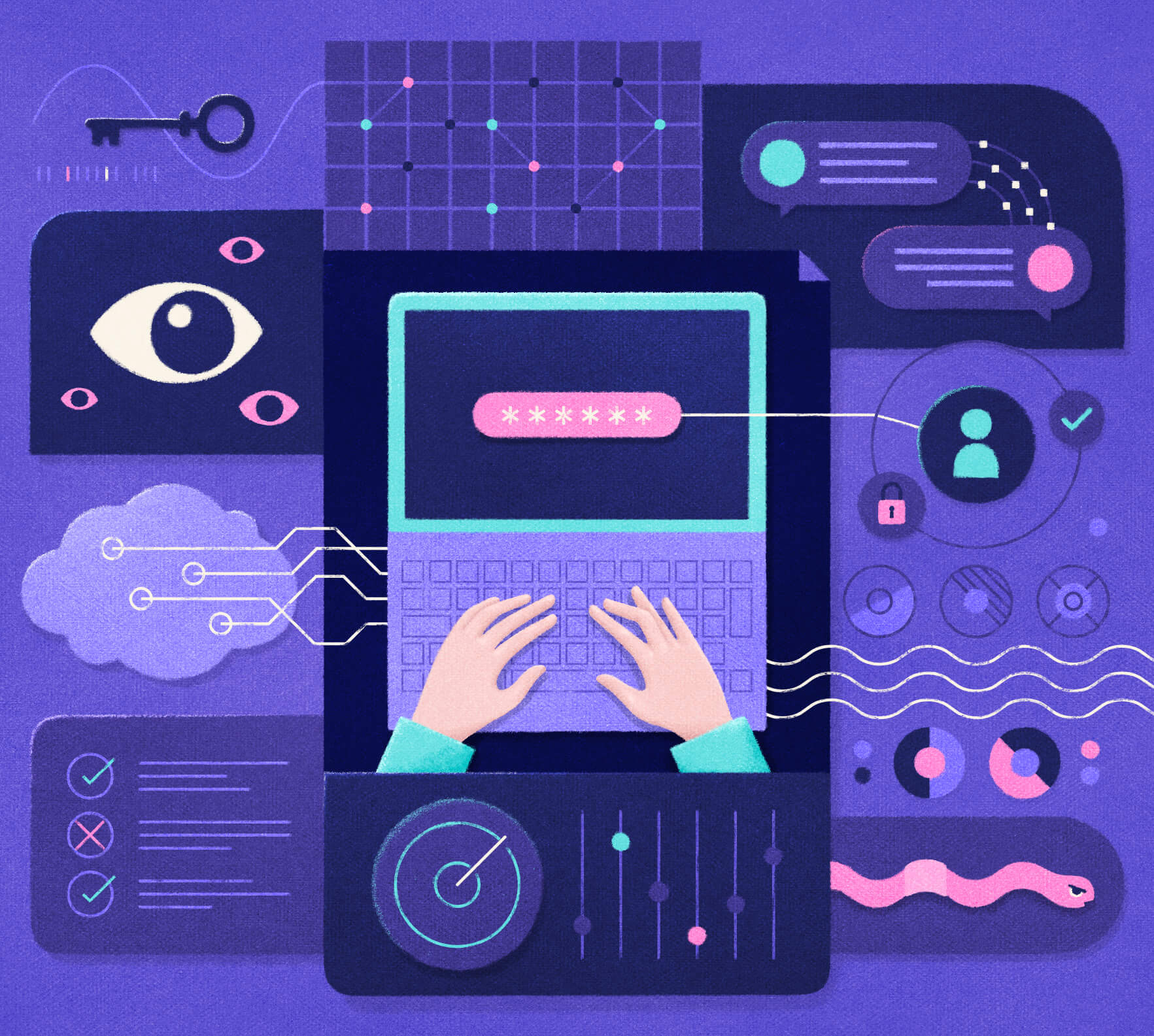
Access Control in the Era of AI Agents
Learn about the history of AI agents, the risks they introduce and how to prevent them with a focus on fine-grained access control.
Cato CTRL™ Threat Research: PoC Attack Targeting Atlassian’s Model Context Protocol (MCP) Introduces New “Living off AI” Risk
Stop me if you've heard this one before: A threat actor (acting as an external user) submits a malicious support ticket. An internal user, linked to a tenant, invokes an …