

A modern replacement for ‘ls’.
Leshem (Legend) Choshen 🤖🤗 on Twitter / X
We know models fail to generalize across languages.But Adam found they fail to generalize when you just call half your English pretraining by another name, like "En2"😵💫 https://t.co/DfWJRP51Fz— Leshem (Legend) Choshen 🤖🤗 (@LChoshen) April 30, 2026
ELS 2026, Kraków - European Lisp Symposium
Homepage for the European Lisp Symposium
Opral (lix & inlang) | Samuel Stroschein | Substack
Insights, thoughts, and deep-dives into Opral, inlang, and lix. Click to read Opral (lix & inlang), by Samuel Stroschein, a Substack publication.
Introducing Lea | Chinmay Hegde | 23 comments
Today we are releasing Lea. Lea is a powerful, open-source Lean 4 theorem proving agent, built out of DARPA's expMath program. Lea is a (deliberately minimal) agent designed to keep mathematicians in the driver's seat: a full front-end UI, full control and visibility on the back end, and a lovely Overleaf extension that auto-formalizes Latex to Lean while you continue working on your manuscript. Lea is fully open-source; we want everyone to fork it, break it, and tell us how to improve it. We have been using Lea internally within our academic groups for the last 3 months. It has closed and formalized multiple open problems in mathematics, and specifically a long-standing conjecture in nonlinear elliptic PDEs. (More on this soon!) We are at a pivotal time in mathematics. I have joked to my friends that DARPA expMath is a "tell-your-grandchildren-about-it" program. The kickoff room in DC in March had Fields medallists, Turing award winners, top mathematicians and theoretical computer scientists. It also had every serious startup in this space --- Axiom Math, Harmonic, Math Inc, @Principia labs, Logical Intelligence. Patrick Shafto and DARPA made a bold bet on AI-accelerated mathematical discovery, and not even 6 months later these efforts are already bearing fruit. Huge thanks to my collaborators Claudio Silva, Sam Westrick, Eduardo Teixeira, Jaume de Dios Pont, Daniel Arturi, Shashwat Patel, Kevin Gomez, and many others. Much of Lea is the result of their hard work, and it's a joy to work with them. | 23 comments on LinkedIn

Mitigating Cross-Lingual Cultural Inconsistencies in LLMs via...
Despite their impressive capabilities, multilingual large language models (MLLMs) frequently exhibit inconsistent behaviour when the prompt's language changes. While such adaptation is generally...

LS Punctuations
Let’s share our punctuation practices, how to details, comments, etc. DIVE IN! These might be made into “Punctuation Cards” What do we think makes something a punctuation? What is it? Definition? Add your thoughts here! It amplifies an LS principle or helps people relate to the purpose/goal of ...

GNU and the AI reimplementations - <antirez>
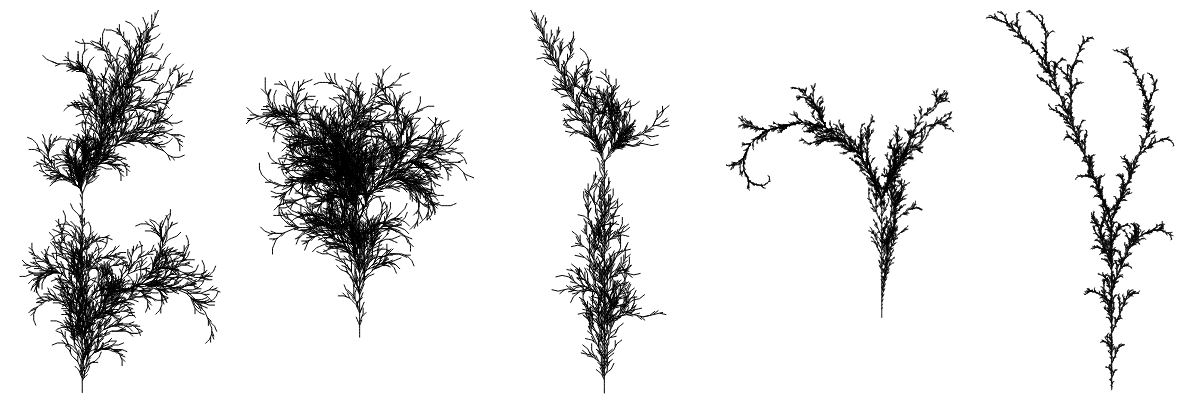
L-systems
Jordan Santell, focusing on open web engineering, immersive web, WebXR, WebGL, JavaScript, open source, open standards, and all things weird web.
elvis on Twitter / X
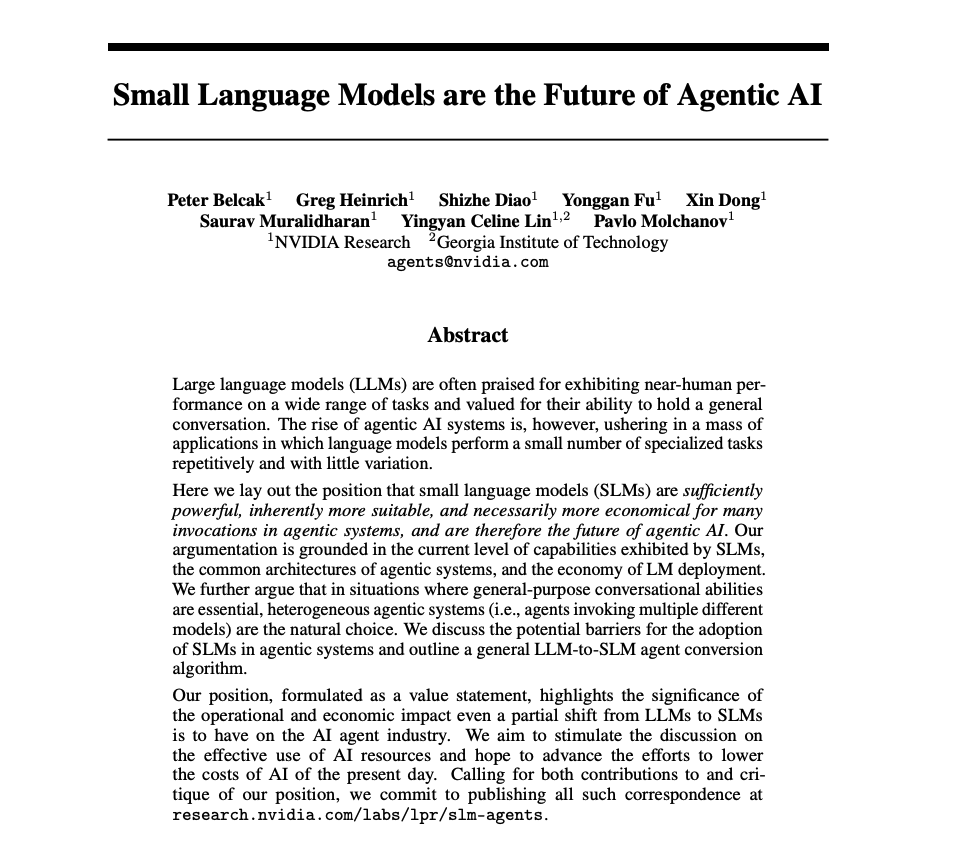
Small Language Models are the Future of Agentic AILots to gain from building agentic systems with small language models.Capabilities are increasing rapidly!AI devs should be exploring SLMs.Here are my notes: pic.twitter.com/7dhmz9V2jB— elvis (@omarsar0) July 1, 2025

Unix system programming in OCaml
Translation by Daniel C. Bünzli, Eric Cooper, Eliot Handelman, Priya Hattiangdi, Thad Meyer, Prashanth Mundkur, Richard Paradies, Till Varoquaux, Mark Wong-VanHaren
OpenMinis/AwesomeMinis
😎 A curated collection of real-world Minis use cases, workflows, and creative scenarios — contributed by the community
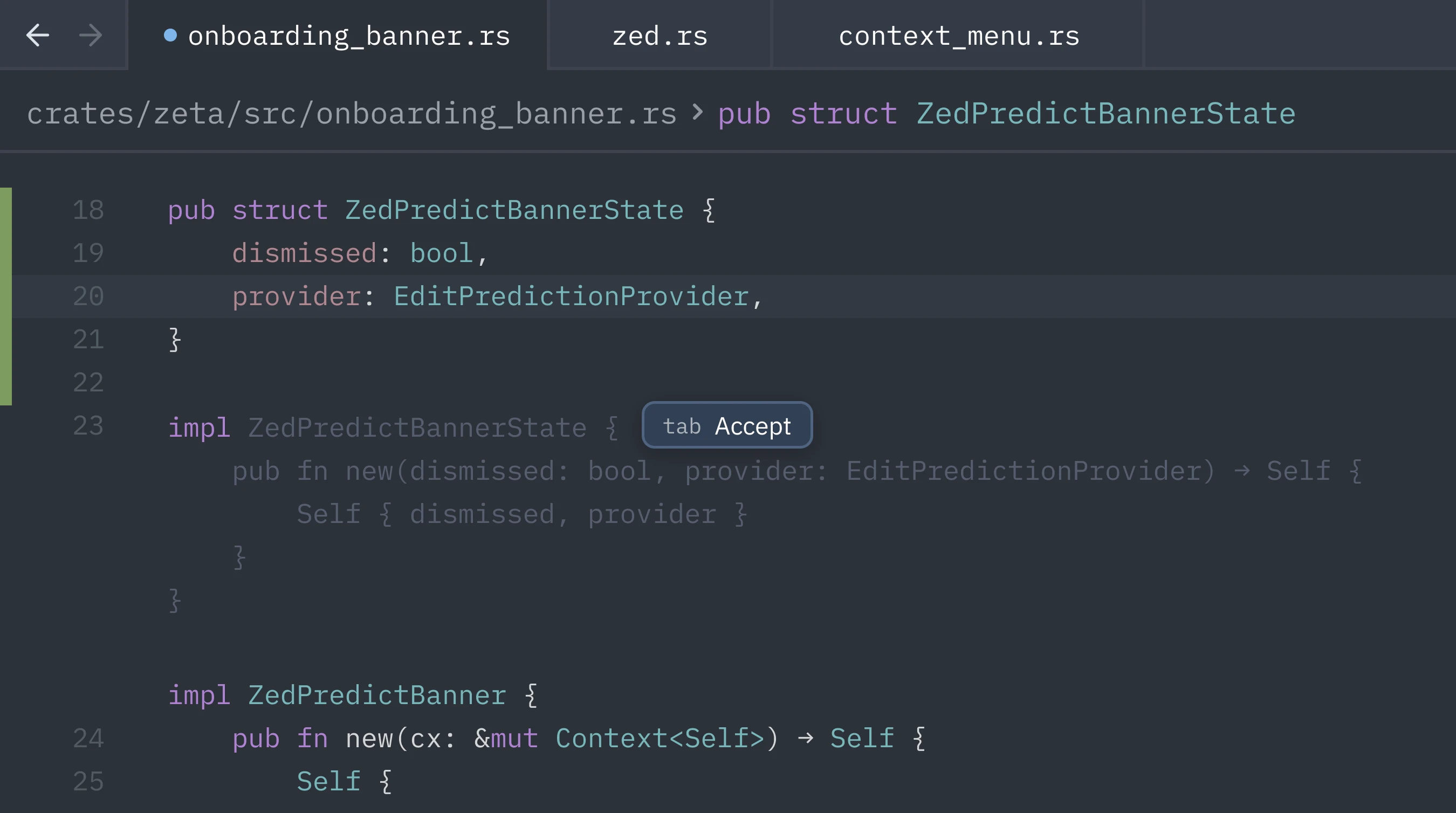
Zed now predicts your next edit with Zeta, our new open model
From the Zed Blog: A tool that predicts your next move. Powered by Zeta, our new open-source, open-data language model.
Introduction | RLHF and Post-Training Book by Nathan Lambert
A first-principles introduction to RLHF, what it changes in language models, and how it became part of modern post-training.
