

css-benchpress aims to help developers and tooling authors discover where CSS patterns become performance problems by growing realistic web-platform test cases until measurable regressions appear.
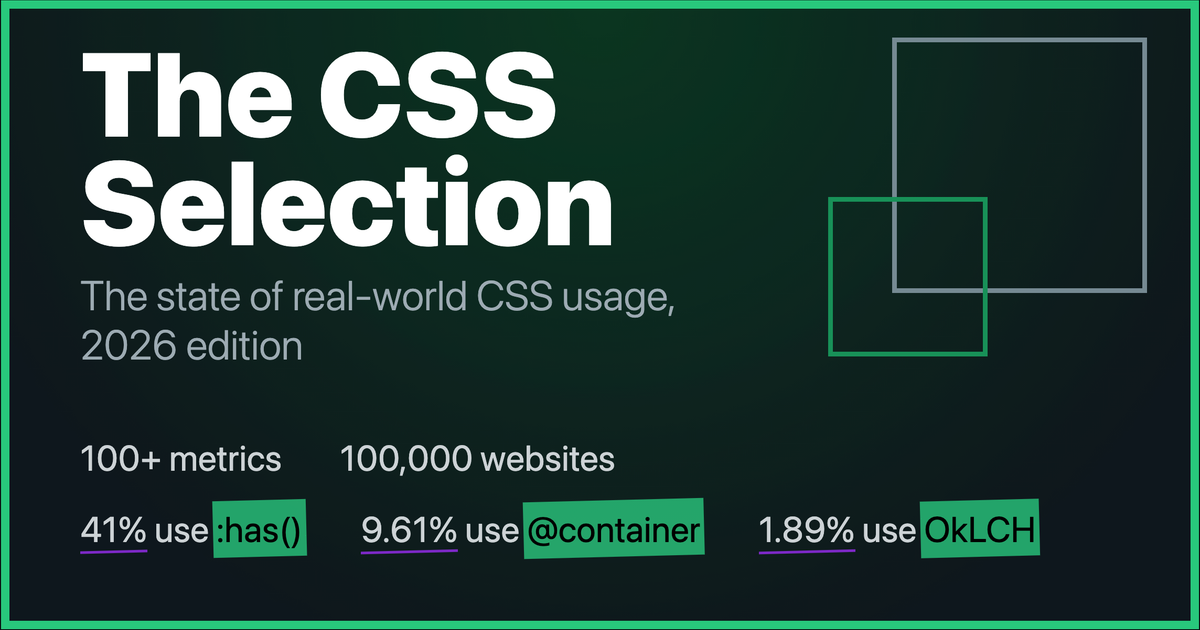
The CSS Selection - 2026 Edition - Project Wallace
The CSS Selection shows real-world CSS usage from over 100,000 websites and looks at the most important metrics.
The State of CSS 2020: Conclusion
The annual survey about the latest trends in CSS.
Improving Your CSS with Parker – CSS Wizardry
Using static analysis to learn where to improve your CSS

Glen Maddern: Internet Pro
Let me tell you about what CSS Modules is, and why it’s the future.
Modern CSS snippets. Every old hack, replaced.
Side-by-side comparisons of outdated CSS techniques and their modern native replacements. Grid, custom properties, nesting, container queries, and more.
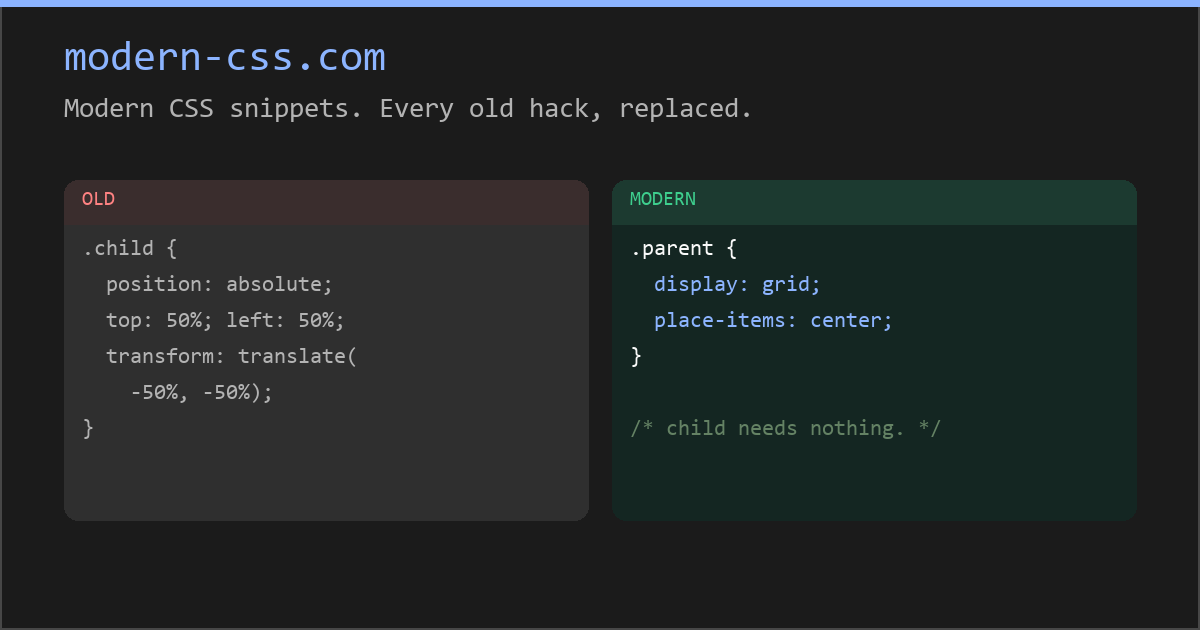
Modern CSS snippets. Every old hack, replaced.
Side-by-side comparisons of outdated CSS techniques and their modern native replacements. Grid, custom properties, nesting, container queries, and more.
2026 CSS wishlist – Nathan Knowler
What I’d like to see prioritized for CSS in 2026, how those features will allow us to create better web-based design systems, and how they renew separation of concerns.
#10: "Bad at CSS" by Keith Cirkel
CSS Formatter, CSS Beautifier and CSS Minifier Online tool
Best Online CSS Formatter, CSS Beautifier, CSS Minifier, Save and Share CSS. Simple Quick and Fast!


Tailwind CSS is the worst…
12 CSS features you can use today with no build step
Modern CSS features that replace Sass, PostCSS plugins and JavaScript hacks: nesting, :has(), container queries, subgrid and more, checked in September 2026.
good-css
Strong opinions about modern CSS technique, borrowed from experts, for agents to know and reach for.

Vanilla CSS is all you need
Campfire, Writebook, and Fizzy show that modern vanilla CSS can power serious apps without Sass, PostCSS, or a build step.

BrowserBench.org — Browser Benchmarks
Speedometer is a browser benchmark that measures the responsiveness of web applications. It's maintained by major browser engine developers under an open governance model.
