A human-made, free/open, beginner-friendly, minimal and human-readable language for the live coding of algorithmic electronic music performances
Show HN: An algorithmic audio landscape | Hacker News
It's definitely inspired by in-world music that sometimes appears in games. I basically took that concept, keeping the music aspect, and dropping the entire "game" aspect.
Australians making music with computer code | Hacker News
His PhD thesis about it (2018) is worth reading for anyone interested in live programming of any sort, music or otherwise: https://openresearch-repository.anu.edu.au/handle/1885/14460...
Hocket
Collaborative live coding in the browser, built on ATProto. Create algorithmic music and visuals in real-time.
Algorave - permanent live coding archive
A permanent, decentralized archive for live coding music sets. Publish, search, and preserve algorave performances on the AT Protocol network.
FMOD Studio
Made for games - The fast, fluid and flexible solution for implementing adaptive music and sounds.
That Music You’re Dancing To? It’s Code (Published 2019)
Collectives in cities around the world are bringing computer languages to the club.

Open source modular synth software lets you create 70s & 80s electronic music | Hacker News
Hardware is much more hands on, with real dials, switches, and other means of physical interaction which screens and mice don't come close to matching. Hardware does exist through which musicians can interact with computers, but it's usually MIDI, which has its own limitations compared to fully analog gear.
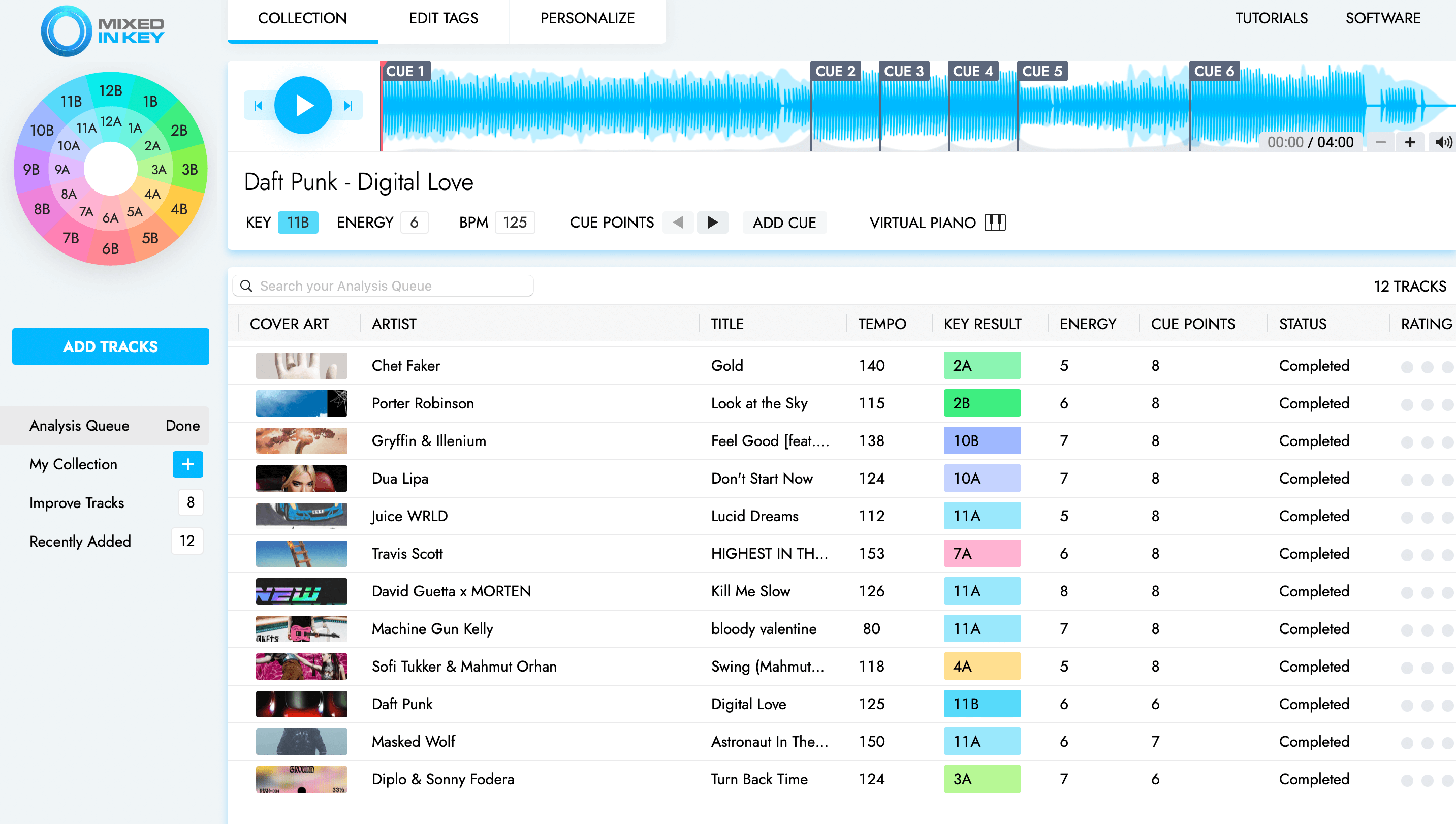
Mixed In Key: Software for DJs and Music Producers
Award-Winning software for DJs and Producers Mixed in Key Pro Wingman Captain Plugins Platinum Notes Pilot Plugins Mixed In Key Live Complete Collection Mixed In...
Music Encoding Initiative
The Music Encoding Initiative (MEI) is a community-driven, open-source effort to define a system for encoding musical documents in a machine-readable structure. MEI brings together specialists from various music research communities, including technologists, librarians, historians, and theorists in a common effort to define best practices for representing a broad range of musical documents and structures. The results of these discussions are formalized in the MEI schema, a core set of rules for recording physical and intellectual characteristics of music notation documents expressed as an eXtensible Markup Language (XML) schema. It is complemented by the MEI Guidelines, which provide detailed explanations of the components of the MEI model and best practices suggestions. Read more …
The Art of DJing: CCL - Polyrhythmic tempo transitions using triplet rhythms

tsiry-sandratraina.com/music-player
An extensible music server written in Rust , single binary, zero dependency
Csound: A sound and music computing system | Hacker News
Max & Pd are fantastic for incorporating sensors & other physical interfaces, real-time interactivity, routing signals, creating visualizations, & all that. Supercollider is fantastic for generative music & using control flow compositionally.
First recording of computer-generated music – created by Alan Turing – restored
Researchers restore 1951 recording generated on machine built by computer scientist famous for breaking Enigma code