

RISE: Red-teaming via Iterative Strategy Evolution (NeurIPS 2026)
RISE: Red-teaming via Iterative Strategy Evolution
A calibrated, strategy-level approach to red-teaming production text-to-image models.
GPT-Red: Unlocking Self-Improvement for Robustness
Explore GPT-Red, OpenAI’s automated red teaming system that uses self-play to improve AI safety, alignment, and prompt injection robustness.
GPT-Red: Unlocking Self-Improvement for Robustness
Explore GPT-Red, OpenAI’s automated red teaming system that uses self-play to improve AI safety, alignment, and prompt injection robustness.
RISE: Red-teaming via Iterative Strategy Evolution for Modern Text-to-Image Models
On modern production text-to-image systems, successful policy violations are rare, and previously effective human-written seeds are often patched out. Current automated red-teamers are poorly matched to this regime in two ways: unreliable success measurement and poor exploration. First, we find that judges widely used in prior T2I red-teaming work are unreliable under vague unsafe-content targets: they either miss true violations or reward benign borderline images on hardened APIs. We therefore define strict category-specific success criteria and calibrate strong VLM judges against human labels. Second, we show that broadly used prompt-modification pipelines do not solve the exploration problem: on harder guardrail settings they remain tied to seed prompts, fail to transfer, or cannot bootstrap positive examples. We introduce RISE, which evolves reusable strategies used to generate prompts rather than rewriting them one by one. The best discovered strategies are then reused to generate attacks across new scenarios. On DALL-E 3, Nano Banana 2 (Google) and GPT-Image-2, RISE reaches up to 13% human-verified ASR; under the same calibrated evaluation, prior methods with reported ASR as high as roughly 30% fall to near zero.
Automated AI Red Teaming by Mozilla
We are building for the next generation in GenAI security and beyond.

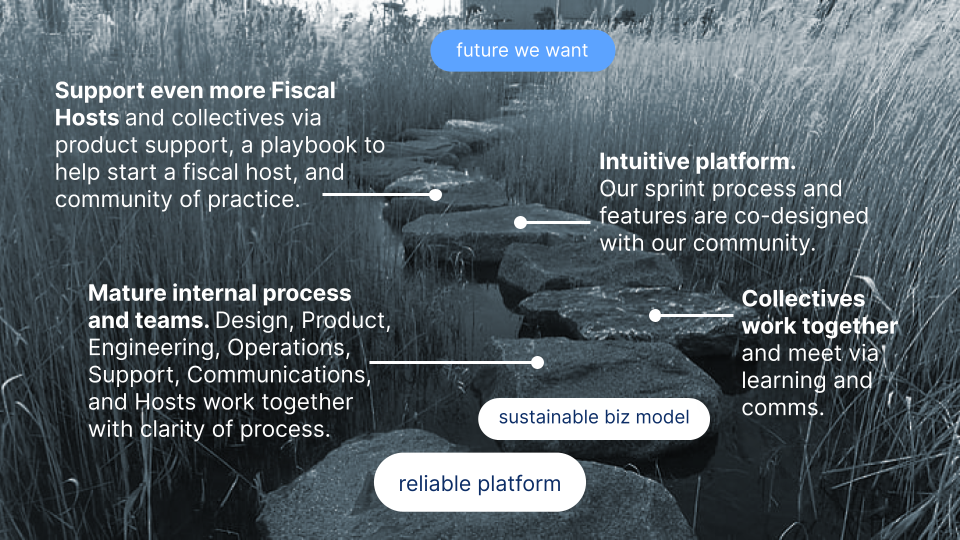
OC Inc. Strategy 2023-2024: Mature Platform + Connected Teams = Strong Foundations
The next two years are about maturing the OC Inc. platform and connecting our teams so that we can scale our impact in the years to come.
Redundancy Protects Human Collaborations from Failure
In the name of efficiency, organizations and governments around the world are increasingly trimming redundancy---personnel or overlapping capabilities beyond what routine operations require. Drawing on distributed computing and cognitive science, we challenge this view. Using queueing simulations and a preregistered multiplayer experiment (N = 832 in 187 teams of 3–6), we show that redundancy improves performance through two distinct routes. Adding collaborators to a team improves resilience, with larger teams completing more tasks when members became temporarily unable to contribute. Giving team members overlapping capabilities also improved efficiency, with teams in which collaborators could perform multiple roles completing substantially more work. These findings suggest that efforts to improve short-term efficiency by reducing redundancy may come at a cost, quietly eroding a team’s capacity to withstand unexpected failures.

Adopt and scale Team Topologies: platform-as-a-product, templates, more. — Team Topologies - Organizing for fast flow of value
Accelerate value with Team Topologies: measure cognitive load, define team boundaries, apply inverse Conway, readiness assessments, and more for fast delivery.


TANKS
Endless tower of tank battles. Sign in with Bluesky and your mutuals become the enemy tanks.

Review: Team Topologies
Many organizations are struggling with their business agility transformation. One of the reasons is the way they have organized their teams. The focus was probably on efficiency and if these teams …

Overgrowth's new game plan | Wolfire Games Blog
Around seven months ago we increased the team size, and started releasing alphas every other week. During this time we've made good progress…

Designing Strategy: Rushdown, Economy, and Defense
Hey everyone! Today I have a good-old-fashioned formalist-ish game design article. It’s been a little while since I’ve really done one of those, unless it was attached to Push the Lane.…

Last April, we raised $100M in Series B funding. This round gives us the ability to scale our team to meet the rapid growth of Bluesky and the AT Protocol. Read more: bsky.social/about/blog/03-19-2026-series-…

Bluesky's 2025 $100M Series B Lays Foundation for Open Social Web - Bluesky
bsky.social