


Cities have always struggled with the tension between the different needs of social classes who share the space. But as The Guardian documents, a new
Re:Permissioning the City — Unlocking cities’ growing underutilised spatial assets for an emergent…
In recent years, various macro-level shifts, including public health crises, demographic changes, and climate risks, have had cascading…

Computational Public Space
A City for Children — Oakland Public Library
A City for Children — Gutman, Marta, — American cities are constantly being built and rebuilt, resulting in ever-changing skylines and neighborhoods. While the dynamic urban landscapes of New York, Boston, and Chicago have been widely studied, there is much to be gleaned from West Coast cities, especially in California, where the migration boom at the end of the nineteenth century permanently changed the urban fabric of these newly diverse, plural metropolises. In A City for Children Marta Gutman focuses on the use and reuse of everyday buildings in Oakland, California, to make the city a better place for children. She introduces us to the women who were determined to mitigate the burdens placed on working-class families by an indifferent industrial capitalist economy. Often without the financial means to build from scratch, women did not tend to conceive of urban land as a blank slate to be wiped clean for development. Gutman shows how, over and over, women instead turned private houses and even a saloon in Oakland into orphanages, kindergartens, settlement houses, and day care centers, and in the process built the charitable landscape--a network of places that was critical for the betterment of children, families, and public life. The industrial landscape of Oakland, riddled with the effects of social inequality and racial prejudice, is not a neutral backdrop in Gutman's story but an active player. Spanning one hundred years of history, A City for Children provides a compelling model for building urban institutions, and it demonstrates that children, women, charity, and reform, along with incremental construction, renovations, alterations, additions, and repurposed structures, are central to the understanding of modern cities.
Why City Benches Are Becoming More Hostile
CityLab - Bloomberg
Bloomberg CityLab reports on the world’s cities, communities, and neighborhoods: How they work, the challenges they face, and the solutions they need.
A City Is Not a Computer: Other Urban Intelligences
<strong>A bold reassessment of "smart cities" that reveals what is lost when we conceive of our urban spaces as computers</strong> Computational models of urbanism—smart cities that use data-driven planning and algorithmic administration—promise to deliver new urban efficiencies and conveniences. Yet these models limit our understanding of what we can know about a city. <i>A City Is Not a Computer</i> reveals how cities encompass myriad forms of local and indigenous intelligences and knowledge institutions, arguing that these resources are a vital supplement and corrective to increasingly prevalent algorithmic models. Shannon Mattern begins by examining the ethical and ontological implications of urban technologies and computational models, discussing how they shape and in many cases profoundly limit our engagement with cities. She looks at the methods and underlying assumptions of data-driven urbanism, and demonstrates how the "city-as-computer" metaphor, which undergirds much of today's urban policy and design, reduces place-based knowledge to information processing. Mattern then imagines how we might sustain institutions and infrastructures that constitute more diverse, open, inclusive urban forms. She shows how the public library functions as a steward of urban intelligence, and describes the scales of upkeep needed to sustain a city's many moving parts, from spinning hard drives to bridge repairs. Incorporating insights from urban studies, data science, and media and information studies, <i>A City Is Not a Computer</i> offers a visionary new approach to urban planning and design.
Building Resilient Neighbourhoods’ Connect & Prepare Learning Report
Through its partnership with Hey Neighbour Collective, Building Resilient Neighbourhoods helped to bring Connect & Prepare to three new BC municipalities, in collaboration with resident champions…

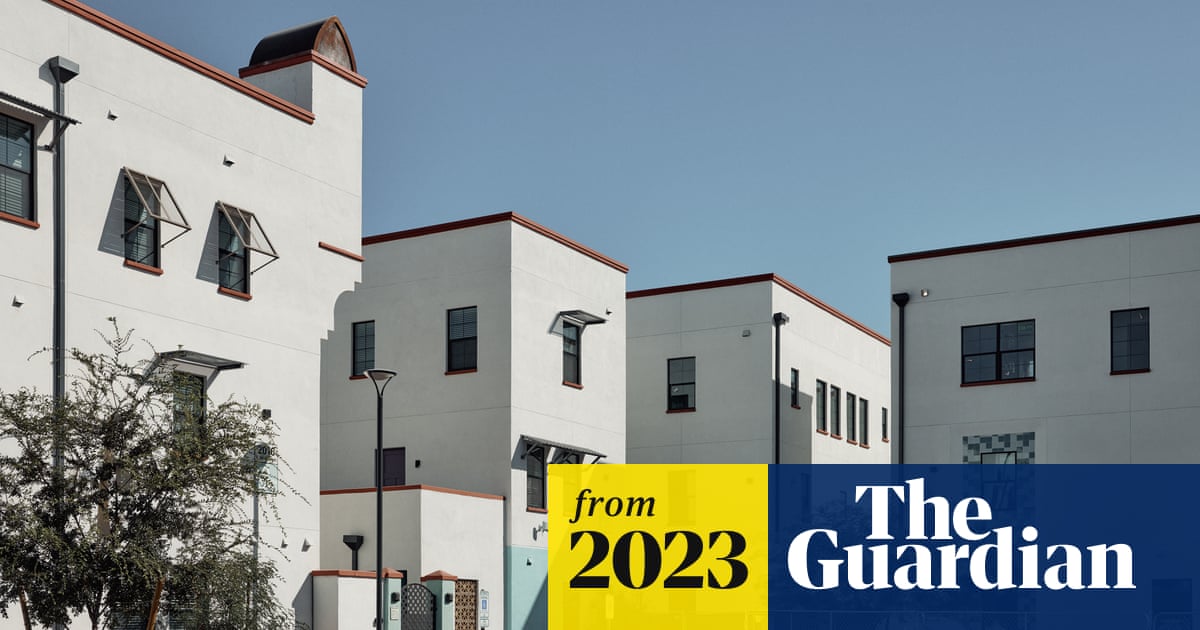
‘People are happier in a walkable neighborhood’: the US community that banned cars
A new housing development outside Phoenix is looking towards European cities for inspiration and shutting out the cars. So far residents love it
Urban America Reconsidered by David L. Imbroscio | Paperback | Cornell University Press
The aftermath of Hurricane Katrina laid bare the tragedy of American cities. What the storm revealed about the social conditions in New Orleans shocked many Americans. Even more shocking is how widespread these conditions are throughout much of urban...
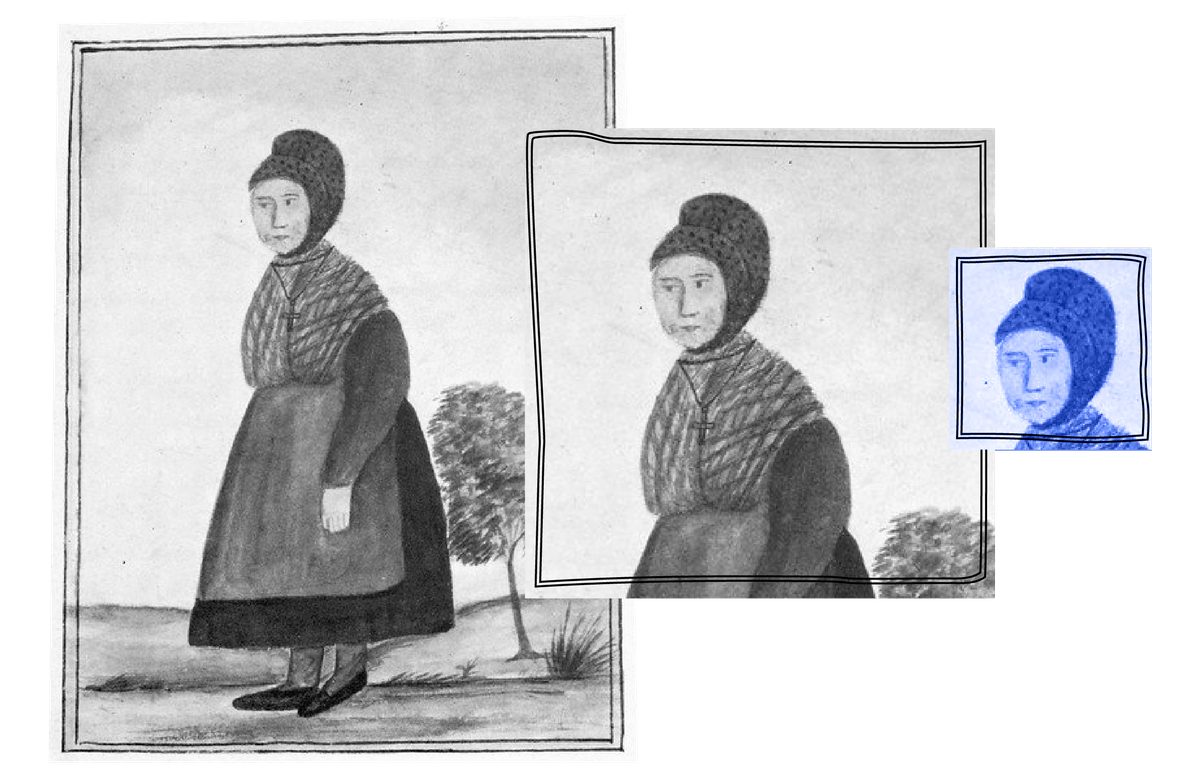
How buildings learn : what happens after they're built
Originally published: New York, NY : Viking, 1994; Includes bibliographical references (p. 224-229) and index; Flow -- Shearing layers -- "Nobody cares what you do in there": the low road --- Houseproud: the high road -- Magazine architecture: no road -- Unreal estate -- Preservation: a quiet, populist, conservative, victorious revolution -- The romance of maintenance -- Vernacular: how buildings learn from each other -- Function melts form: satisficing home and office -- The scenario-buffered building -- Built for change -- Appendix: The study of buildings in time

A City in Common: A Framework to Orchestrate Large-scale Citizen Engagement around Urban Issues
As part of the Digital Library's transition to Open Access, new features for researchers are available in the Premium Edition. Click here to learn more.

Do we actually know how to make cities safer for women?
Women-only buses, catcalling fines and gender-sensitive design — we've tried them all.

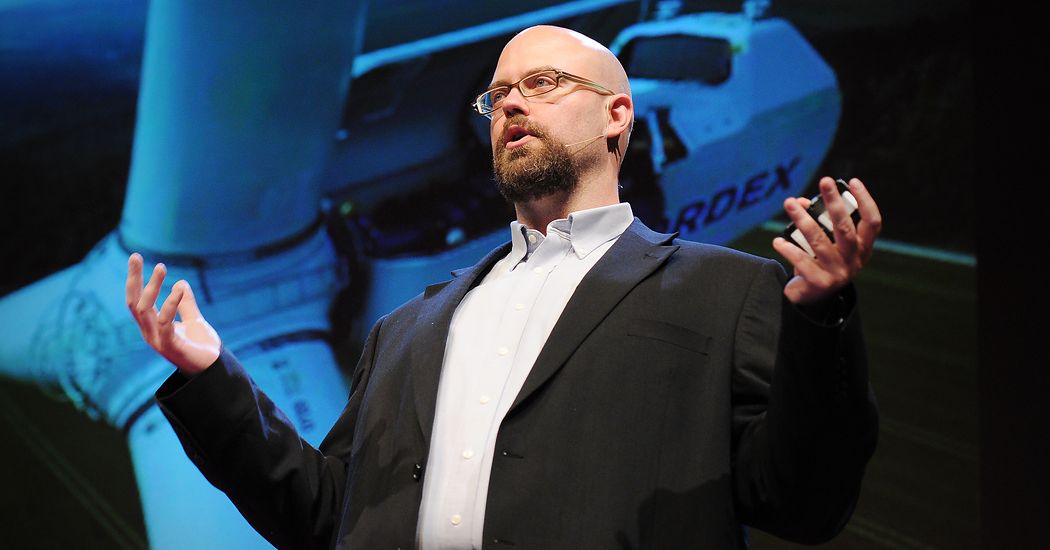
Alex Steffen: The shareable future of cities
How can cities help save the future? Alex Steffen shows some cool neighborhood-based green projects that expand our access to things we want and need -- while reducing the time we spend in cars.
Planning for isolation? The role of urban form and function in shaping mobility in Brasilia
Brasília offers a rare test of how urban form shapes experienced segregation. Built almost at once around modernist neighbourhood units, then expanded through planned satellites and informal peripheries, it lets us ask whether urban form turns mobility into mixing or into a more efficient engine of separation. We combine data on human mobility with urban morphometrics, amenities, road networks, along with enclosures and tessellations that capture segregation at the scales where access is structured: districts, neighbourhoods, blocks, and street-and-building cells. We find that segregation intensifies as resolution sharpens, from 0.282 at the district scale to 0.545 at the block scale, indicating that Brasília looks most integrated at coarse units and most segregated where everyday encounters are actually organised. Mobility softens home segregation for most users, but not symmetrically: poorer groups travel farther, while affluent groups remain the most selectively exposed. civic cores and mid-rise, mixed-use areas are the least segregated morphotypes, yet they occupy only a sliver of the metropolis. Elsewhere, rich lakefront suburbs and dense poor settlements reach similarly high segregation through opposite spatial logics. Amenities predict lower segregation, while barriers and enclosed residential interiors predict higher segregation. Built form explains more of this pattern than visit volume alone in the segregation models: integration is less a property of residential design than of shared destinations and porous connections. Planned capitals can build order without building isolation if they distribute mixing space rather than sequestering it.

