


The winners of the 2015 FASEB BioArt Image and Video Competition have been announced, and they’re amazing. Chosen from a diverse cross-section of biology,
Free and open-source images, icons, and tools for creating scientific illustrations
Phylopic, NIH Bioart, Bioicons, Scidraw, Open Science Art, Health Icons, Servier Medical Art, Biodiversity Heritage Library, the Noun Project, Segment Anything, Excalidraw, draw.io, Biographics
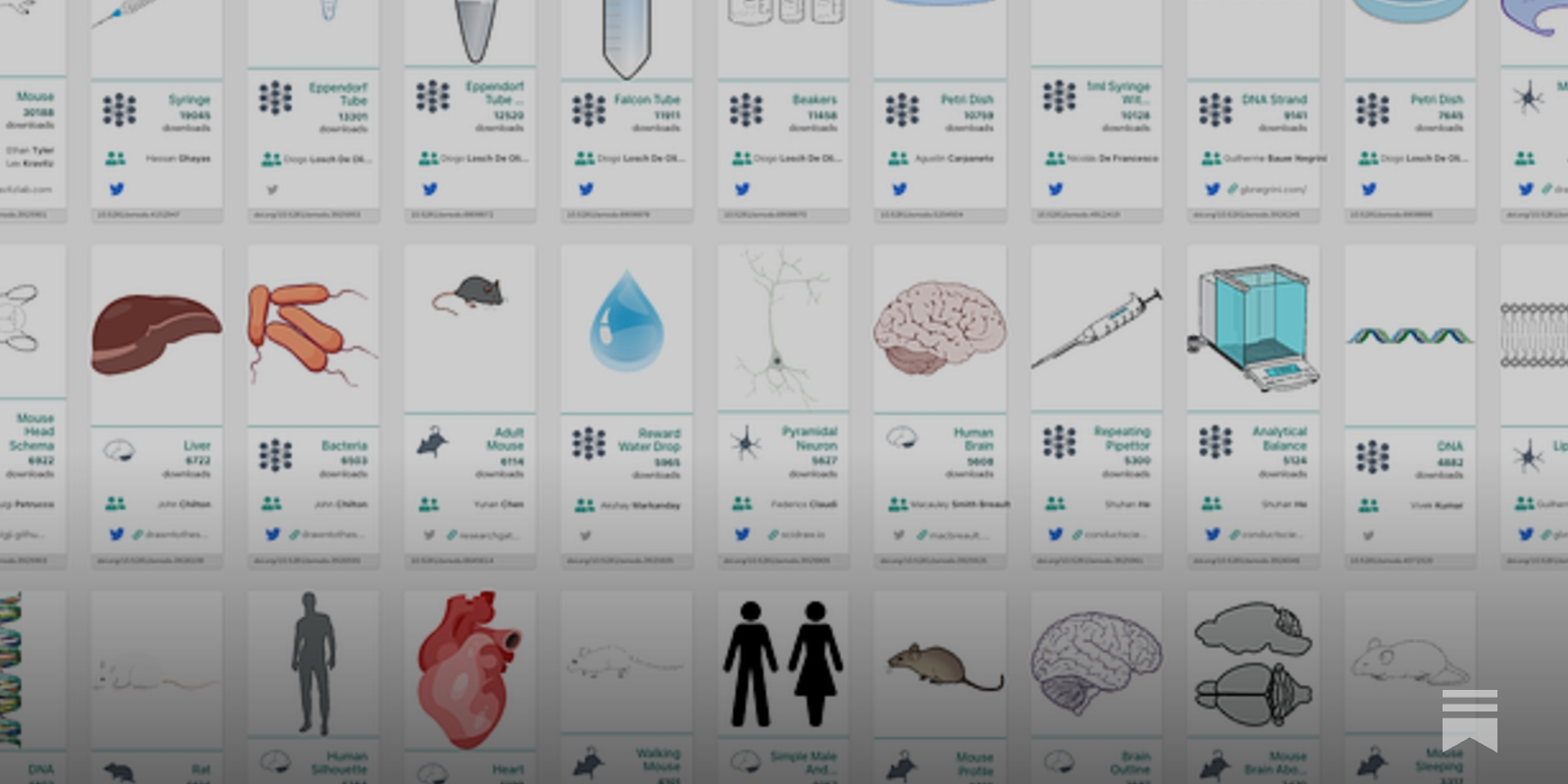
Generrated: 9,300 images generated with DALL·E 2 and DALL·E 3 prompts
An image/prompt reference and inspiration resource containing 9,300 images generated using DALL·E

About Image Cooperative – Image Cooperative
We are a cooperative of imaging scientists dedicated to advancing open standards and open source technology in scientific image data analysis, storage, and dissemination. We believe that collaborating with open tools can dramatically accelerate scientific progress for the benefit of all. We deliver our mission through standards development, software development, training, and education.
Why are the Artemis II photos on Flickr? - Anil Dash
A blog about making culture. Since 1999.

Explaining the Most Important Artemis II Photos
Linden Gledhill Photography
Linden Gledhill photography. Commercial imaging for advertising artwork and promotion using advanced macro photography and photomicroscopy
SOLU / Bioart Society
SOLU / Bioart Society Panimokatu 1, 3rd floor 00580 Helsinki Finland info@bioartsociety.fi
The Great Season — 13FOREST Gallery
On Friday, January 24, 13FOREST Gallery will open The Great Season, an exhibition of new and recent acrylic work by painter Nicole Duennebier. Dark and sumptuous, The Great Season highlights a fantastical six-panel painting that associates the random beauty of nature with an elaborate 19th-century parlor game. Set against black backgrounds, Duennebier’s complex forms strongly refer to Baroque still-life paintings in which fruits and vegetables simultaneously emerge and pass into different stages of maturity. A key difference in Duennebier’s work is that, rather than render images of everyday objects, she bases them on her fascination with biology, particularly bacteria, fungi and other objects hidden from view. Referring to her use of darkness, the artist states that her inky backgrounds are “like a primordial soup, a pool of black that springs forth a decadent and sometimes horrible growth.” Each of the paintings in the show is associated with lush proliferation. In Bright Beast After Nature, for instance, a black background gives rise to a nebula of unfolding, biomorphic forms that seem to divide and overtake one another. Painted in thin, translucent layers, the work suggests a still life captured in only one of many stages it will eventually pass through. With Bright Beast Dissected View Duennebier gives an equally fantastic image of the engine behind such proliferation. Similar to vivisections seen in science textbooks, the painting shows the surface of a soft, woolly plant and the interior, biological source of its existence. In content the “engine” plays with the idea of a still life, but one made of flowers, vegetables and animal viscera. Duennebier’s centerpiece in The Great Season is a vast, six-panel painting titled, Hydnellum Myriorama. Its title refers to a type of fungus found in nature and to a Victorian card game – myriorama – in which children could arrange a series of illustrated cards to form hundreds of different landscapes. In Duennebier’s six panels are hybrid images that resemble Baroque still lifes, coral, fur, crystals and close-ups of microscopic fauna. Each of the forms emerges from nothing and stands bathed in a common light source. Despite the panels’ differing environments, Duennebier negates their importance by enabling viewers to arrange the panels into aesthetic experiences of their own choice. With Hydenellum Myriorama, the random potential of generation and decline in nature is given its parallel in art. Of her own work Duennebier states: “My interests in natural phenomenon (dermoid cysts, fungus, invasive flora/fauna) and my love of candied Old Master opulence always seem to be present in my painting… Painting with attention to detail, I’ve become accustomed to the fact that nature in itself, or anything living really, never totally allows you to have a perfectly idealized experience. Everything is always spewing, dripping, rotting a little.”

Bioprinting: From a DIY revolution to patients
Bioprinting, a technology that emerged from open source communities, has the potential to improve medical science.

Martin Krzywinski - Data Visualization, Design, Science and Art - Canada's Michael Smith Genome Sciences Centre
I present clearly, connect broadly, spark imagination and encourage enthusiasm for inquiry and explanation. I create visuals with analytical clarity and artistic dimensions.
Extreme Macro Photos of Insect Wings by Chris Perani Layer Thousands of Images
The undulating surfaces of Perani's high-resolution photos resemble chromatic pixels, stained glass, or even beadwork.

Free Images & Free stock photos - PxHere
Over 1183859 high quality photos. Free for commercial use. No attribution required. Do whatever you want (CC0).
b.next: rebuilding biology for engineering
A few hours ago, Adobe released Firefly 2, their new AI image generator. But how good is it? I compared it to Midjourney & DALL-E 3 across 10 very different image categories so you don't have to. Here are the results:
A few hours ago, Adobe released Firefly 2, their new AI image generator.But how good is it?I compared it to Midjourney & DALL-E 3 across 10 very different image categories so you don't have to.Here are the results:— Chase Lean (@chaseleantj) October 11, 2023
Animal Photo Reference Repository
Artists creating derivative or transformative works without Generative AI have blanket permission to reference these photos.

#fp4party Series 1. Pear and serviceberry blossoms. 📷Minolta α-9 🔘Minolta AF 200mm F4 Macro APO 🎞️Ilford FP4+ #filmphotography #believeinfilm
