

Glimmer turns a research project into a navigable knowledge graph you can explore, run, verify, and extend — reproducibly.
Orrery, a Knowledge Graph That Adapts to Its Corpus
Orrery is our open-source knowledge graph that gets deeper as you feed it: domains that hit critical mass earn their own custom extraction specs, agents get an API, and humans get a galaxy. The whole …
knowledgator/gliformer-large-v1 · Hugging Face
We’re on a journey to advance and democratize artificial intelligence through open source and open science.

ggml
AI inference at the edge. ggml has 22 repositories available. Follow their code on GitHub.

Metagov x Future of Science Seminar - Discourse Graphs with Matt Akamatsu
Deep Research, information vs. insight, and the nature of science
What AI will accelerate in the scientific process, what it cannot do, and how we can prepare for new manners of scientific investigation.
ScientistTwo: Pioneering the Human Knowledge Frontier with Autonomous AI
Scientific discovery is defined by the ability to identify the boundaries of existing knowledge and venture into unexplored territory. The ultimate vision for AI in science is problem-driven autonomous research: given a fundamental challenge by a human expert, the AI independently navigates the scientific landscape, uncovers theoretical and empirical bottlenecks, and systematically expands the frontier of knowledge. In this paper, we introduce ScientistTwo, a fully autonomous multi-agent framework designed to realize this vision. Specifically, ScientistTwo takes an initial problem as input, establishes state-of-the-art baselines, formulates novel hypotheses, and coordinates specialized agents to orchestrate an end-to-end discovery cycle without human intervention. Moreover, the framework rigorously conducts experiments using diverse datasets and metrics, refines methodologies through automated ablation studies, and validates research findings via a closed-loop simulated peer-review rebuttal engine. To evaluate ScientistTwo's capabilities against the highest standards of human scientific achievement, we benchmark it across papers accepted at top-tier conferences such as ICLR, ICML, and NeurIPS. As a result, ScientistTwo autonomously generates expert-level, publishable papers and fully verified, executable codebases. Its solutions consistently outperform human state-of-the-art models, and achieve higher average review ratings than human-authored papers under automated AI review agents. These results show that ScientistTwo is not merely an assistive tool but an autonomous scientific pioneer capable of pushing the frontiers of human discovery. Project website: https://scientist-two.github.io/

Import AI 475: Swarm scaling; Google DeepMind watermarks biology; and the AI science economy
Who chooses what AI gets to do?

Infinite Researchers | AI-Powered Scientific Discovery
What happens to the speed of discovery if we have infinite researchers? Explore AI experiments accelerating breakthroughs.

Find Open Datasets for AI and Research | Kaggle
Browse and download hundreds of thousands of open datasets for AI research, model training, and analysis. Join a community of millions of researchers, developers, and builders to share and collaborate on Kaggle.
Accelerating scientific discovery with ChatGPT for Academic Researchers
OpenAI is giving 100,000 academic researchers free access to ChatGPT's most advanced AI models to accelerate scientific research, collaboration, and discovery.
Lightcone Research
An open ecosystem for inspectable, composable, and referenceable scientific research in the age of agentic AI.
Google Search's guidance about AI-generated content | Google Search Central Blog | Google for Developers
In this post, we'll share more about how AI-generated content fits into our long-standing approach to show helpful content to people on Search.
LLM Wikis

AI-compiled knowledge bases
MOSAIC

Modular Open Science, AI & Collective Intelligence (mosaic-program.org)
Jared Goering on Twitter / X
OpenWiki: Open Source Repo Documentation for Coding Agents
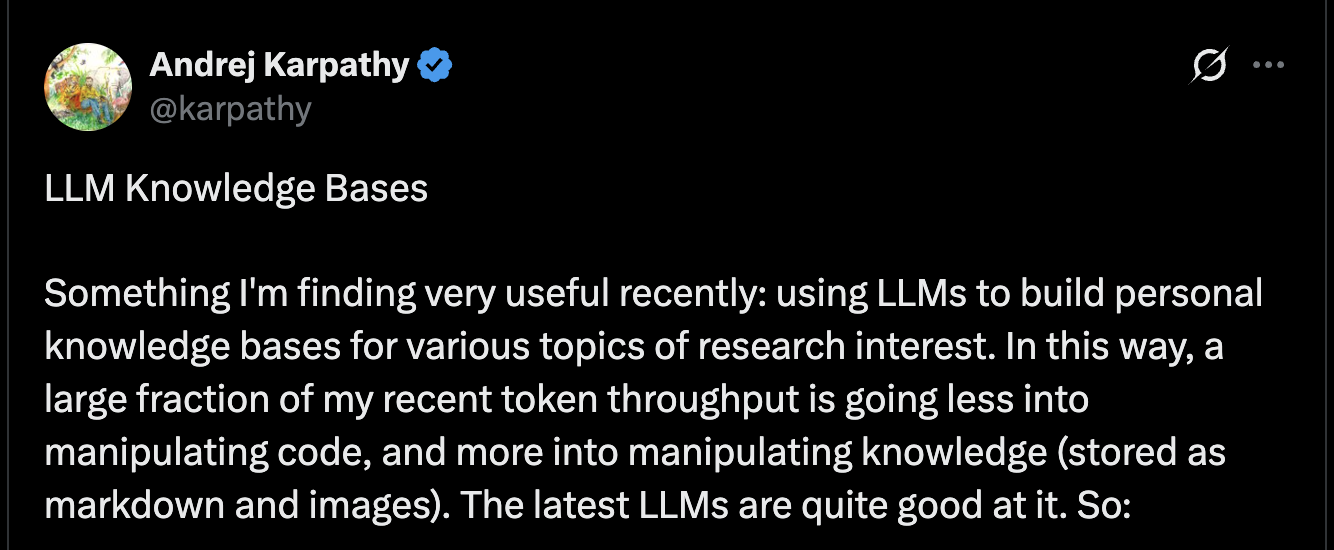
Wiki Memory

The Obsidian heads were right.
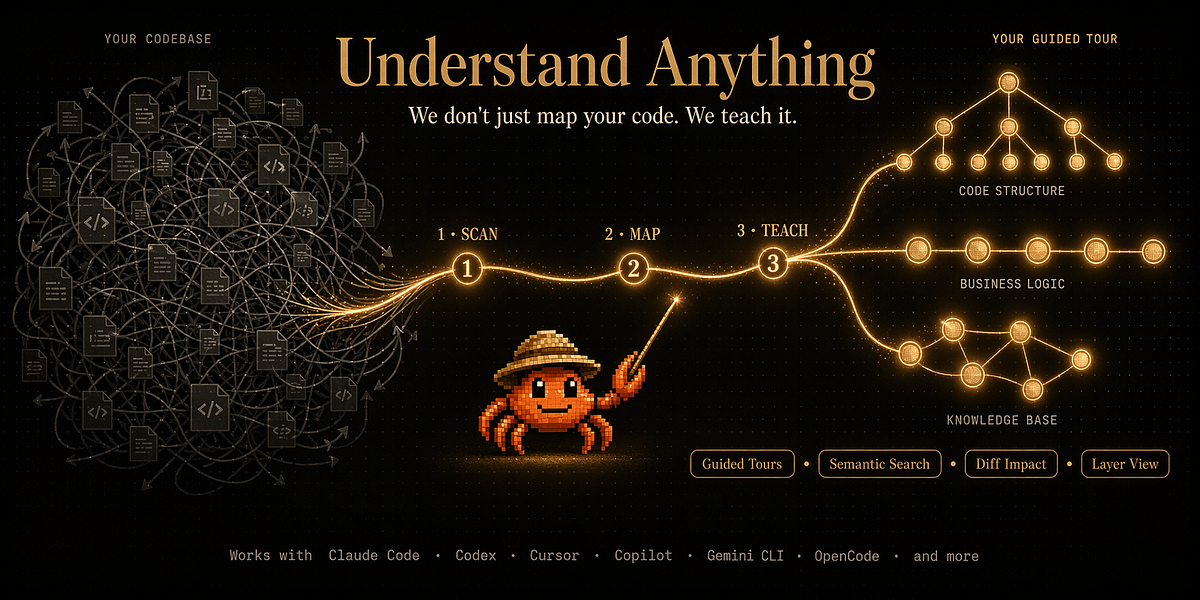
The Definitive Guide to Understand Anything: Turning Code and Knowledge Into Graphs That Teach
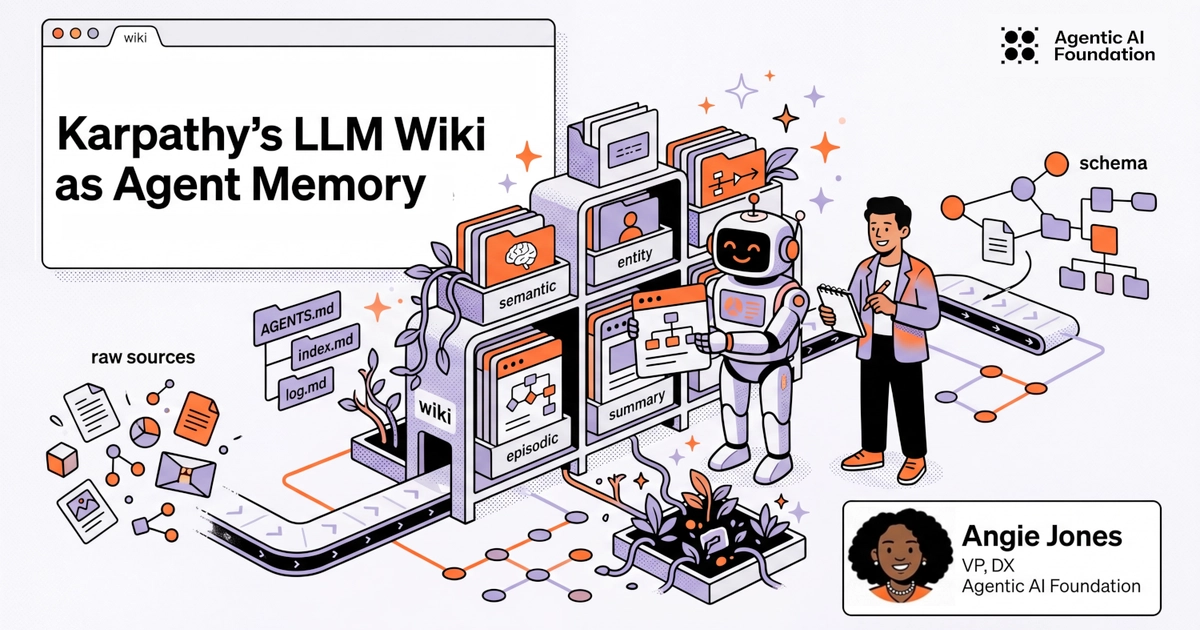
Karpathy's LLM Wiki as Agent Memory - Agentic AI Foundation (AAIF)
Humans are Missing from AI Coding Agent Research
ci.acm.org

Reinventing Discovery

Human learning is an understudied but promising lever for boosting human–AI synergy

AI for science needs reasoning, not just data
MOSAIC — Modular Open Science, AI & Collective Intelligence
