


Define 90+ terms in planetary science — from Anthropocene and tipping points to planetary boundaries and the ecosphere.
Planetary Sapience & Planetary Stupidity: a Bildungsroman for the Baby Noosphere | Antikythera
That is, the faculty of recollection and foresight? Until recently, I would argue, our planet was amnesiac. That is, no part of it was reflectively aware of the place of the present relative to the established past nor the expected future. But then peculiar animals emerged, capable—no matter how imperfectly—of cooperation, abstraction and invention. In the last blink of geologic time, through the collaboration of these animals with their increasingly cunning artifacts, this state of planetary amnesia has faltering begun being cured. That is, through our artifacts, our planet is becoming aware of its own unfolding biography. In our fallible attempts to model our world—alongside our growing legion of sensors—The Earth system has developed a way of recollecting its deepest past and tracking the changing complexities of its present so as to forecast its furthest future.

The Climate of History in a Planetary Age
For the past decade, historian Dipesh Chakrabarty has been one of the most influential scholars addressing the meaning of climate change. Climate change, he argues, upends long-standing ideas of history, modernity, and globalization. The burden of The Climate of History in a Planetary Age is to grapple with what this means and to confront humanities scholars with ideas they have been reluctant to reconsider—from the changed nature of human agency to a new acceptance of universals. Chakrabarty argues that we must see ourselves from two perspectives at once: the planetary and the global. This distinction is central to Chakrabarty’s work—the globe is a human-centric construction, while a planetary perspective intentionally decenters the human. Featuring wide-ranging excursions into historical and philosophical literatures, The Climate of History in a Planetary Age boldly considers how to frame the human condition in troubled times. As we open ourselves to the implications of the Anthropocene, few writers are as likely as Chakrabarty to shape our understanding of the best way forward.
Planetary carambolage: The evolutionary political economy of technology, nature and work
The following editorial introduces the special issue (SI) on “Work, Environment and Planetary-scale Computation in Political-Economic Evolution”. Here, however, we go beyond an outline of what each contribution to the SI addresses, and attempt to draw a more pronounced shared embedding of the arguments that have come to the fore. The original idea of this SI was to synthesize a range of contemporary global political-economic challenges, i.e. (1) technology (esp. digital transformation), (2) nature (esp. ecological crisis) and (3) work (esp. precarization via the evolving platform economy). The main argument developed in this editorial reflection focuses on the common ground and origin of those processes found in the complex evolution of capitalist development. We frame the latter by assigning it a new term, i.e. “planetary carambolage”.
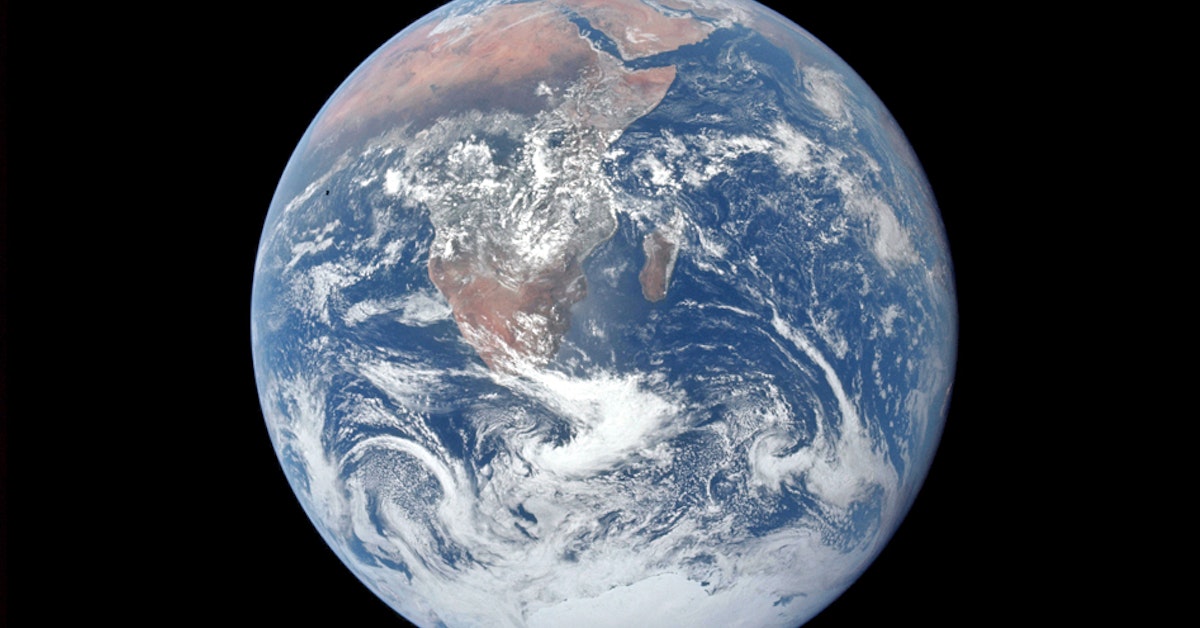
Solar System
The Solar System is the gravitationally bound system of the Sun and the masses that orbit it, most prominently its eight planets, of which Earth is one. The system formed about 4.6 billion years ago when a dense region of a molecular cloud collapsed, creating the Sun and a protoplanetary disc from which the orbiting bodies assembled.

The Origins Of <br>‘Planetary Realism’ And <br>‘Whole Earth’ Thinking | NOEMA
There is no escaping an interconnected world.
How May the ‘Anthropocene’ Enable and Constrain Cybersystemic Governance? The ‘Anthropocene Problematique’
A growing awareness of the need for cybernetics and systems thinking (cybersystemic) in praxes of governance to improve human-biosphere relationships in the Anthropocene has become apparent. Nonetheless, mainstream governance informed by linear-causality seems to perpetuate an increasingly inadequate paradigm of dominant first-order/systematic thinking in governing complex interactions between humans and their natural environments. This conundrum is explored through the second-order lens of a systemic inquiry, using an integrative literature review. We discuss limitations of the Anthropocene metaphor and make the case for a reframing of our situation (humans’ co-evolutionary dynamic with the biosphere) as the ‘Anthropocene problematique’. This reframing as a systemic-duality offers more conducive affordances for trajectory-shifting cybersystemic governance to emerge. Aligning with a body of literature evidencing the influence of language on human cognition, we argue that by joining up the strengths of both ideas, ‘Anthropocene problematique’ may form a conceptual device amenable to changing worldviews and guiding practical action in governing human-biosphere relationships. We suggest a conceptual framework for practitioners to design and enact purposeful systems of cybersystemic governance with potential to improve situated Anthropocene problematiques. This framing and theoretical proposal are motivated by a need for shifts towards a social purpose of healing human-biosphere relationships in current governance systems in the Anthropocene-world.

The shock of the anthropocene: the earth, history and us
Dissecting the new theoretical buzzword of the "Anthrop…

Incomputable Earth: Technology and the Anthropocene Hypothesis
This open access collection argues that climate breakdown represents an irreducibly incomputable problem that cannot be resolved through algorithmic optimization or cybernetic planetary management.

Beyond technofix: Thinking with Epimetheus in the anthropocene
The Prometheus myth has long now provided inspiration for those who envision solutions to environmental issues. Prometheus is the figure par excellence of human forethought and progress in the anthropocene. In this article, we introduce the concept of ambient Prometheanism to describe the way of thinking that foregrounds foresight and anticipation and advances technological solutions developed by capital and energy-intensive projects. We question this stance, arguing that ambient Prometheanism, with its emphasis on technofix, leads to the economisation and depoliticisation of planetary environmental issues. Following Bernard Stiegler, we recover from the myth the figure of Epimetheus, Prometheus’ brother, as well as his associated faculty, epimetheia to theorise what we call an ‘Epimethean politics’. Thinking the anthropocene from the perspective of ambient Prometheanism and Epimetheanism means to consider the role of technology in climate politics, and in particular to make the case for the importance of afterthought in face of unintended consequences and accumulated errors. To substantiate our argument, we outline the challenge posed by emerging solutions focussed on technological intensification (geoengineering) and socio-economic acceleration (green growth and accelerationism). An Epimethean politics of the climate requires to use reflexivity as a capacity to anticipate, but also to mobilise epimetheia to account for accidents and past mistakes. Such a politics builds from an alternative conception of technology, one that radically differs from ambient Prometheanism. Finally we read as actualisations of Epimethean politics contemporary eco-political struggles and their imperatives for multispecies living and convivial livelihoods.

Biosphere
The biosphere, also called the ecosphere, is the worldwide sum of all ecosystems. It can also be termed the zone of life on the Earth. The biosphere is virtually a closed system with regard to matter, with minimal inputs and outputs. Regarding energy, it is an open system, with photosynthesis capturing solar energy at a rate of around 100 terawatts. By the most general biophysiological definition, the biosphere is the global ecological system integrating all living beings and their relationships, including their interaction with the elements of the lithosphere, cryosphere, hydrosphere, and atmosphere. The biosphere is postulated to have evolved, beginning with a process of biopoiesis or biogenesis, at least some 3.5 billion years ago.

Assessing nature's contributions to people
Recognizing culture, and diverse sources of knowledge, can improve assessments , A major challenge today and into the future is to maintain or enhance beneficial contributions of nature to a good quality of life for all people. This is among the key motivations of the Intergovernmental Science-Policy Platform on Biodiversity and Ecosystem Services (IPBES), a joint global effort by governments, academia, and civil society to assess and promote knowledge of Earth's biodiversity and ecosystems and their contribution to human societies in order to inform policy formulation. One of the more recent key elements of the IPBES conceptual framework ( 1 ) is the notion of nature's contributions to people (NCP), which builds on the ecosystem service concept popularized by the Millennium Ecosystem Assessment (MA) ( 2 ). But as we detail below, NCP as defined and put into practice in IPBES differs from earlier work in several important ways. First, the NCP approach recognizes the central and pervasive role that culture plays in defining all links between people and nature. Second, use of NCP elevates, emphasizes, and operationalizes the role of indigenous and local knowledge in understanding nature's contribution to people.

Knowledge infrastructures for the Anthropocene
The technosphere metabolizes not only energy and materials, but information and knowledge as well. This article first examines the history of knowledge about large-scale, long-term, anthropogenic environmental change. In the 19th and 20th centuries, major systems were built for monitoring both the environment and human activity of all kinds, for modeling geophysical processes such as climate change, and for preserving and refining scientific memory, i.e. data about the planetary past. Despite many failures, these knowledge infrastructures also helped achieve notable successes such as the Limited Test Ban Treaty of 1963, the ozone depletion accords of the 1980s, and the Paris Agreement on climate change of 2015. The article’s second part proposes that knowledge infrastructures for the Anthropocene might not only monitor and model the technosphere’s metabolism of energy, materials and information, but also integrate those techniques with new accounting practices aimed at sustainability. Scientific examples include remarkable recent work on long-term socio-ecological research, and the assessment reports of the Intergovernmental Panel on Climate Change. In terms of practical knowledge, one key to effective accounting may be ‘recycling’ of the vast amounts of ‘waste’ data created by virtually all online systems today. Examples include dramatic environmental efficiency gains by Ikea and United Parcel Service, through improved logistics, self-provision of renewable energy, and feedback from close monitoring of delivery trucks. Blending social ‘data exhaust’ with physical and environmental information, an environmentally focused logistics might trim away excess energy and materials in production, find new ways to re-use or recycle waste, and generate new ideas for eliminating toxic byproducts, greenhouse gas emissions and other metabolites.

Knowledge infrastructures for the Anthropocene
The technosphere metabolizes not only energy and materials, but information and knowledge as well. This article first examines the history of knowledge about large-scale, long-term, anthropogenic environmental change. In the 19th and 20th centuries, major systems were built for monitoring both the environment and human activity of all kinds, for modeling geophysical processes such as climate change, and for preserving and refining scientific memory, i.e. data about the planetary past. Despite many failures, these knowledge infrastructures also helped achieve notable successes such as the Limited Test Ban Treaty of 1963, the ozone depletion accords of the 1980s, and the Paris Agreement on climate change of 2015. The article’s second part proposes that knowledge infrastructures for the Anthropocene might not only monitor and model the technosphere’s metabolism of energy, materials and information, but also integrate those techniques with new accounting practices aimed at sustainability. Scientific examples include remarkable recent work on long-term socio-ecological research, and the assessment reports of the Intergovernmental Panel on Climate Change. In terms of practical knowledge, one key to effective accounting may be ‘recycling’ of the vast amounts of ‘waste’ data created by virtually all online systems today. Examples include dramatic environmental efficiency gains by Ikea and United Parcel Service, through improved logistics, self-provision of renewable energy, and feedback from close monitoring of delivery trucks. Blending social ‘data exhaust’ with physical and environmental information, an environmentally focused logistics might trim away excess energy and materials in production, find new ways to re-use or recycle waste, and generate new ideas for eliminating toxic byproducts, greenhouse gas emissions and other metabolites.
A Billion Black Anthropocenes or None
Check out A Billion Black Anthropocenes or None - <p><b>Rewriting the “origin stories” of the Anthropocene</b><br /><br /> No geology is neutral, writes Kathryn Yusoff. Tracing the color line of the Anthropocene, <i>A Billion Black Anthropocenes or None</i> examines how the grammar of geology is foundational to establishing the extractive economies of subjective life and the earth under colonialism and slavery. Yusoff initiates a transdisciplinary conversation between feminist black theory, geography, and the earth sciences, addressing the politics of the Anthropocene within the context of race, materiality, deep time, and the afterlives of geology.<br /><br /> Forerunners is a thought-in-process series of breakthrough digital works. Written between fresh ideas and finished books, Forerunners draws on scholarly work initiated in notable blogs, social media, conference plenaries, journal articles, and the synergy of academic exchange. This is gray literature publishing: where intense thinking, change, and speculation take place in scholarship.</p> by Kathryn Yusoff on Bookshop.org UK!

We had the very first research lexicons call today, to discuss interop & standards for research applications! 🎉 (think @standard.site but for science 🧪) With @mariaa.bsky.social @wesleyfinck.org @aaronstevenwhite.io @byarielm.fyi @ronentk.me Reach out if you want to be part of these discussions!

