

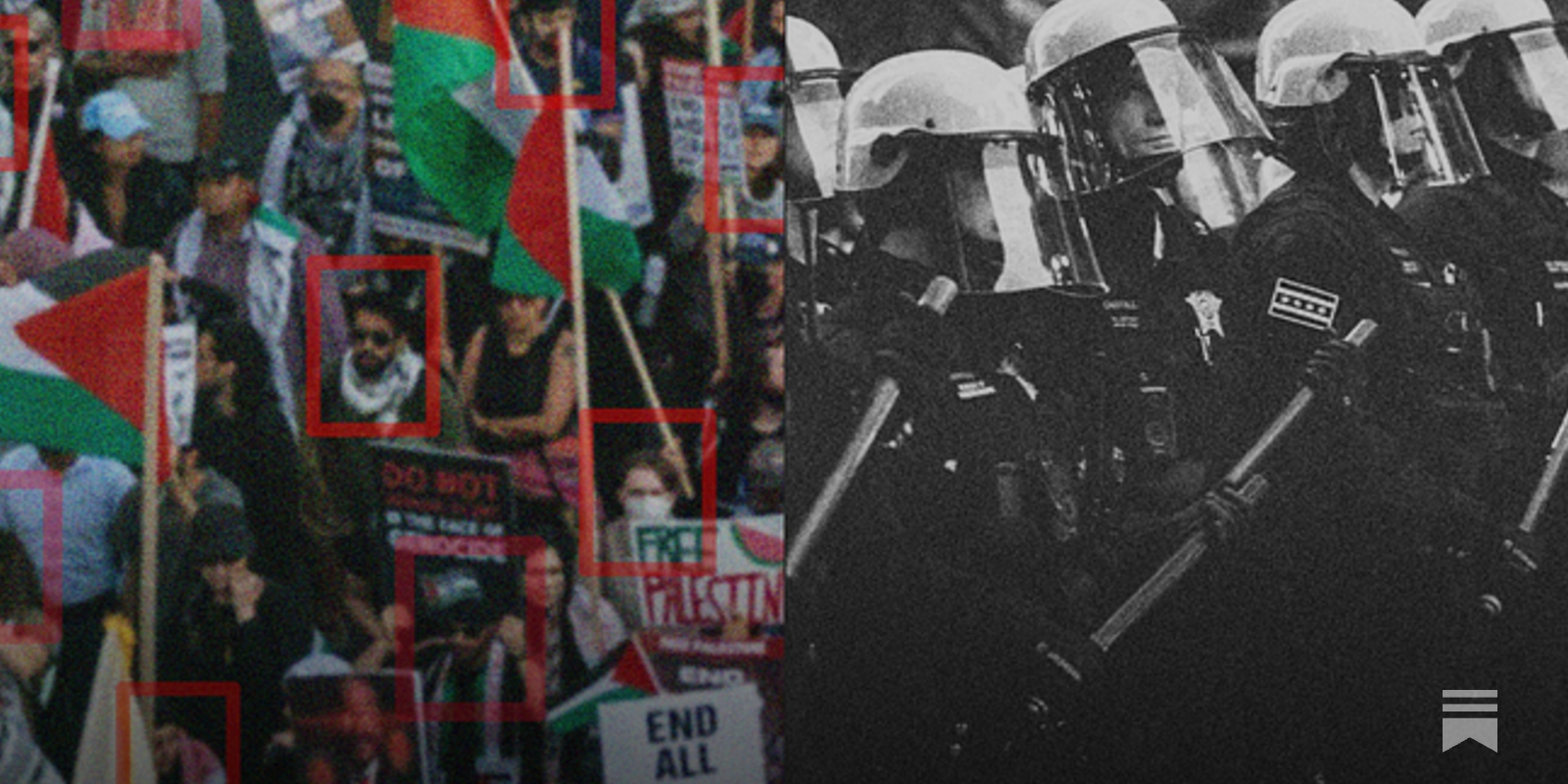
The US is a secret police state. Using special software, WIRED collected signals from nearly 300,000 devices, revealing vulnerabilities for both law enforcement and everyday citizens alike.
Why the U.S. is noticing this Canadian security bill | CBC News
A Liberal government bill that proposes giving police and spies easier access to information during investigations has fallen into the crosshairs of U.S. tech giants and two American congressional committees, threatening to become the latest irritant in the Canada-U.S. relationship.

Revealed: How undercover agents spied on anti-ICE protesters in Minnesota
DHS officers posed as concerned citizens, joining Signal groups and taking photos of community meetings

Privacy under attack: the NSA files revealed new threats to democracy
We now know the apparatus of repression has been attached to the democratic state, but our struggle for privacy is far from hopeless. By Eben Moglen
Search warrant for Signal user data, Santa Clara County
Here we are in the second half of 2021, Signal still knows nothing about you, but the government keeps asking.

The WIRED Guide to Protecting Yourself From Government Surveillance
Donald Trump has vowed to deport millions and jail his enemies. To carry out that agenda, his administration will exploit America’s digital surveillance machine. Here are some steps you can take to evade it.

Here’s how cops are using high-tech tools to monitor protesters
When Americans take to the streets to make their voices heard, they’re inevitably dragging their digital trails right along behind them.
The Lawful Access Two-Headed Surveillance Monster: How Bill C-22 Went Off the Rails - Michael Geist
The government’s plans for lawful access have gone off the rails. In recent days, Signal has warned it would pull out of the Canadian market rather than comply with Bill C-22. Windscribe, the Toronto-headquartered VPN provider, has said it would relocate its headquarters out of Canada and NordVPN has warned it would consider following suit. Apple and Meta have both raised public concerns about the bill’s effect on encryption and cybersecurity. The Canadian Chamber of Commerce, the Cybersecurity Advisors Network, civil liberties groups, and a long line of legal and security experts have all called for changes. The chairs of the U.S. House Judiciary and Foreign Affairs Committees have written to Public Safety Minister Gary Anandasangaree warning that the bill threatens U.S. national security and the integrity of cross-border data flows. Even the bill’s own oversight body, the National Security and Intelligence Review Agency, has told the SECU committee it does not have the access it needs for effective oversight. If the government thought it could push through the bill largely unnoticed, it has been proven painfully wrong as there are now trade frictions with the U.S., the prospect of leading companies exiting the Canadian market, and weaker cybersecurity protections for ordinary users. How did Canada’s lawful access plan go awry so quickly?

Japan police panel urges remote phone analysis to fight anonymous crime groups
TOKYO -- A Japan police advisory panel has proposed the early introduction of remote analysis of smartphones used by anonymous, fluid crime groups, de

Records Reveal How Homeland Security Agents Surveilled ICE Protesters
Spokane police documents show a DHS task force officer tracing protesters’ cars, identities, and whereabouts without alleging any wrongdoing.

Facebook snooped on users' Snapchat traffic in secret project, documents reveal | TechCrunch
A secret program called "Project Ghostbusters" saw Facebook devise a way to intercept and decrypt the encrypted network traffic of Snapchat users to study their behavior.

Chat Control & Going Dark: The war on encryption is on the rise. Through a shady collaboration between the US and the EU.
After Snowden’s whistleblowing in 2013, large parts of the internet became encrypted, enabling private and secure communication. Not everyone has welcomed this change. Most notably, the FBI and other U.S. government agencies have fought what is often called the “crypto wars”, the war on encryption. In recent years, they have been joined by the European Commission. Under the slogan “what about the children,” they try to introduce total mass surveillance of all EU citizens — first through the proposed Chat Control legislation, and later via the Going Dark and ProtectEU initiatives. The goal is to legally mandate spy tools on every European smartphone and computer. The forces behind these efforts have turned out to be American tech companies and intelligence agencies.
State Capacity of Secret Surveillance
The state capacity-civil society tradeoff model tends to treat the “state” and “civil society” as separate entities who move to constrain one another. However, this modeling technique leaves out the nuances of individual action within a collective setting by treating each as a relative black box. This article explores this balance in the context of the surveillance state that has arisen in the 20th and 21st century. As state capacity in surveillance increases it better allows the state to respond to threats to citizens from citizens. However, the increased capacity also lessens the ability of societal pressure to check authoritarian advances even in a nation with a thriving civil society presence.
State Capacity of Secret Surveillance
The state capacity-civil society tradeoff model tends to treat the “state” and “civil society” as separate entities who move to constrain one another. However, this modeling technique leaves out the nuances of individual action within a collective setting by treating each as a relative black box. This article explores this balance in the context of the surveillance state that has arisen in the 20th and 21st century. As state capacity in surveillance increases it better allows the state to respond to threats to citizens from citizens. However, the increased capacity also lessens the ability of societal pressure to check authoritarian advances even in a nation with a thriving civil society presence.
Your privacy is under attack from several terrifying new laws
“If privacy is outlawed, only outlaws will have privacy.” — Philip Zimmermann, creator of PGP Last week the United Kingdom passed a new bill that allows for “extreme surveillance.” This Investigatory Powers Bill — better known as the “snooper’s char...
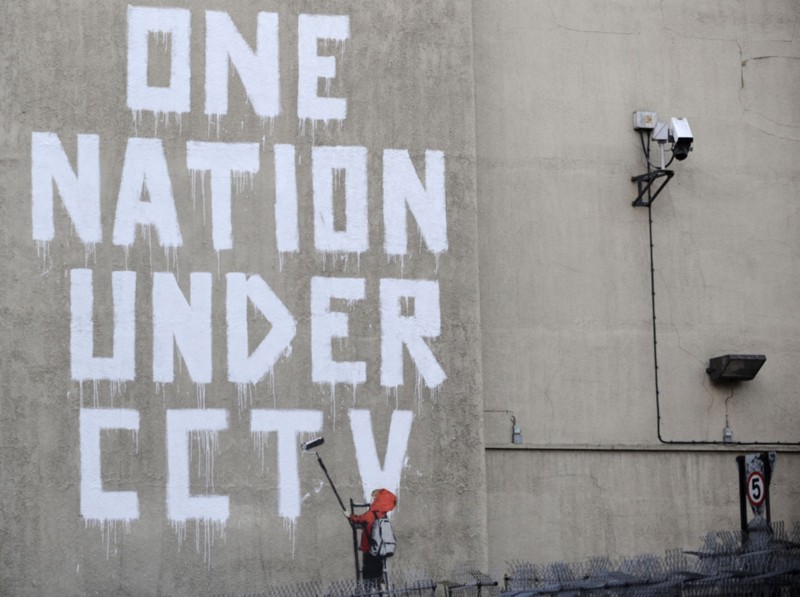
Surveillance Self-Defense
We’re the Electronic Frontier Foundation, a member-supported non-profit working to protect online privacy for over thirty-five years. This is Surveillance Self-Defense: our expert guide to protecting you and your friends from online spying. Read the BASICS to find out how online surveillance works. Dive into our TOOL GUIDES for instructions...
The Intercept Sues to Uncover Secretive Government Anti-Protestor Database
Department of Homeland Security Refuses to Comply with FOIA Requests Relating to Unlawful and Undemocratic First Amendment Stifling Effort
