


What Dawkins got almost right.
What is Intelligence? | Antikythera
AGIHound on Twitter / X
"Demis Hassabis says our brains are likely to be approximate Turing machines."Dear Lord. This Alan Turing worship never ends. It's a cult. 🤦♂️I research the visual system of the brain. I've come to understand that the most important principle of intelligence is the precise… https://t.co/isLnLqjFkw— AGIHound (@TrueAIHound) May 5, 2026
Complementary Intelligence
In the following, I will try sketch a way of thinking about human intelligence and human nature through emphasizing its difference from the...

The Octotypic Mind
Carcinization, Cognitive Prosthetics, and the Shape of Intelligence After AI
Without a theory of intelligence
The history of science — and of progress — is a series of benefits that are direct results of new tools.

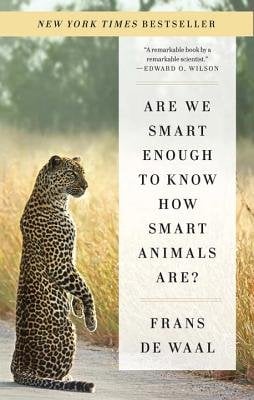
Are We Smart Enough to Know How Smart Animals Are?
Check out Are We Smart Enough to Know How Smart Animals Are? - Hailed as a classic, Are We Smart Enough to Know How Smart Animals Are? explores the oddities and complexities of animal cognition--in crows, dolphins, parrots, sheep, wasps, bats, chimpanzees, and bonobos--to reveal how smart animals really are, and how we've underestimated their abilities for too long. Did you know that octopuses use coconut shells as tools, that elephants classify humans by gender and language, and that there is a young male chimpanzee at Kyoto University whose flash memory puts that of humans to shame? Fascinating, entertaining, and deeply informed, de Waal's landmark work will convince you to rethink everything you thought you knew about animal--and human--intelligence. by Dr Frans de Waal on Bookshop.org US!
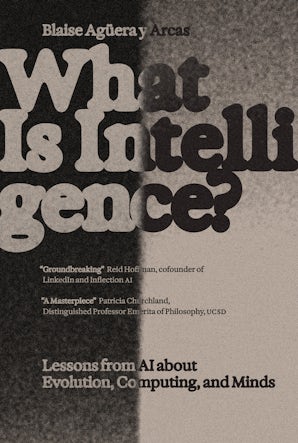
What Is Intelligence?
It has come as a shock to some AI researchers that a large neural net that predicts next words seems to produce a system with general intelligence. Yet this ...
You Can Increase Your Intelligence: 5 Ways to Maximize Your Cognitive Potential
Jon Barron on Twitter / X
This idea that intelligence is solely a function of what you've observed since birth and not also a function of the 500 million years of evolution that preceded your birth is surprisingly sticky despite being demonstrably untrue. https://t.co/m2z5cN8Byb— Jon Barron (@jon_barron) January 28, 2026
Sense-making reconsidered: large language models and the blind spot of embodied cognition
Large Language Models (LLMs) demonstrate a kind of linguistic competence that theories of embodied and enactive cognition have long deemed impossible for systems lacking the meaningful perspective of a living being, i.e., the capacity for sense-making. Facing up to this unexpected technological development requires confronting what I propose to call the “AI dilemma”: either frontier LLMs are capable of sense-making despite lacking biological embodiment, or the kind of linguistic competence they exhibit does not necessarily require sense-making. In their chapter on cognition, Frank, Thompson, and Gleiser (2024) maintain that no AI system comes close to realizing relevance, a position that derives much of its motivation from past practical failures. However, frontier LLMs have effectively overcome Dreyfus’ commonsense knowledge problem, such that their dismissal as categorically mindless risks undermining Frank et al.’s central claim that human cognition is deeply intertwined with lived experience. I therefore argue in favor of the alternative side of the AI dilemma: human-level linguistic competence of LLMs should be recognized as a novel non‑biological form of sense‑making, based on a technologically‑mediated embodiment whose enabling properties are in need of further theoretical analysis. This reorientation invites enactive theory to clarify which aspects of sense-making may be universal and which aspects are specifically contingent on organic life, thereby advancing its conceptual framework in dialogue with contemporary AI.
Are We Thinking Correctly About AI Intelligence? | Quanta Magazine
Computer scientist Melanie Mitchell discusses why artificial intelligence doesn’t “think” or “reason” like humans, and how we can create better methods for measuring machine cognition.
Commodity Intelligence
The seductiveness of “general intelligence” is rooted in a costly category error

A Definition of AGI
The lack of a concrete definition for Artificial General Intelligence (AGI) obscures the gap between today's specialized AI and human-level cognition. This paper introduces a quantifiable framework to address this, defining AGI as matching the cognitive versatility and proficiency of a well-educated adult. To operationalize this, we ground our methodology in Cattell-Horn-Carroll theory, the most empirically validated model of human cognition. The framework dissects general intelligence into ten core cognitive domains-including reasoning, memory, and perception-and adapts established human psychometric batteries to evaluate AI systems. Application of this framework reveals a highly "jagged" cognitive profile in contemporary models. While proficient in knowledge-intensive domains, current AI systems have critical deficits in foundational cognitive machinery, particularly long-term memory storage. The resulting AGI scores (e.g., GPT-4 at 27%, GPT-5 at 57%) concretely quantify both rapid progress and the substantial gap remaining before AGI.

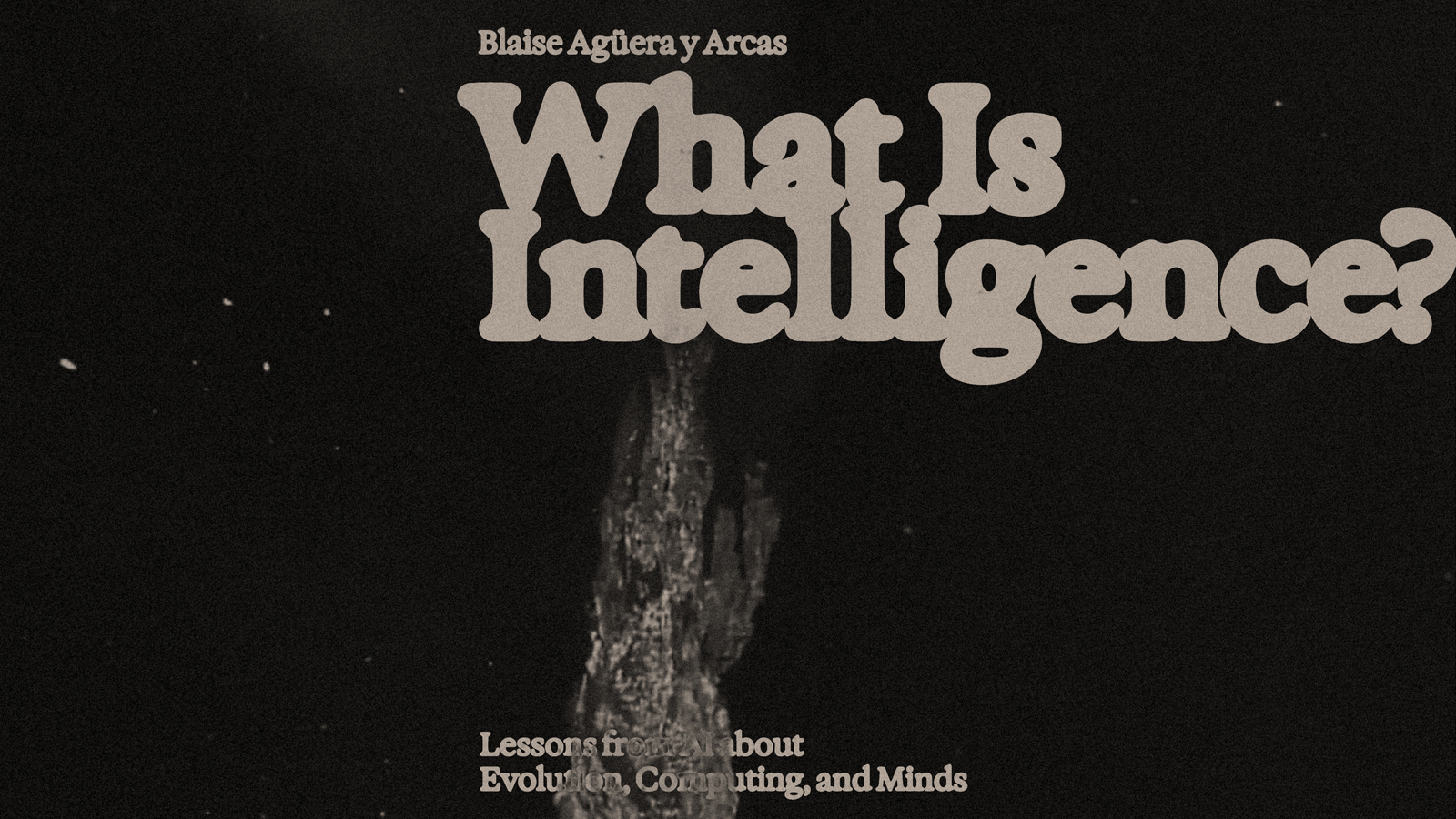
What Is Intelligence? Lessons from AI About Evolution, Computing, and Minds | Blaise Agüera y Arcas
How ‘Jagged Intelligence’ Can Reframe the A.I. Debate
A.I. has always been compared to human intelligence, but that may not be the right way to think about it. What it does well can help predict what jobs it may replace.
