Websites have evolved over the years, but in the name of evolution, there seems to be mistaken thinking that the process of building a website needs to get more complex, using Javascript frameworks and modern backend systems; when at the end of the day, browsers still only need static HTML content to interpret.
Supporting Embedded Content | Web Browser Engineering
While our browser can render complex styles, visual effects, and animations, all of those apply basically just to text. Yet web pages contain a variety of non-text embedded content, from images to other web pages. Support for embedded content has powerful implications for browser architecture, performance, security, and open information access, and has played a key role throughout the web’s history.
About HTML semantics and front-end architecture – Notes by Nicolas Gallagher
A critical look the term 'semantic HTML' and the limitations it has created for web engineers

The AI browser wars are about to begin
Artificial intelligence is already writing an obituary for the internet as we know it. So why is everyone building new web browsers?

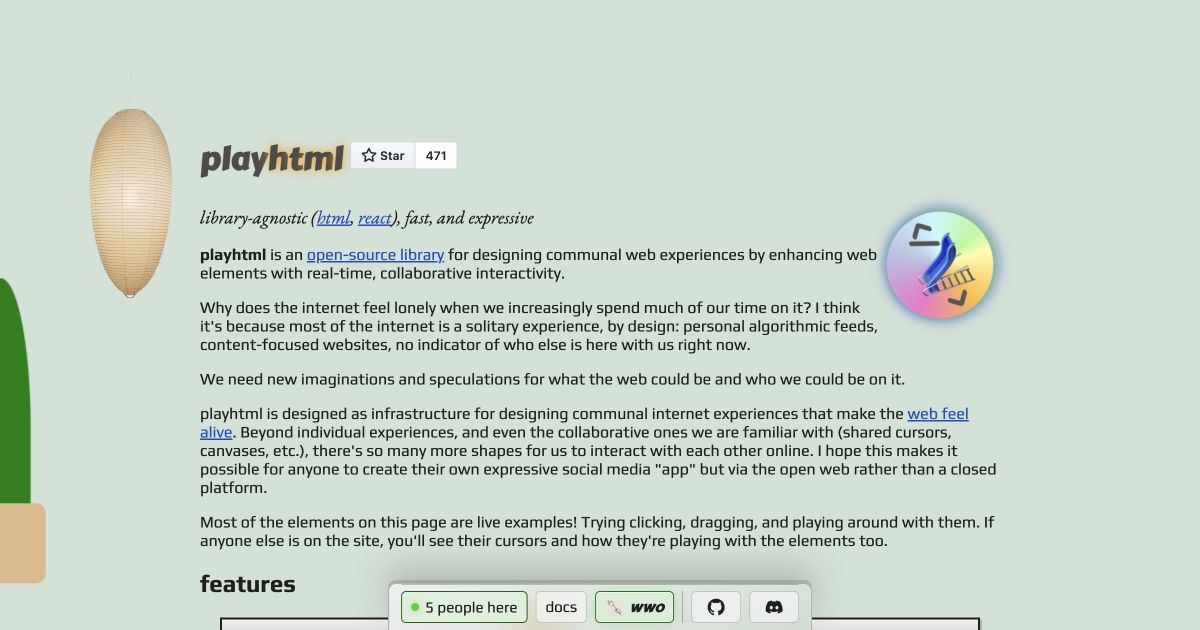
playhtml — make the web feel alive
Make the web feel alive with interactive, collaborative HTML elements and no backend to run.
Object-Oriented UX
We know big, monolithic webpages won’t meet the needs of responsive sites and endless screens. But we’re often still quilting together design patterns and content modules, rather than truly thinkin…

Constructing an HTML Tree | Web Browser Engineering
So far, our browser sees web pages as a stream of open tags, close tags, and text. But HTML is actually a tree, and though the tree structure hasn’t been important yet, it will be central to later features like CSS, JavaScript, and visual effects. So this chapter adds a proper HTML parser and converts the layout engine to use it.

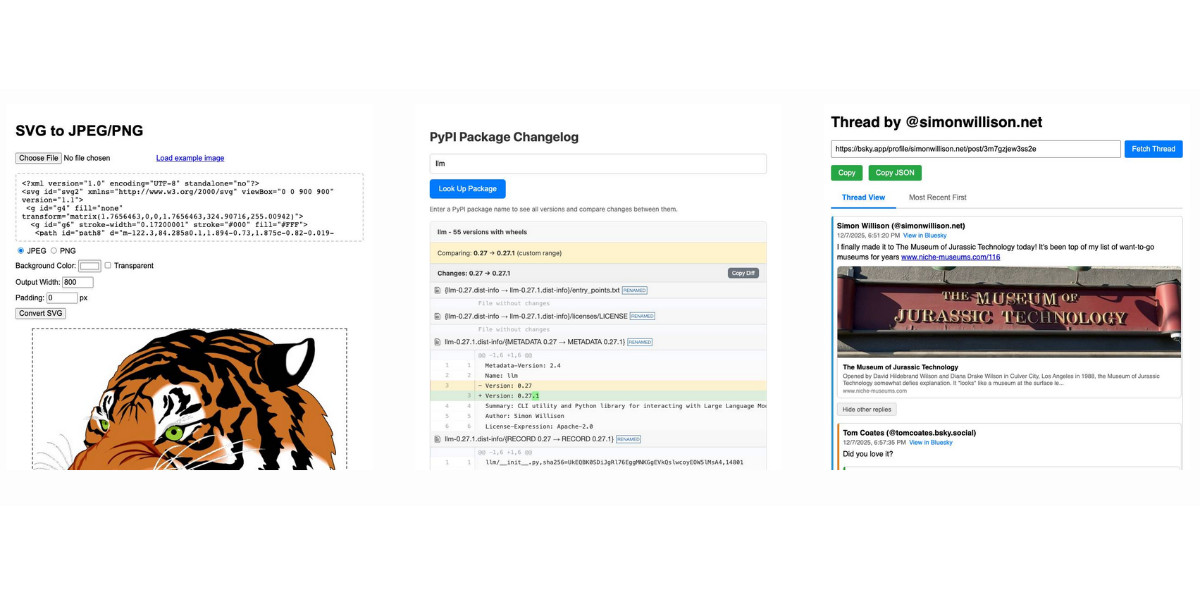
Useful patterns for building HTML tools
I’ve started using the term HTML tools to refer to HTML applications that I’ve been building which combine HTML, JavaScript, and CSS in a single file and use them to …
The Elephant in the Room: Web design work is drying up | Hacker News
- A "web designer" or "web developer" used to be a generalist who wrote HTML, CSS, and some jQuery. Now there's a demand for specialization: a UI/UX designer who can prototype, iterate quickly, and use real data if possible, and a UI/UX engineer who can develop large-scale apps with an eye towards security, performance, reusability, and maintainability.
Embedding The Web
We need to talk more The web is much more than browsers. What works great in browser development is missing in related spaces like embedding. Can we get together to collectively describe security and compatibility properties of user agents that are not browsers? Can we develop things that don’t ...

Making Content Accessible | Web Browser Engineering
So far, we’ve focused on making the browser an effective platform for developing web applications. But ultimately, the browser is a user agent. That means it should assist the user in whatever way it can to access and use web applications. Browsers therefore offer a range of accessibility features that take advantage of declarative UI and the flexibility of HTML and CSS to make it possible to interact with web pages by touch, keyboard, or voice.
Why build a new browser? From intuition to reality - Blog | Lightpanda
Three years ago when we started Lightpanda, we asked ourselves a seemingly simple question what would a browser look like if it were built specifically for automation?

Why Browsers Get Built - Infrequently Noted
There are only two-and-a-half reasons to build a browser, and they couldn't be more different in intent and outcome, even when they look superficially similar.

The Web Is For User Agency
We take the Web for granted as that thing that's there and we talk of things being good or bad for the Web, but we don't ever sit down and really say what the Web is for. I take a look at this question with an eye towards understanding what it is we need to do to build a Web that's actually better.