


Good News is your source for uplifting and positive stories from around the world! 🌍✨ Discover inspiring news that brings hope and optimism to your day.
We asked our climate reporters to highlight one idea for positive change. We got a chronicle of global transformation
There are countless initiatives around the world that can inspire people and spur them into action. Amid the devastation of the climate crisis, our journalists strive to highlight these stories of hope
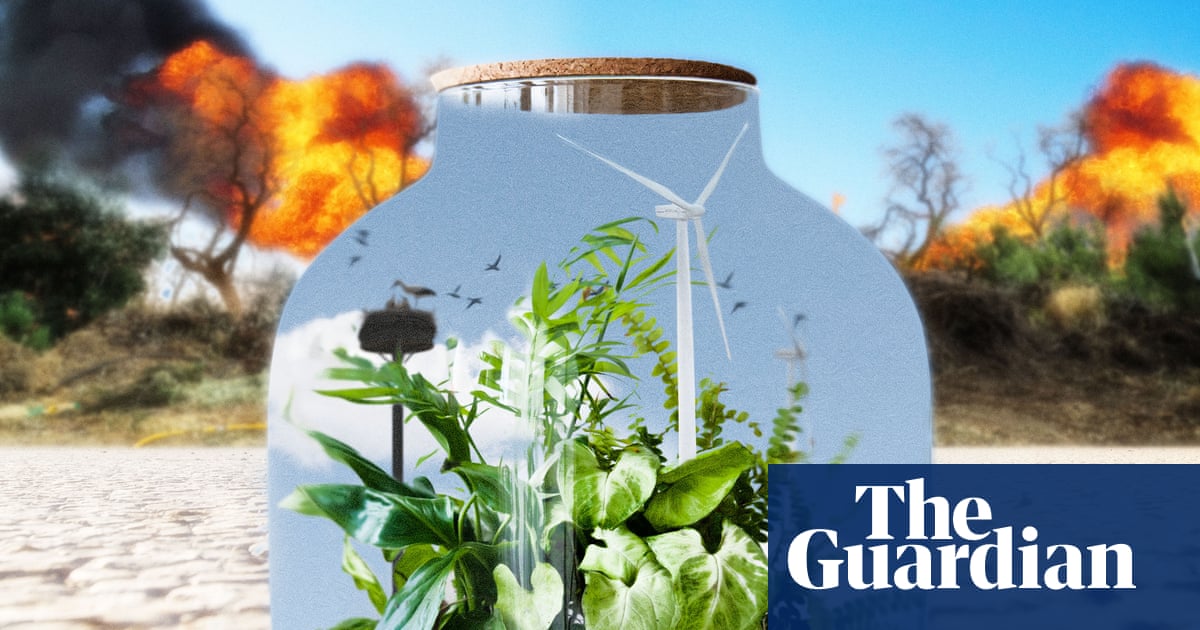
On technological optimism and technological pragmatism
"There are no guarantees that things are going to turn out very well for anyone.”

Ali Alkhatib: On techno-optimism
I’ve got a longer draft in the works, but I don’t think that’s going to become a blog post, so I figure it might be useful to publish something here and solicit feedback, or just plant a flag in the ground that this was a thing I did. Last week Several weeks ago I gave a talk at Wayne State University titled “the uncanny pessimism of techno-optimism”. In this post I’m going to breeze through some of the stuff I talked about and give a sense of what’ll be coming. Eventually.
Peace Arch News (@peacearchnews.bsky.social)
Your community news outlet for all things White Rock and South Surrey, chronicling life on the Semiahmoo Peninsula at www.peacearchnews.com

What’s the best technology that doesn’t exist yet?
We analyzed 100+ conversations and essays on positive futures to find out


Pika - Start Your Happy Blog
Pika is a pretty good blogging (and newsletter!) platform built by the good people at Good Enough.

Following news on social media boosts knowledge, belief accuracy and trust
Many worry that news on social media leaves people uninformed or even misinformed. Here we conducted a preregistered two-wave online field experiment in France and Germany (N = 3,395) to estimate the effect of following the news on Instagram and WhatsApp. Participants were asked to follow two accounts for 2 weeks and activate the notifications. In the treatment condition, the accounts were those of news organizations, while in the control condition they covered cooking, cinema or art. The treatment enhanced current affairs knowledge, participants’ ability to discern true from false news stories and awareness of true news stories, as well as trust in the news. The treatment had no significant effects on feelings of being informed, political efficacy, affective polarization and interest in news or politics. These results suggest that, while some forms of social media use are harmful, others are beneficial and can be leveraged to foster a well-informed society.

New app: Yesterday, an iPhone app for yesterday’s weather
Posted on Friday 28 Aug 2026. 519 words, 2 links. By Matt Webb.

NEWSWELL: When local news thrives, the whole story changes
NEWSWELL is an innovative nonprofit organization. Our mission is to transform local news to help communities and democracy thrive.
Newsmast Foundation - Social Community App
Bring your people and content together in a safer, calmer, independent space supported by an education charity.
Why older people are happier and what we can learn from them | Psyche Ideas
Around the world, happiness tends to peak later in life. It has more to do with balancing priorities than elderly wisdom

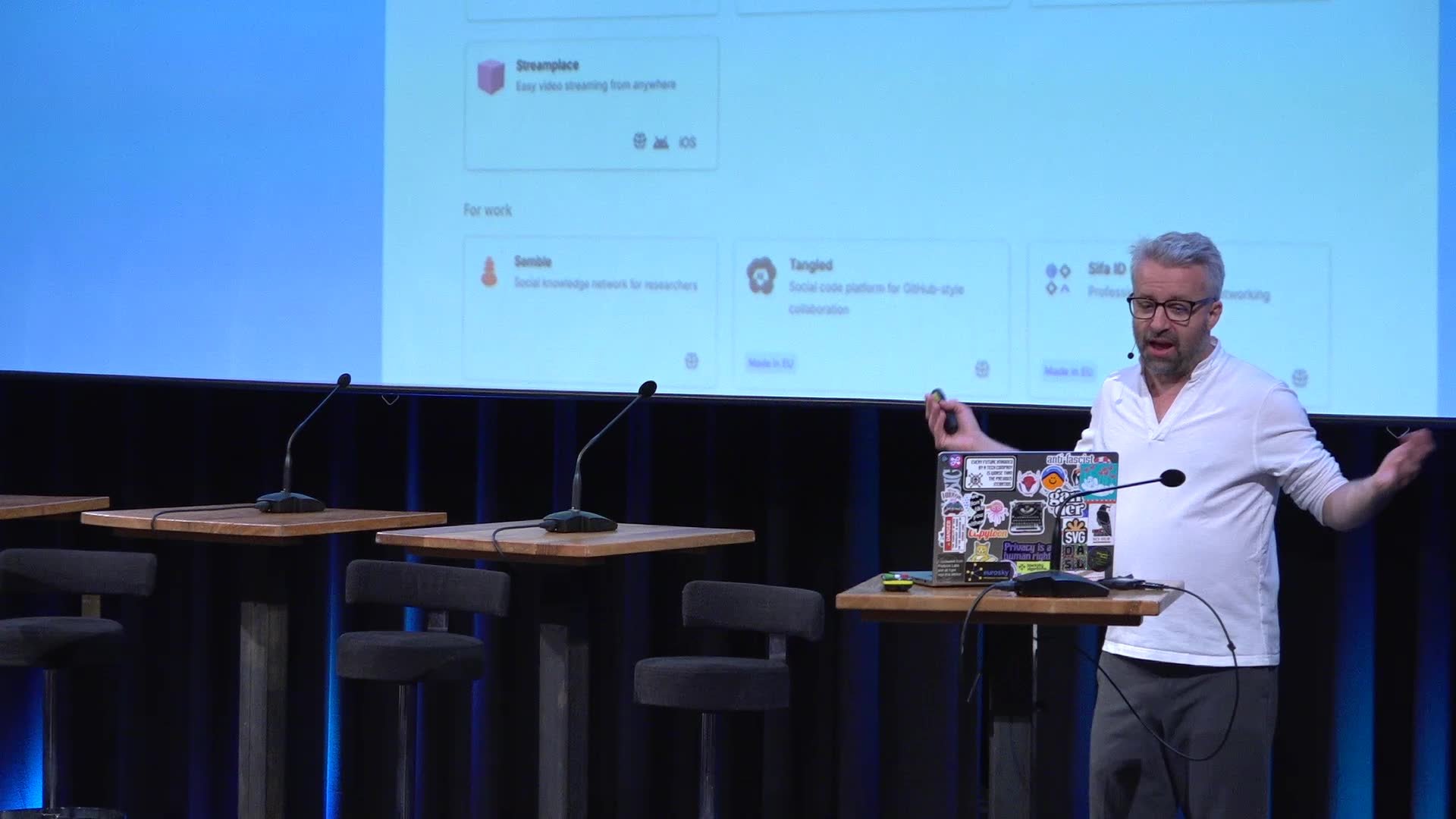
We Build On Hope @ PublicSpaces Conference 2026
Keynote by Robin Berjon The current state of tech can feel disheartening. Years of critical analysis and reform efforts have left us with a digital sphere that seems worse than ever. In Europe, our...
Positech@CSCW2026
People care about climate change, injustice, and humanitarian crises. The challenge is not apathy but capacity: sustained engagement with large-scale problems is psychologically costly, and social media architecture often amplifies awareness while providing few pathways to meaningful action.
From risk to flourishing: Seeds for responding to a complex world
Flourishing is the actualization of all beings toward their good -- not only individually but collectively, answering the question of `how do we live well with and for each other?'. In science as in society, the tendency to reduce, segregate, specialize, and settle has precluded embracing the concept of flourishing as a guiding principle. We aim to identify an approach to risk science research that promotes the flourishing of socio-ecological-technological systems (SETS). We discuss the normative role of an orientation toward flourishing for the field of risk science. We explore the possibility that (risk) science could be done in a way that is capable of pointing society toward a different future, one more resilient and more capable of flourishing. Our exploration mirrors the conversational nature of flourishing itself: examine ideologies traditionally believed to be rigidly in opposition and consider what emerges in the space(s) and conversation between them. We call this a dialectical approach. Within this paradigm grounded in conversation, pluralism, and pragmatism, we revisit three longstanding tensions in risk science: physical$|$social, determinism$|$uncertainty, contextuality$|$generality. Although these tensions are not new, revisiting them together through the lens of complexity science, and with explicit attention to the normative commitments that shape risk research, reveals underexplored possibilities for the field. Examining them in conversation with the other allows us to explore the provisional seeds for what might be termed complex risk science: interdependence, responsivity, participation, pluralism, openness, and ongoingness. Enacting the dialectical paradigm towards a risk science for a flourishing world will depend on creating collectives toward complex risk science, supporting them with skillfully governed commons, and centering care in our research.

I recently had the honour of speaking at @publicspaces.net — an amazing community — about what we can do and how we can hope. It's called "We Build On Hope" and the video is now online: video.publicspaces.net/w/e4FiBfh23Xp2MivCLws79W?star…

We Build On Hope @ PublicSpaces Conference 2026
video.publicspaces.net