


Here are some of the top areas we focused on in our fight against bad ads in 2015.
facebook-ads-we-burned-20k
We've also tried Facebook marketing. In this blog post we describe our successes and failures with the marketing channel Facebook.
Broken by Design - Ad Tech and What We Can Do About It
This is the first banner ad. Created for an AT&T advertising campaign in 1994 by Wired Magazine it is perhaps the most influential thing to ever happen to the internet. No single thing has done more to change, deform, alter, or make sustainable the web. When it launched, it had a 44% CTR - that’s...

Ads and Ad blockers
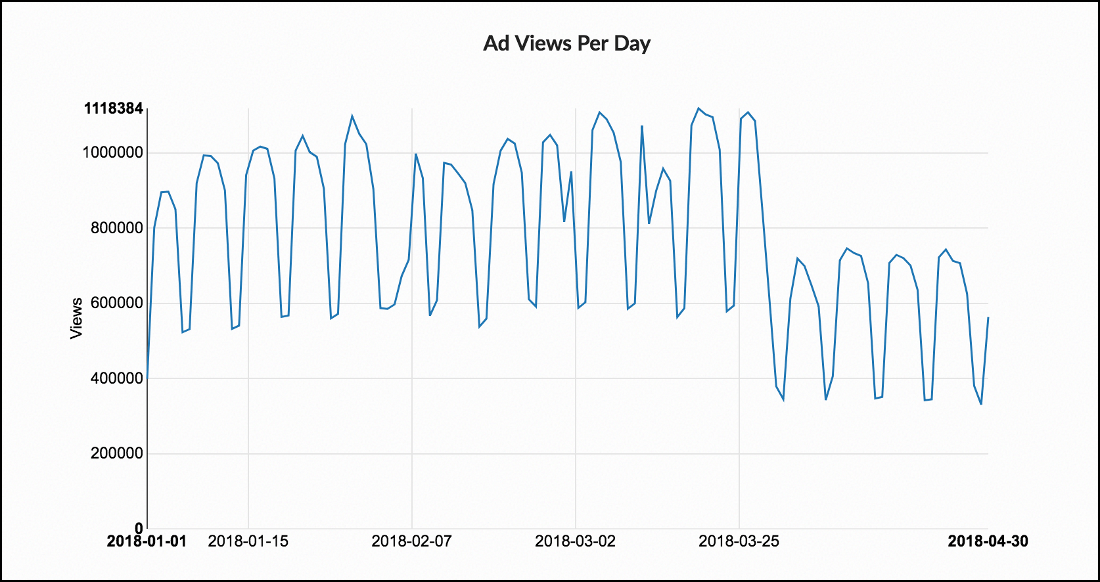
Last time, we shared how ethical advertising works to keep Read the Docs sustainable without creepy ad targeting. This time, we will share about one of our biggest challenges with advertising. At the beginning of April, Read the Docs was added to one of the most popular ad block lists: the Easyli...
Debunking the science of advertising
We delve into the world of advertising, worth hundreds of billions of dollars annually, to find out if it's really even that effective. A collection with 3 stories from The Correspondent.

Tracking Harris and Trump’s Ad Spending on Facebook and Instagram
Meta’s Ad Library is free to use, and provides useful insights into how politicians and their campaigns are advertising on social media platforms.

Meta Ran Ads That Contained AI-Generated Child Sexual Abuse Imagery
More than 50 offending image and video ads were published across Facebook, Instagram, Messenger, or Threads, according to Meta’s ad library data. Some ran as recently as this week.

Meta’s “Trusted Experts” helped me run scam ads on Facebook and Instagram
A Reuters reporter created ads promising unrealistic investment returns and easily placed them on Meta's social media platforms.

Why Stack Overflow Doesn’t Care About Ad Blockers - Stack Overflow
Hi! I’m Steve Feldman, Senior Ad Ops Manager at Stack Overflow. My whole life I’ve been fascinated by advertising. Even as a kid, I wondered what a company was trying to tell me by using one word instead of another in an ad. Over time, I developed a strong (read: subjective) opinion of what makes an ad ’good,’ and what makes an ad ’bad.’ It took me many years-- in fact, it wasn’t until joining the Ad Sales team at Stack Overflow-- to finally figure out that the common thread shared by the best ads is relevance. Maintaining that relevance is how we’ve managed to avoid one of the biggest issues facing publishers today: ad blocking.

Is the online advertising bubble finally starting to pop?
I started calling online advertising a bubble in 2008. I made “The Advertising Bubble” a chapter in The Intention Economy in 2012. I’ve been unpacking what I figure ought to be ob…

New Research: Is an Ad-Supported Internet Feasible in Emerging Markets? | The Mozilla Blog
Fresh research conducted by Caribou Digital and funded by Mozilla explores digital advertising models in the Global South — whether they can succeed, and

The $2.43 Billion Question: Podcast Advertising in 2024
An immersive data story exploring podcast advertising trends and the breaking point where ads drive audiences away.
Dare Obasanjo (@carnage4life@mas.to)
The decline of the advertising supported internet is inevitable yet sad. Tech has been unique in being an equalizer. A poor Nigerian kid, a techie in the US or Jeff Bezos all used the same apps and websites. Now many charge $5-$15 per month creating a huge financial divide. Online advertising is a progressive form of taxation as the rich, mostly US-based consumers who buy goods & services from ads subsidized the internet for everyone else. We now live in the flat tax version of the internet.
Governance of Ad Requests by a Union of Diverse Actors (GARUDA)
Governance for advertising on the Web

Can We Ever Know If Online Advertising Really Works?
In the summer of 2003, Viacom executive Mel Karmazin managed to sum up old media’s horror of the Internet with one of business lore’s greatest vulgar...

Variety Effects in Mobile Advertising
Mobile app users are often exposed to a sequence of short-lived marketing interventions (e.g., ads) within each usage session. This study examines how an increase in the variety of ads shown in a session affects a user's response to the next ad. The authors leverage the quasi-experimental variation in ad assignment in their data and propose an empirical framework that accounts for different types of confounding to isolate the effects of a unit increase in variety. Across a series of models, the authors consistently show that an increase in ad variety in a session results in a higher response rate to the next ad: holding all else fixed, a unit increase in variety of the prior sequence of ads can increase the click-through rate on the next ad by approximately 13%. The authors then explore the underlying mechanism and document empirical evidence for an attention-based account. The article offers important managerial implications by identifying a source of interdependence across ad exposures that is often ignored in the design of advertising auctions. Furthermore, the attention-based mechanism suggests that platforms can incorporate real-time attention measures to help advertisers with targeting dynamics.

The Truth About Social Media as an "Advertising Industry," Bluesky's Gamble, and "Reclaiming Conversation" - Nightflight