

If a system is to be stable, the number of states of its control mechanism must be greater than or equal to the number of states in the system being controlled.

Viability theory
Viability theory is an area of mathematics that studies the evolution of dynamical systems under constraints on the system state.[1][2] It was developed to formalize problems arising in the study of various natural and social phenomena, and has close ties to the theories of optimal control and set-valued analysis.
Variety (cybernetics)
In cybernetics, the term variety denotes the total number of distinguishable elements of a set, most often the set of states, inputs, or outputs of a finite-state machine or transformation, or the binary logarithm of the same quantity.[1] Variety is used in cybernetics as an information theory that is easily related to deterministic finite automata, and less formally as a conceptual tool for thinking about organization, regulation, and stability. It is an early theory of complexity in automata, complex systems,[1]: 6  and operations research.[2]
Requisite variety and its implications for the control of complex systems
Recent work on the fundamental processes of regulation in biology (Ashby, 1956) has shown the importance of a certain quantitative relation called the law of requisite variety. After this relation had been found, we appreciated that it was related to a theorem in a world far removed from the biological—that of Shannon on the quantity of noise or error that could be removed through a correction-channel (Shannon and Weaver, 1949; theorem 10). In this paper I propose to show the relationship between the two theorems, and to indicate something of their implications for regulation, in the cybernetic sense, when the system to be regulated is extremely complex. Since the law of requisite variety uses concepts more primitive than those used by entropy, I will start by giving an account of that law.
Theory of Constraints - The Decision Lab
The theory of constraints is a systems-based methodology that identifies and addresses the weakest link in a process or system.

ver.ooo
Curious about systems — how they behave, how they fail, and what they get up to when nobody is steering.

Dark mode toggles: two states are enough • Lea Verou
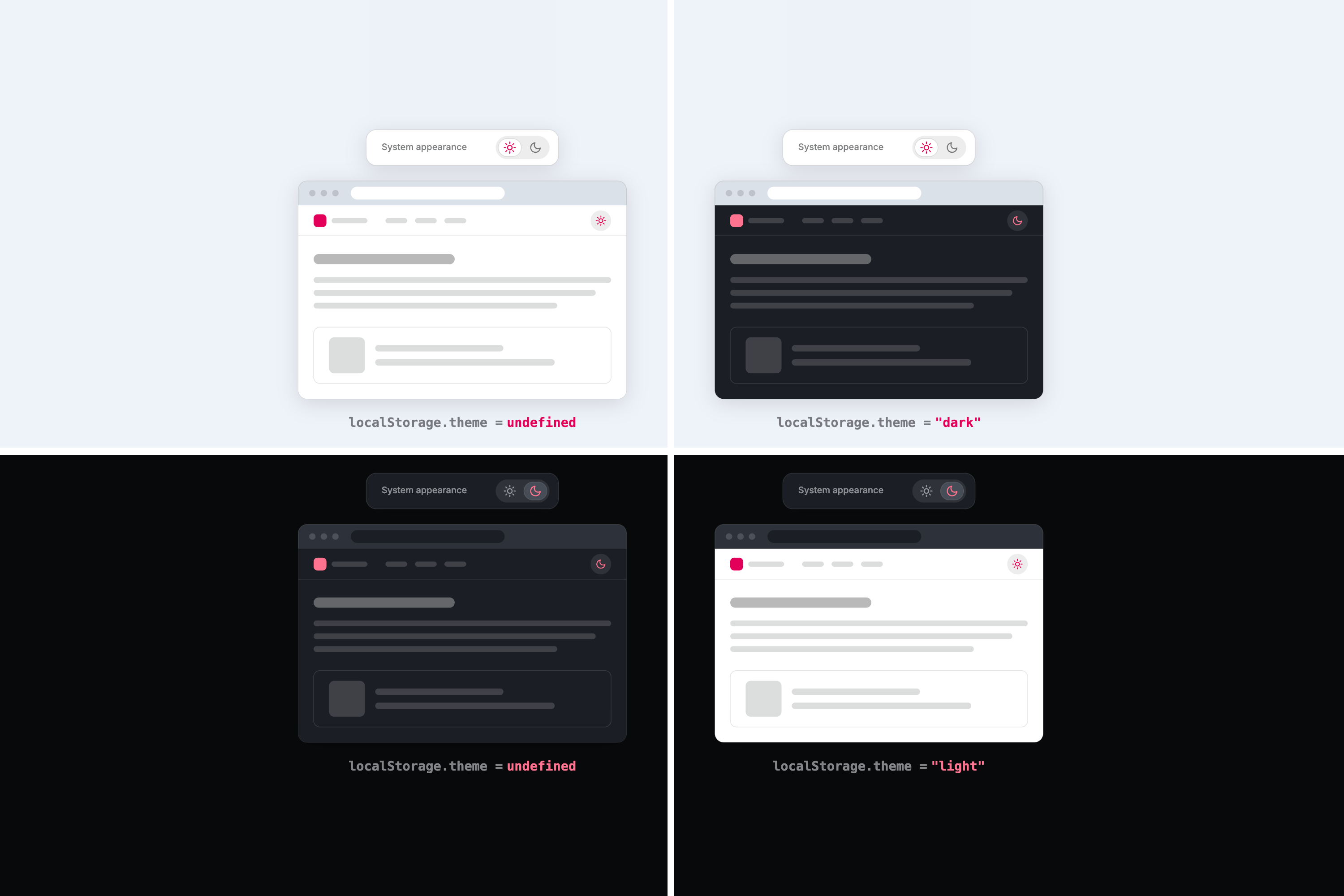
Yes, the underlying model must have three states, but one is always irrelevant to the actual user goal. Users do not seek out solutions to problems they don’t currently have. A lot of the hate towards two-state toggles is based on poor implementations.
Protocol: How Control Exists after Decentralization by …
How Control Exists after Decentralization by Galloway, …

On the Mechanism Institute (Ori Shimony) : Metagovernance Seminar
Ori Shimony presents his team's research and plans at the Mechanism Institute, which has a compiled a large library of mechanisms and is doing research on...

Knowing When to Stop: The Art of Making a Loop Converge | Andreessen Horowitz
The systems that matter will not be the ones that can keep going. They all can.

At least it's an ethos?
The limits of optimal control, from the maximalist and minimalist perspectives

Distributed Systems lecture series
Pace Layering: How Complex Systems Learn and Keep Learning · Journal of Design and Science
Pace layers provide many-leveled corrective, stabilizing feedback throughout the system. It is in the contradictions between these layers that civilization finds its surest health. I propose six significant levels of pace and size in a robust and adaptable civilization.


Dynamical Systems Group | Complex Systems, Engineered
Systems engineering firm that operationalizes emerging technology for high-reliability organizations. Scientific Computing, MBSE, Systems Integration.

Structured reasoning about actor systems | Proceedings of the 2013 workshop on Programming based on actors, agents, and decentralized control
Successfully attaining consensus in the absence of a centralized coordinator is a fundamental problem in distributed multi-agent systems. We analyze progress in the Synod consensus protocol—which does not assume a unique leader—under the ...
