

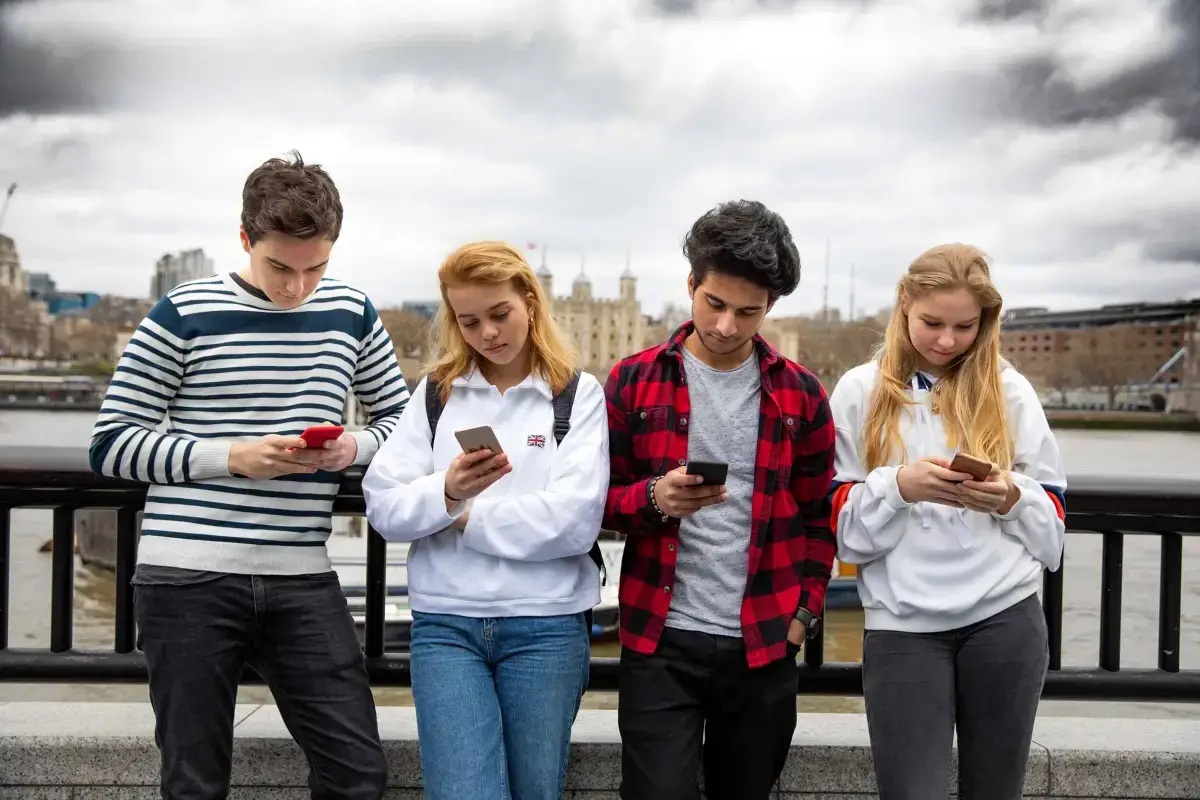
A new book argues that social media does more harm than good and we might be happier and healthier using it less.
People Across the Globe Increasingly Say Social Media Is Harming Democracy
Most think social media leads to manipulation and division, but they also say it informs people and gives them a voice in politics.
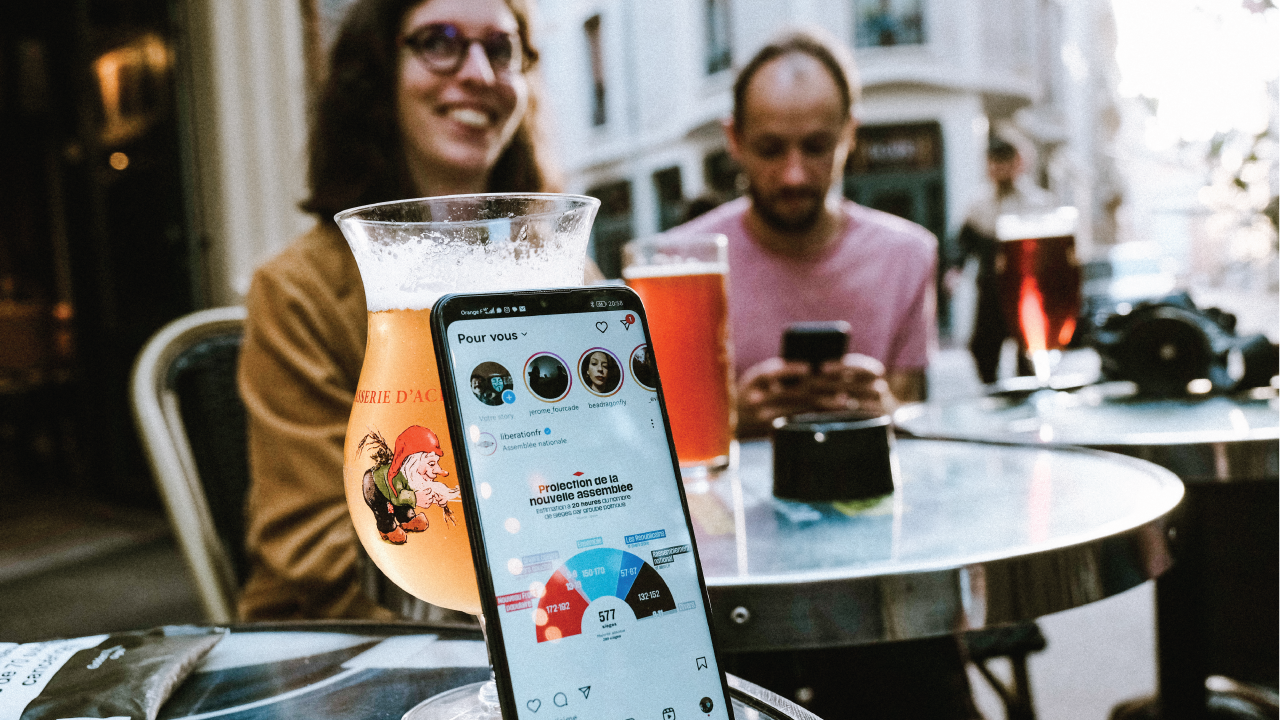
Measuring The Health of Our Public Conversations - Cortico
By Deb Roy, Eugene Yi, Russell Stevens Published: March 1, 2018 The Internet and social media have transformed modern society in many positive ways by connecting us to the world’s information, enabling social connections that transcend space and time, and giving everyone a voice. Within this transformation, social media have become an essential part of
Ten Myths About the Effect of Social Media Use on Well-Being
This viewpoint reviews the empirical evidence regarding the association between social media use and well-being, including life satisfaction and affective well-being, and the association between social media use and ill-being, including loneliness, anxiety, and depressive symptomology. To frame this discussion, this viewpoint will present 10 widely believed myths about social media, each drawn from popular discourse on the topic. In rebuttal, this viewpoint will offer a warranted claim supported by the research. The goal is to bring popular beliefs into dialogue with state-of-the-art quantitative social scientific evidence. It is the intention of this viewpoint to provide a more accurate and nuanced claim to challenge each myth. This viewpoint will bring attention to the importance of using rigorous scientific evidence to inform public debates about social media use and well-being, especially among adolescents and young adults.

Why Protecting Kids from Social Media May Make Things Worse — Douglas Rushkoff
I’m supposed to give a talk next week about kids and social media and the need for more media literacy education, more regulation of platforms, and more substantive discussion about how to keep our kids from media-induced self-harm. The whole event is well-meaning, but is characterized by a sense of worry and protection. And for some reason, after years of making those sorts of arguments in my articles and documentaries, I have a strong impulse to pivot the other way.
RIP social media. What comes next is messy.
As social media splinters, how can we keep the new online spaces from devolving into toxic pits of despair?
No Sense of Place: The Impact of Electronic Media on Social Behavior
Electronic media present us with a collage of experiences from everyplace. We eat dinner at home while watching starving children thousands of miles away reach out to us for food. From our easy chairs, we stare at blindfolded hostages, and coolly

The Nightmare of Eternal Spring: Why Social Media Can't Survive on "Niceness" Alone - Nightflight
Two tests of social displacement through social media use
The present manuscript presents two tests of the hypothesis that social media use decreases social interaction, leading to decreased well-being. Study 1 used the Longitudinal Study of American Yout...

Hard Questions: Is Spending Time on Social Media Bad for Us?
With people spending more time on social media, many rightly wonder whether that time is good for us. Do people connect in meaningful ways online? Or are they simply consuming trivial updates and polarizing memes at the expense of time with loved ones?
Estimating the association between Facebook adoption and well-being in 72 countries
Social media's potential effects on well-being have received considerable research interest, but much of past work is hampered by an exclusive focus on demographics in the Global North and inaccurate self-reports of social media engagement. We describe associations linking 72 countries' Facebook adoption to the well-being of 946 798 individuals from 2008 to 2019. We found no evidence suggesting that the global penetration of social media is associated with widespread psychological harm: Facebook adoption predicted life satisfaction and positive experiences positively, and negative experiences negatively, both between countries and within countries over time. Nevertheless, the observed associations were small and did not reach a conventional 97.5% one-sided credibility threshold in all cases. Facebook adoption predicted aspects of well-being more positively for younger individuals, but country-specific results were mixed. To move beyond studying aggregates and to better understand social media's roles in people's lives, and their potential causal effects, we need more transparent collaborative research between independent scientists and the technology industry.

Study: Social media probably can’t be fixed
The [structural] mechanism producing these problematic outcomes is really robust and hard to resolve."
Do social media threaten democracy?
Facebook, Google and Twitter were supposed to save politics as good information drove out prejudice and falsehood. Something has gone very wrong

The Interplay of Knowledge Overestimation, Social Media Use, and Populist Ideas: Cross-Sectional and Experimental Evidence From Germany and Taiwan - Niels G. Mede, Adrian Rauchfleisch, Julia Metag, Mike S. Schäfer, 2024
Social media expose users to an abundance of information about various issues. But they also make it difficult for users to assess the quality of this informati...

Social media is no longer social. Most of it is passive viewing of videos and pictures from people we've never met. But we're still studying social media like it's 2010. We've entered the post-social media era — and research needs to catch up. osf.io/preprints/socarxiv/6nue7_v1 preprint w/ Richard Rogers
Does social media harm everyone? No. But it harms *most* adolescents. However, not all platforms are harmful. An analysis of 44,211 diaries from 479 adolescents over 100 days finds that 60% of adolescents experienced small, negative effects of social media link.springer.com/article/10.1007/s12144-025-08…
Is social media truly making us more politically polarized, or does it simply over-represent our most extreme opinions? In our new preprint, @small-schulz.bsky.social and I present *punishing evidence* that social media systematically overrepresents users’ most extreme political opinions. 1/n


