

‘Quite simply the best historical dictionary of English slang there is, ever has been […] or is ever likely to be’ — Journal of English Language and Linguistics
Online Etymology Dictionary
The online etymology dictionary (etymonline) is the internet's go-to source for quick and reliable accounts of the origin and history of English words, phrases, and idioms.

In Defense of “Y’all,” a Perfect Word
A New York Times columnist says it’s “much too slangy, regional or what you might even call ethnic to ever gain universal acceptance.” We couldn’t disagree more.

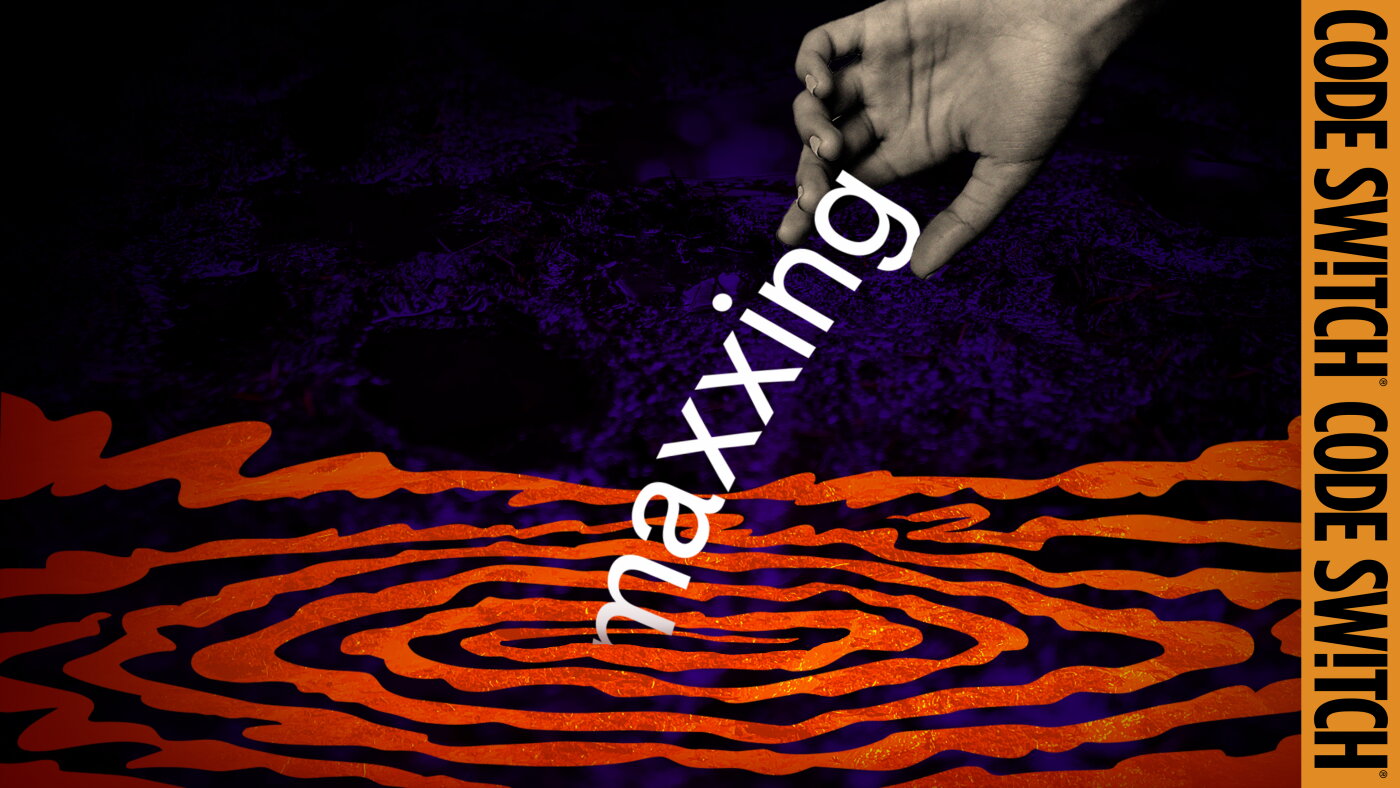
It's giving incel: The evolution of internet slang : Code Switch
How have recommendation algorithms affected language? Linguist Adam Aleksic — aka the Etymology Nerd — says most “Gen-Z slang” is either appropriated from Black people or incels. This week, we trace how -maxxing went from the eugenicist looksmaxxing subculture to trending TikToks to the Pentagon tweeting about “lethality maxxing.” And we ask what’s actually at stake when we use words without knowing where they come from.

Did we change the definition of 'literally'?
Literally every modern dictionary includes this definition

An AT Proto lexicon currently under consideration and development
An AT Proto lexicon currently under consideration and development · GitHub
The Grid: A Lecture on Cybotron and Techno-Vernacular Expressionism by DeForrest Brown, Jr.
Chimbridge Singlish Dictionary
Etymology, Definitions, Meaning, Usage, Synonyms, Antonyms, Origins, Languages, and more


What Language is This? Ask Your Tokenizer
Language Identification (LID) is an important component of many multilingual natural language processing pipelines, where it facilitates corpus curation, training data analysis, and cross-lingual evaluation of large language models. Despite near-perfect performance on high-resource languages, existing systems remain brittle in low-resource and closely related language settings. We introduce UniLID, a simple and efficient LID method based on the UnigramLM tokenization algorithm, leveraging its probabilistic framing, parameter estimation technique and inference strategy. In short, to predict a string's language label, we simply ask: under which language's unigram distribution is this string most likely? Our formulation is data- and compute-efficient, supports incremental addition of new languages without retraining existing models, and can naturally be integrated into existing language model tokenization pipelines. Empirical evaluations against widely used baselines, including fastText, GlotLID and CLD3, show that UniLID achieves competitive performance on standard benchmarks, substantially improves sample efficiency in low-resource settings -- reaching ~70% accuracy with as few as five labeled samples per language -- and delivers large gains on fine-grained dialect identification.

The Wikipedia Revolution: How a Bunch of Nobodies Creat…
"Imagine a world in which every single person on the pl…

Th relationship between domains and lexicons seems like a short-term win, but it remains unclear for me if it’s good in the long-term.

atproto.brussels 🇧🇪
Loosely related question I have about lexicons being tied to a domain. Domains are not free. So, say your lexicon becomes the industry standard and thousands use it across many apps. It seems fragile to me that the domain belongs to an individual and not a public entity. Is there a solution to that?
