The global standard for calculating and reducing the carbon emissions of your software. ISO/IEC 21031:2024.
The Green Side of the Lua
The United Nations' 2030 Agenda for Sustainable Development highlights the importance of energy-efficient software to reduce the global carbon footprint. Programming languages and execution models...

Evaluating Sustainable Digitalization: A Carbon-Aware Framework for Enhancing Eco-Friendly Business Process Reengineering
In an era where sustainability is paramount, understanding the environmental impact of digitalizing business processes is critical. Despite the growing emphasis on sustainable practices, there is a lack of comprehensive methodologies to evaluate how digitalization impacts environmental sustainability compared to traditional processes. This paper introduces a carbon-aware methodological framework specifically designed to assess the sustainability of business process reengineering through digitalization. The Digital Green framework quantitatively analyzes the environmental costs associated with digital transformation, ensuring that truly sustainable digitalization results in lower resource consumption relative to the complexity of the process being digitalized. To demonstrate its effectiveness, the framework was applied to a case study involving the reengineering of an administrative process at a small university in southern Italy. The case study highlighted the framework’s ability to quantify the environmental benefits or detriments of digital transformation, thus guiding organizations toward more sustainable digital practices. This research contributes to the field by offering a concrete tool for aligning digitalization efforts with ecological sustainability, and by paving the way for integration with initiatives such as the Green Software Foundation’s Software Carbon Intensity (SCI) specifications.
Greenhouse Gas Equivalencies Calculator | US EPA
A calculator that allows users to translate abstract greenhouse gas amounts into concrete terms that are easy to understand.

Carbon
Carbon is the easiest way to create and share beautiful images of your source code.
Carbon Removal Technologies | YC Request for Startups
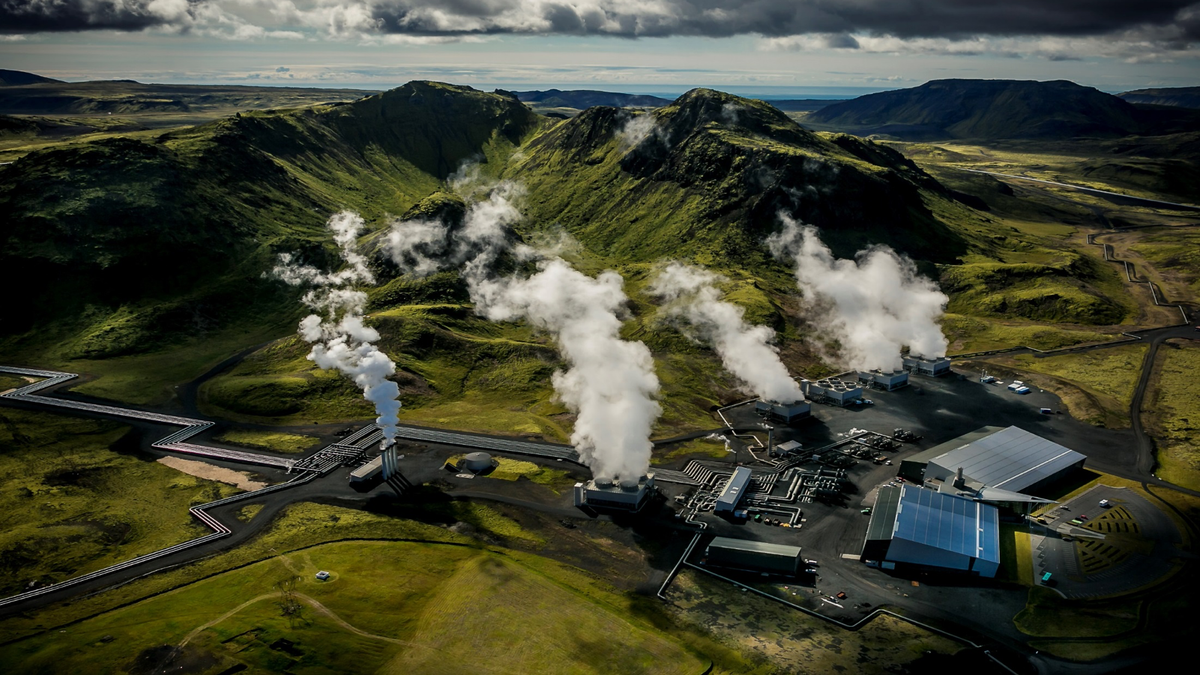
Climate change presents an existential threat to humanity. We are already seeing the effects and they are showing up faster and stronger than anticipated. A report by United Nations' scientific panel on climate change released this month expects the atmosphere-on our current trajectory-to warm up by 1.5 degrees Celsius by 2040. Even the effects of a 0.5 degrees increase will have far-reaching consequences. This research indicates that we are already past the tipping point; even if we significantly reduced emissions, climate change would continue (Source IPCC summary C3 section). We believe there's still time to make a change if we look both to renewal energy and CO2 removal.

Best Green Code Tools July 2025 (Mainly Python)
Optimising your code and product has been around since the beginning of time. Devs tend to optimise the code to use fewer resources and…

Quantifying the Carbon Emissions of Machine Learning
From an environmental standpoint, there are a few crucial aspects of training a neural network that have a major impact on the quantity of carbon that it emits. These factors include: the location of the server used for training and the energy grid that it uses, the length of the training procedure, and even the make and model of hardware on which the training takes place. In order to approximate these emissions, we present our Machine Learning Emissions Calculator, a tool for our community to better understand the environmental impact of training ML models. We accompany this tool with an explanation of the factors cited above, as well as concrete actions that individual practitioners and organizations can take to mitigate their carbon emissions.
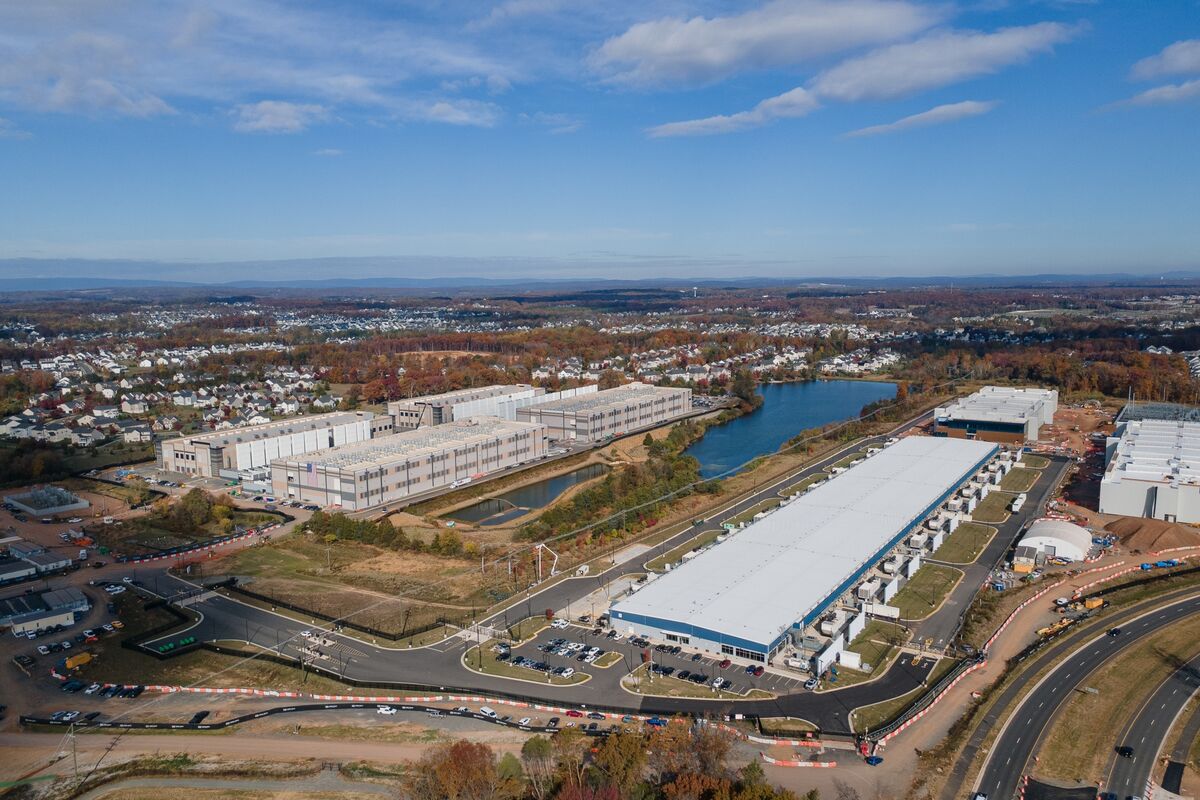
New US Data Centers Projected to Emit More Carbon Than All of Mexico
The boom is set to produce enough greenhouse gases to cancel out 15 years of declines in power-sector emissions, according to a Sierra Club analysis.
How to SNIFF out Good Scientific Software
New PLOS Computational Biology paper: "Ten Quick Tips to SNIFF Out Sustainable and Secure Scientific Software"
Sasha Luccioni, PhD 🦋🌎✨🤗 on Twitter / X
Man, this preprint is really the gift that keeps on giving.In case people missed my previous PSA : you can't compare the carbon emissions of people and objects. Humans are more than just the work that they do. (Also, that paper makes a lot of false assumptions in general) https://t.co/bZA414J9YI— Sasha Luccioni, PhD 🦋🌎✨🤗 (@SashaMTL) September 19, 2023
Assessing the carbon emissions and energy consumption of US hyperscale data centres
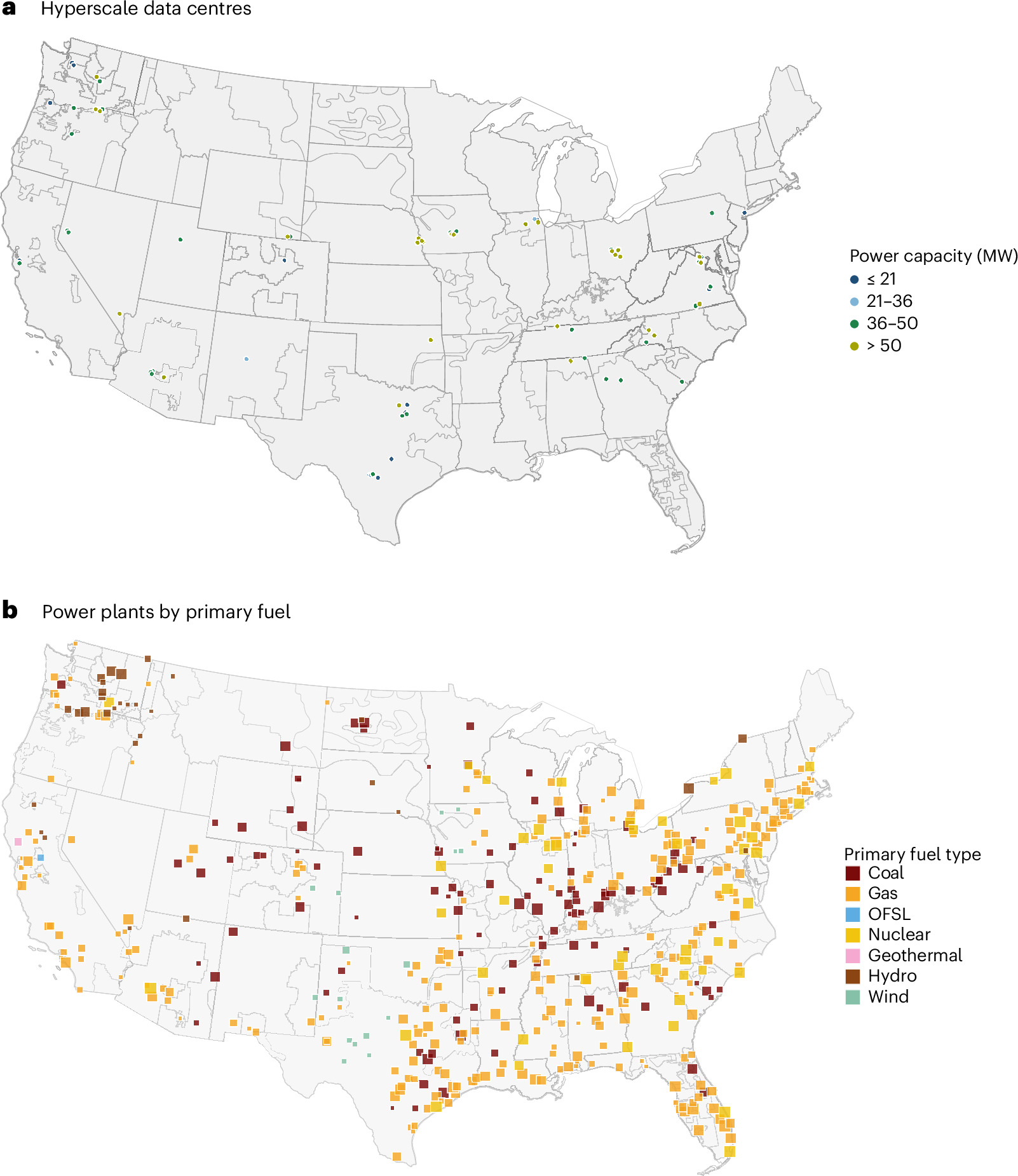
The rapid proliferation of hyperscale data centres (HDCs) in the USA—mainly driven by the adoption of artificial intelligence—has raised concerns about this industry’s carbon footprint. We compiled facility-level information on 403 US hyperscale data centres operating between May 2024 and April 2025 and estimated their electricity consumption, electricity sources and attributable CO2 emissions. Across facility-load scenarios, these HDCs consumed approximately 68–99 TWh of electricity and were associated with approximately 21–31 million metric tons of CO2 under a location-based, total-output balancing-authority attribution method. Under the central scenario, HDC electricity demand was approximately 82 TWh, corresponding to about 1.8% of total US electricity consumption, and attributable CO2 emissions were approximately 25.7 Mt. Roughly 54% of attributed generation was supplied by fossil-fuel sources. The HDC electricity-weighted total-output carbon intensity was approximately 314 gCO2 kWh−1, compared with a US total-output average of approximately 348 gCO2 kWh−1. Our approach provides a facility-resolved attributional framework for assessing the carbon footprint of hyperscale data centres using plant-level electricity-generation and emissions data.
Linking the world's research to the code it runs on - OpenAlex blog
Research relies on software. Software written by scientists, for science, runs through the entire modern research stack: NumPy and SciPy, R and ggplot2, Jupyter, BLAST, ImageJ, AlphaFold. Yet in the scholarly record, that software is nearly invisible. Software is not usually cited formally in publications and is usually just mentioned in the text, which means […]

Radial — Science needs a new operating system.
We design, fund, and operate high-impact programs that prototype a new model for how science is done, shared, and scaled for real-world utility.
Green Software Foundation — Building a Sustainable Digital Future
The Green Software Foundation is a non-profit creating a trusted ecosystem of people, standards, tooling, and best practices for building green software.
The Climate Solution Actually Adding Millions of Tons of CO2 Into the Atmosphere — ProPublica
New research shows that California’s climate policy created up to 39 million carbon credits that aren’t achieving real carbon savings. But companies can buy these forest offsets to justify polluting more anyway.