

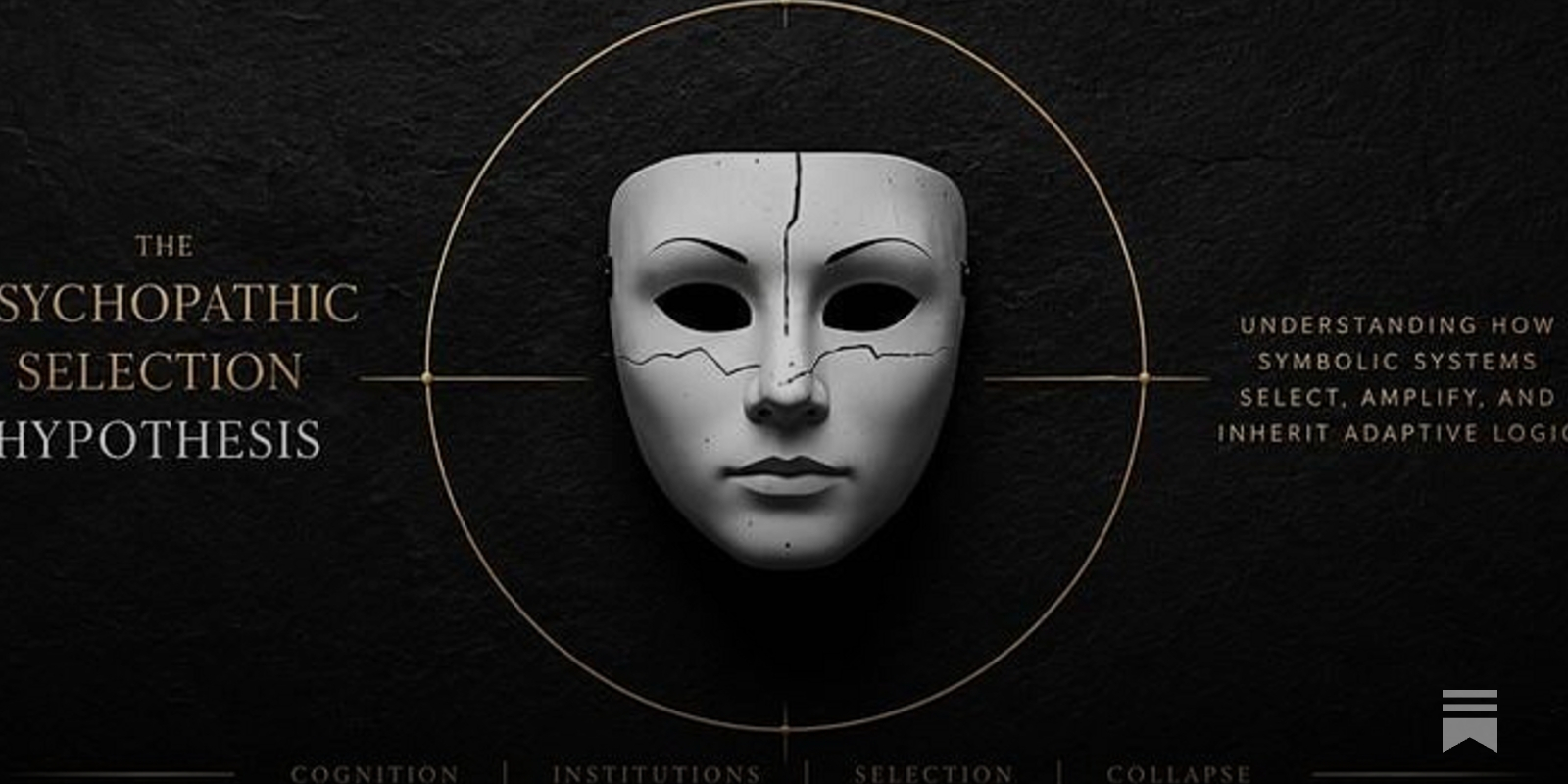
How human created symbolic systems alter the adaptive environment, select among behavioural strategies, generate institutional games, and reshape the evolutionary conditions inherited by future actors
The Psychopathic Selection Hypothesis: The Rules of the Game Keep Us Trapped - The Great Simplification
In this episode, Nate is joined by Greg Elliott, a systems theorist and author of the Psychopathic Selection Hypothesis (PSH), to unpack why our institutions themselves have become so psychopathic, and how that affects the behavior of the average human.

The hidden ‘rules of the game’ that dictate how we navigate the world | Psyche Videos
How free are we really, if human behaviour embodies the complex, intertwined webs of society and history?

Handbook of Evolutionary Psychology
‘This Handbook is refreshingly different. While including requisite chapters on subfields within evolutionary psychology, it also includes chapters on evolutionary psychology’s influence on other disciplines (e.g., Anthropology, Criminology), and retrospectives on six foundational studies. And perhaps most innovative, chapters are written by an international collection of up-and-coming scholars who give their take on the current and future state of evolutionary psychology.’ – David F. Bjorklund, Florida Atlantic University, USA

Learning how to behave: cognitive learning processes account for asymmetries in adaptation to social norms
Changes to social settings caused by migration, cultural change or pandemics force us to adapt to new social norms. Social norms provide groups of individuals with behavioural prescriptions and therefore can be inferred by observing their behaviour. This work aims to examine how cognitive learning processes affect adaptation and learning of new social norms. Using a multiplayer game, I found that participants initially complied with various social norms exhibited by the behaviour of bot-players. After gaining experience with one norm, adaptation to a new norm was observed in all cases but one, where an active-harm norm was resistant to adaptation. Using computational learning models, I found that active behaviours were learned faster than omissions, and harmful behaviours were more readily attributed to all group members than beneficial behaviours. These results provide a cognitive foundation for learning and adaptation to descriptive norms and can inform future investigations of group-level learning and cross-cultural adaptation.

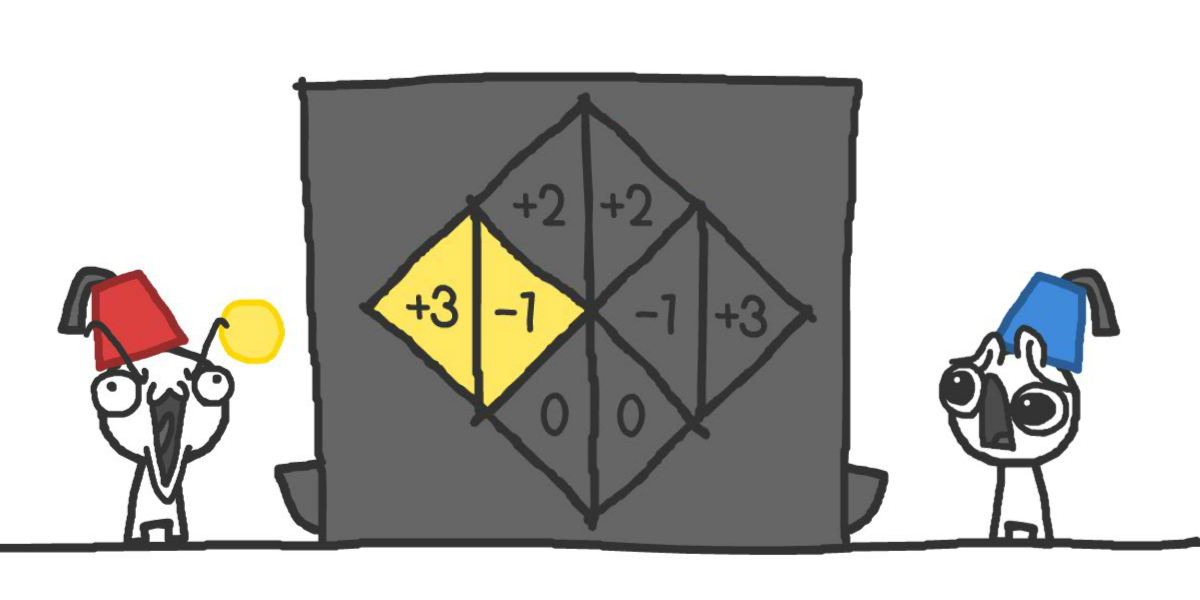
The Evolution of Trust
an interactive guide to the game theory of why & how we trust each other
Rethinking Norm Psychology
Norms permeate human life. Most of people’s activities can be characterized by rules about what is appropriate, allowed, required, or forbidden—rules that are crucial in making people hyper-cooperative animals. In this article, I examine the current cognitive-evolutionary account of “norm psychology” and propose an alternative that is better supported by evidence and better placed to promote interdisciplinary dialogue. The incumbent theory focuses on rules and claims that humans genetically inherit cognitive and motivational mechanisms specialized for processing these rules. The cultural-evolutionary alternative defines normativity in relation to behavior—compliance, enforcement, and commentary—and suggests that it depends on implicit and explicit processes. The implicit processes are genetically inherited and domain-general; rather than being specialized for normativity, they do many jobs in many species. The explicit processes are culturally inherited and domain-specific; they are constructed from mentalizing and reasoning by social interaction in childhood. The cultural-evolutionary, or “cognitive gadget,” perspective suggests that people alive today—parents, educators, elders, politicians, lawyers—have more responsibility for sustaining normativity than the nativist view implies. People’s actions not only shape and transmit the rules, but they also create in each new generation mental processes that can grasp the rules and put them into action.

Study: Sycophantic AI can undermine human judgment
Subjects who interacted with AI tools were more likely to think they were right, less likely to resolve conflicts.

Is AI Creating a Culture of Avoidance?
As chatbots and AI companions emerge as communication tools of choice for humans, a new and unsettling dynamic is taking shape. Tools that can smooth over difficult communication between friends and coworkers—reducing misunderstandings, hurt feelings, or social discomfort—also have a downside. Left unchecked, they may erode human intuition and sabotage empathy.

Propagation and preservation of AI-discovered problem-solving strategies in human culture
Intelligent machines have the potential to uncover problem-solving strategies beyond human discovery. Emerging evidence from competitive gameplay, such as Go and chess, demonstrates that AI systems are evolving from mere tools to sources of cultural innovation adopted by humans. However, the conditions under which intelligent machines transition from tools to drivers of persistent cultural change remain unclear. We identify three key dimensions that modulate machine influence on human problem-solving: the discovered strategies must be non-trivial, learnable, and offer a clear advantage. Using a cultural transmission experiment, we demonstrate that when these conditions are met, machine-discovered strategies can be transmitted, understood, and preserved by human populations, leading to enduring cultural shifts. Conversely, using agent-based simulations, we show how machine influence is constrained in the absence of these conditions. These findings provide a framework for understanding how machines can persistently expand human cognitive skills and underscore the need to consider their broader implications for human cognition and cultural evolution.

The Fabric and the Brain
Articulating agent ecologies with high-personality planetary computation

The Triadic Mind: How Language Reveals the Limits of Human Cognition
Languages are the most complex symbolic systems humans have ever created. Yet children acquire them effortlessly, without formal…

Karpathy says developers have 'AI Psychosis.' Everyone else is next.
Anthropic’s Mythos, Gen Z’s backlash, and Meta’s token binge all point to the same shift: developers are feeling AI first, but not for long.

Symbolic Manipulation: an Anthropological Perspective
The aim of this article is to elucidate the anthropological conditions of possibility for computing. I will first show how symbolic manipulation is constitutive of hominization. Secondly, I will ex…

The New Science of Designing for Humans (SSIR)
The rise of behavioral science and impact evaluation has created a new way for engineering programs and human interactions. <meta property=
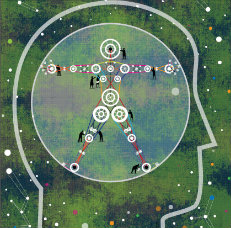

"[PSH] asks not only what the psychopathic profile is, but where it wins. ... whether the traits that once had to remain parasitic at the margins of reciprocal communities can become structurally amplified in environments where consequence is abstracted and reward is symbolic."

The Psychopathic Selection Hypothesis Guide for Readers
gregelliott2000.substack.com