


The biggest source for breaking news around the world. Compare headlines across the political spectrum using media bias ratings driven by data.
Media Bias/Fact Check News
We are the most comprehensive media bias resource on the internet. There are currently 3900+ media sources listed in our database and growing every day.
Politics News | Breaking Political News, Video & Analysis-ABC News
ABC News is your trusted source on political news stories and videos. Get the latest coverage and analysis on everything from the Trump presidency, Senate, House and Supreme Court.

Politics News | Breaking Political News, Video & Analysis-ABC News
ABC News is your trusted source on political news stories and videos. Get the latest coverage and analysis on everything from the Trump presidency, Senate, House and Supreme Court.
Fakebook: Using Data Science to Spot Fake News
As fake news permeates throughout social media outlets (like Facebook), it's more important than ever to identify what is fact vs. fiction. This is especially true in the age of COVID where the spread of misinformation can impact the spread of the virus. Data scientists are emerging on the front lines of this fight, using programs to help them identify fake news sources. Led by Dr. Teon Brooks, Josh Modeste, and Steven Azeka from the Gotham Data Clinic (fka CiELabs), this workshop will explore the “life cycle” of scientific research and how scientists come to consensus about how we interpret data. We’ll examine what to look for in credible news sources, and the consequences of leaning on not-so-trusty pseudoscientific sources. Then you’ll put that knowledge to work by developing a rubric for identifying fake news. No experience necessary! https://www.eventbrite.com/e/fakebook-using-data-science-to-spot-fake-news-tickets-137833492687
Changes to the Facebook Algorithm Decreased News Visibility Between 2021-2024
Platforms, especially Facebook, are primary news sources in the US. In its widely criticized "War on News," Meta algorithmically deprioritized news and political content. We use data from 40 news organizations (5,243,302 Facebook posts, 7,875,372,958 user reactions) and 21 non-news pages (396,468 posts; 1,909,088,308 reactions) between January 1, 2016 and February 13, 2025 to examine how these changes influenced news visibility on the platform. Reactions to news declined by 78% between 2021 and 2024 while reactions to non-news pages increased, indicating targeted suppression of news visibility. Low-quality sources were especially suppressed, yet the 2025 end to "War on News" increased user reactions to news, especially low-quality ones. These changes do not reflect decreased news supply, Facebook user base, or interest in news over this period.

Fakebook: Using Data Science to Spot Fake News
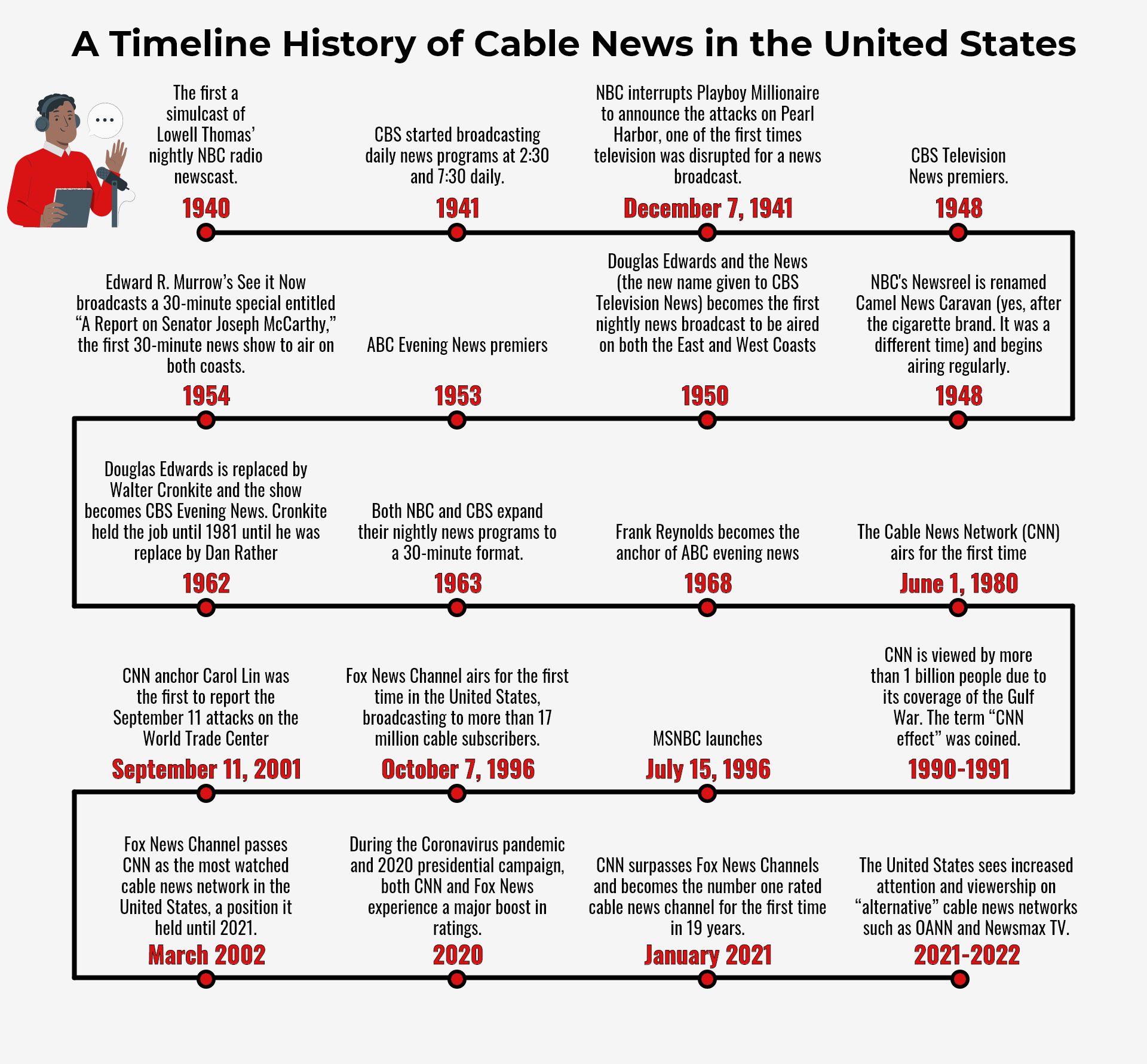
The Growth and Impact of Cable News
Cable news has had a tremendous impact on how people consume news. We discuss the growth and impact of cable news including the good, bad and downright ugly.
Push journalism vs. pull journalism
Let's experiment with making news products so relevant that people pull them into their lives

PropagandaScope
Tracking articles from newspapers. Real-time analysis of propaganda transmission patterns.
Why the Algorithm Loves a Villain, And How to Beat It
When the internet is full of distortions, fake news, and AI-generated slop, how can facts and journalism rise to the top? Former BBC and Vice journalist Sophia Smith Galer has one possible way to…


Political Bias in the Media – Evidence from the Universe of French Broadcasts, 2002-2020 | ifo Institute | CESifo
How does the media bias the news? And in particular, how much does it cost owners to ensure that journalists comply with their stance? We compile a unique dataset of journalists and guests appearing on French television and radio shows between 2002 and 2020 to quantify the role played by journalist selection and compliance in political coverage. First, we leverage the movements of thousands of journalists between media outlets, and estimate a model in which the share of coverage for each political group is determined both by journalist and outlet components. We find that outlet-level decisions account for three-fourths of the differences in political coverage; in contrast, journalists’ personal editorial preferences play only a minor role. Second, we examine how journalists respond to a major takeover-induced editorial change. Using a difference-in-differences strategy, we show that while many journalists left in response to the shock, those who stayed largely adapted to the new editorial direction. Notably, exploiting unique data on journalist salaries, we show that this compliance came at nearly no cost for the new owner, reflecting journalists’ low bargaining power in an industry in crisis.

How we decide what news is important, and why that process maybe flawed
Have you ever thought about the type of news that populates on your Facebook feed? Where does it come from and how is it specifically…

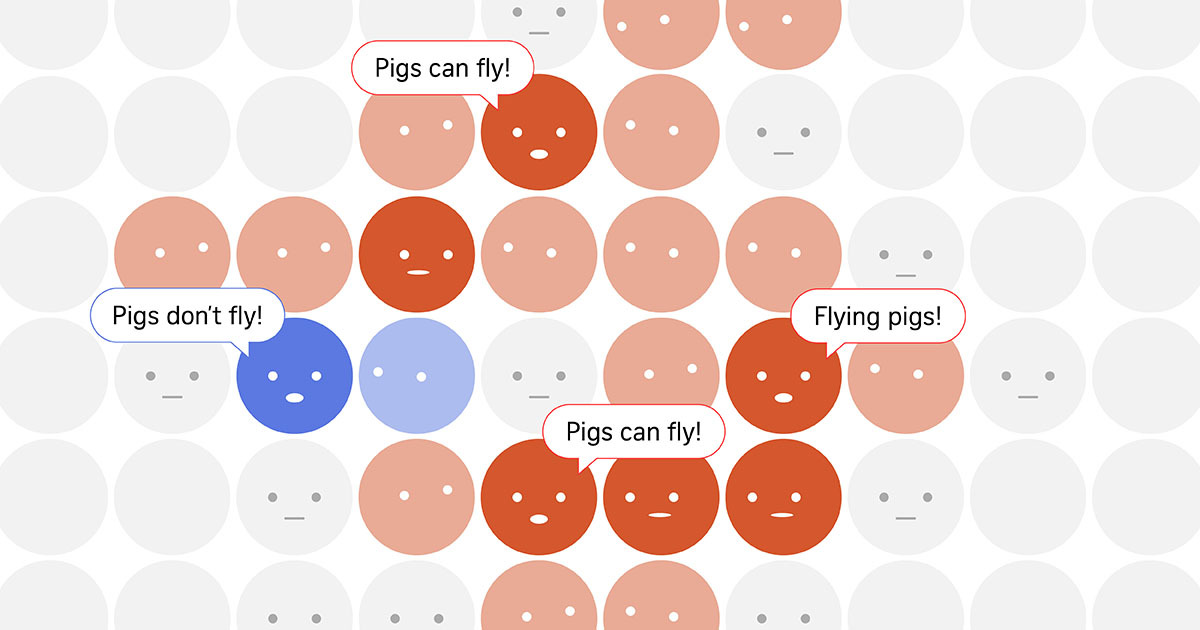
Fake news spreads like an epidemic. Here’s how to stop it.
Researchers study fake news the same way they study the spread of disease. When misinformation “goes viral”, it is not just a metaphor. It is what’s actually happening. via @straits_times str.sg/viz-misinformation
The spreading of misinformation online
Significance The wide availability of user-provided content in online social media facilitates the aggregation of people around common interests, worldviews, and narratives. However, the World Wide Web is a fruitful environment for the massive diffusion of unverified rumors. In this work, using a massive quantitative analysis of Facebook, we show that information related to distinct narratives––conspiracy theories and scientific news––generates homogeneous and polarized communities (i.e., echo chambers) having similar information consumption patterns. Then, we derive a data-driven percolation model of rumor spreading that demonstrates that homogeneity and polarization are the main determinants for predicting cascades’ size. , The wide availability of user-provided content in online social media facilitates the aggregation of people around common interests, worldviews, and narratives. However, the World Wide Web (WWW) also allows for the rapid dissemination of unsubstantiated rumors and conspiracy theories that often elicit rapid, large, but naive social responses such as the recent case of Jade Helm 15––where a simple military exercise turned out to be perceived as the beginning of a new civil war in the United States. In this work, we address the determinants governing misinformation spreading through a thorough quantitative analysis. In particular, we focus on how Facebook users consume information related to two distinct narratives: scientific and conspiracy news. We find that, although consumers of scientific and conspiracy stories present similar consumption patterns with respect to content, cascade dynamics differ. Selective exposure to content is the primary driver of content diffusion and generates the formation of homogeneous clusters, i.e., “echo chambers.” Indeed, homogeneity appears to be the primary driver for the diffusion of contents and each echo chamber has its own cascade dynamics. Finally, we introduce a data-driven percolation model mimicking rumor spreading and we show that homogeneity and polarization are the main determinants for predicting cascades’ size.

World News

World news: politics, geopolitics, crisis.
Trump Says El-Sayed Is a Muslim Brotherhood Member. The Public Evidence Is About His Mother.

Michigan Senate debate: Fact-checks of El-Sayed, Rogers

El-Sayed responds after Vance calls him a "weasel" as Michigan Senate race grows contentious

Abdul El-Sayed’s Mother Was Active in Muslim Brotherhood in College, Sister Said

Meet the Press – October 11, 2026
www.reuters.com