

An interactive exploration of quadtrees. Start with brute-force spatial search, build recursive space partitioning step by step, then use it for point lookups, range queries, nearest-neighbor search, collision detection, and image compression.
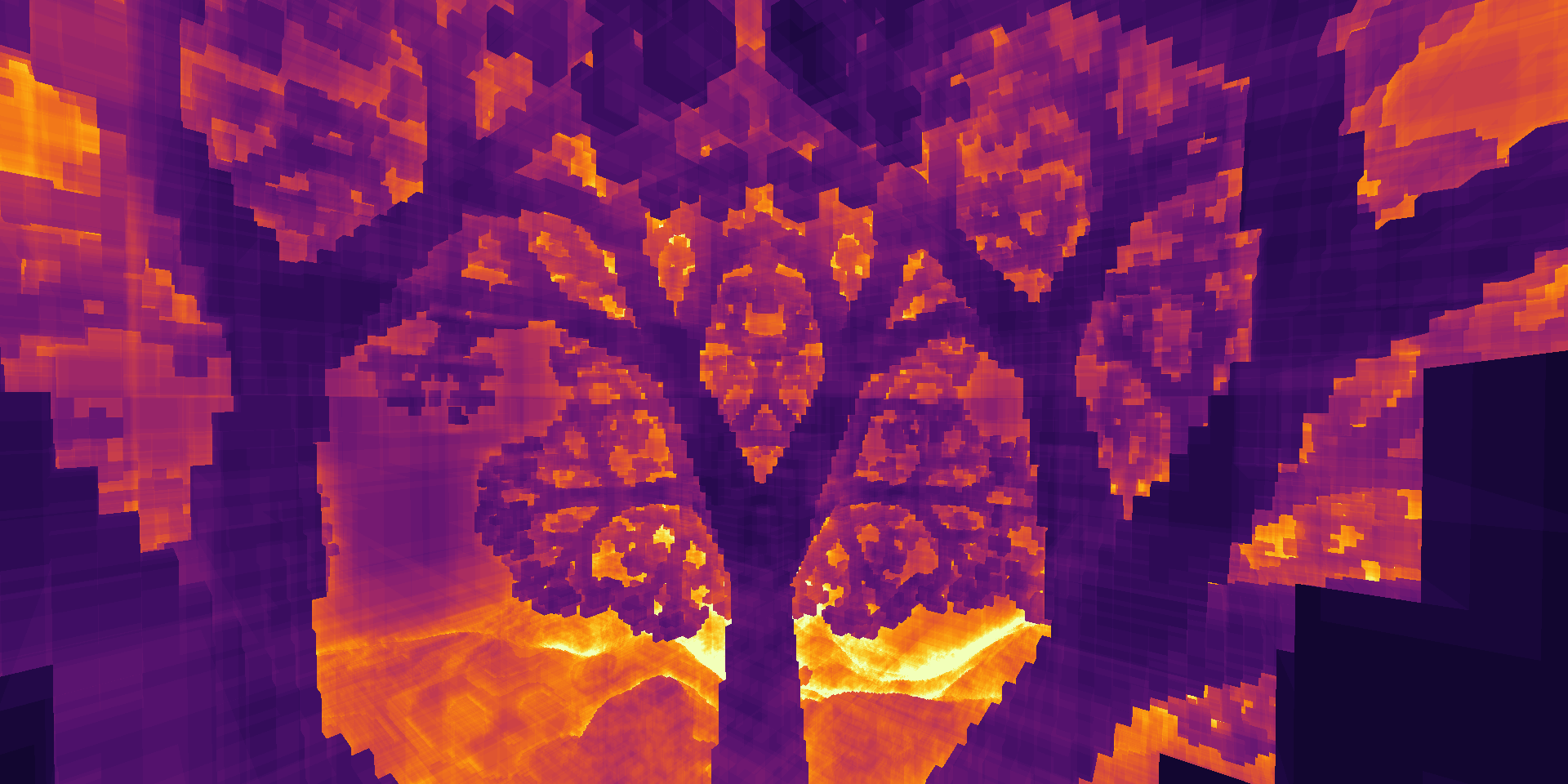
A guide to fast voxel ray tracing using sparse 64-trees
If you have ever tried to ray trace voxels before, you might have heard about Sparse Voxel Octrees. They are one of those ideas that are just simple and clever enough to be intriguing, but not so great to hold in practice at the basic premise.
A dive into spatial search algorithms
Searching through millions of points in an instant
R-tree
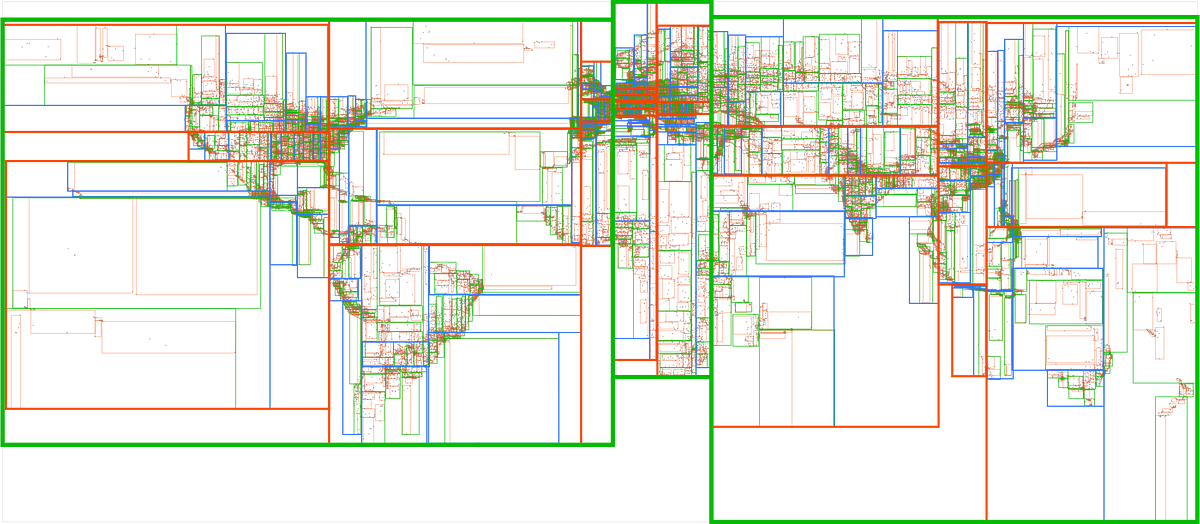
R-trees are tree data structures used for spatial access methods, i.e., for indexing multi-dimensional information such as geographical coordinates, rectangles or polygons. The R-tree was proposed by Antonin Guttman in 1984[2] and has found significant use in both theoretical and applied contexts.[3] A common real-world usage for an R-tree might be to store spatial objects such as restaurant locations or the polygons that typical maps are made of: streets, buildings, outlines of lakes, coastlines, etc. and then find answers quickly to queries such as "Find all museums within 2 km of my current location", "retrieve all road segments within 2 km of my location" (to display them in a navigation system) or "find the nearest gas station" (although not taking roads into account). The R-tree can also accelerate nearest neighbor search[4] for various distance metrics, including great-circle distance.[5]

ICQR Magic Tree — 3D QR Code Generator
Turn any link into a stunning 3D tree that doubles as a scannable QR code. Pick a season, customize colors, and share.
ICQR Magic Tree — 3D QR Code Generator
Turn any link into a stunning 3D tree that doubles as a scannable QR code. Pick a season, customize colors, and share.
The Strangest Video Game Butterfly Effects
Exploring Rectangle Subdivisions
Last week, I saw a talk on Vuntra City, a procedurally generated city with a fully explorable city. Developer Larissa Davidova explained that she settled on using Recursive Subdivision for the city…

The SQLite R*Tree Module
An R-Tree is a special index that is designed for doing range queries. R-Trees are most commonly used in geospatial systems where each entry is a rectangle with minimum and maximum X and Y coordinates. Given a query rectangle, an R-Tree is able to quickly find all entries that are contained within the query rectangle or which overlap the query rectangle. This idea is easily extended to three dimensions for use in CAD systems. R-Trees also find use in time-domain range look-ups. For example, suppose a database records the starting and ending times for a large number of events. A R-Tree is able to quickly find all events that were active at any time during a given time interval, or all events that started during a particular time interval, or all events that both started and ended within a given time interval. And so forth.
Quaternius • Free Game Assets
A library of hundreds of free Low Poly 3D Models, using the CC0 License.

PixelGuys/Cubyz
Voxel sandbox game with a large render distance, procedurally generated content and some cool graphical effects.
The guide to implementing 2D platformers | Higher-Order Fun
Having previously been disappointed by the information available on the topic, this is my attempt at categorizing different ways to implement 2D platform games, list their strengths and weaknesses, and discuss some implementation details.

A Journey Into Shaders
Demystify shaders with this beginner-friendly guide. Explore fragment shaders, signed distance functions, and metaballs through interactive code examples. Learn how to create beautiful blob animations and effects using just a few lines of code.

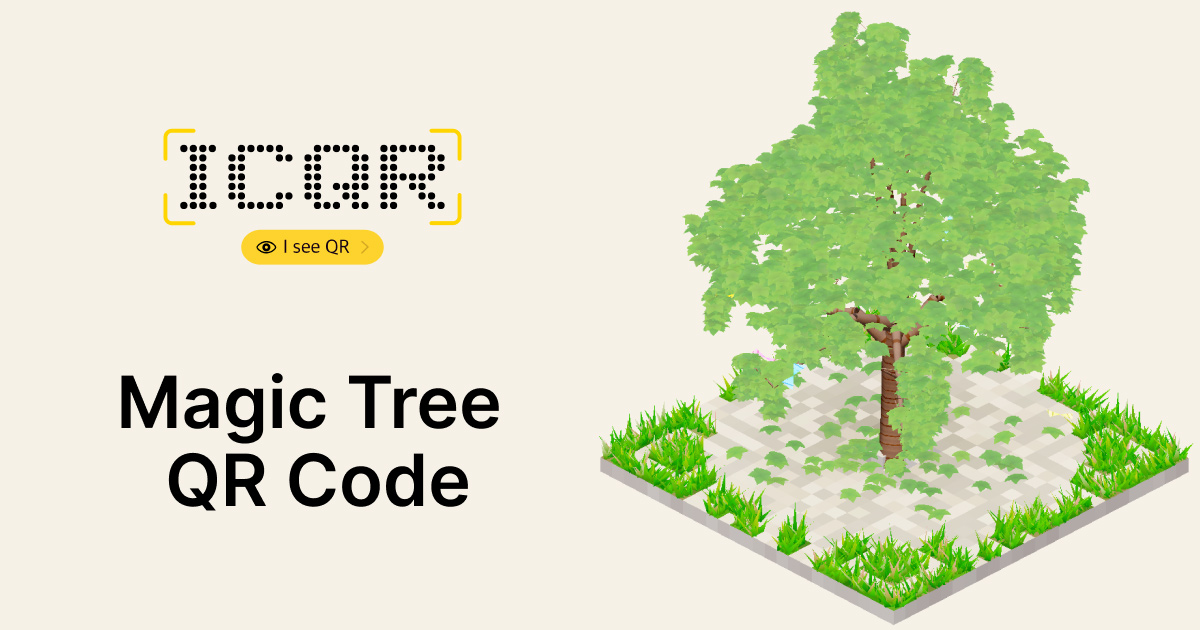
Generate QR code that looks like 3D tree, by Manish Kumar. - Enter a URL and it grows a 3D tree from the code itself - The ground grid is the actual scannable QR - Switch between Spring, Summer, and Autumn - Tap the tree to flatten it and scan tree.icqr.com?q=MDBodHRwczovL2ljcXIuY29tLw
digital gardens


Good Internet

smallweb
about - pivot point - Obsidian Publish
