


I recently tweeted, as an aside, that biological sex is a social construct, and the backlash and attacks were swift, incredulous and heavily reliant upon very basic biology. There is a common perce…
Social Constructs (or, 'What is A Woman, Really?')
Is Science a social construct? – a response to Richard Dawkins
With characteristic certainty and self-assurance, Professor Richard Dawkins recently tweeted his irritation with those who describe science as a social construct. “Science is not a social construct…

Testosterone causes both prosocial and antisocial status-enhancing behaviors in human males | PNAS
Although popular discussion of testosterone’s influence on males often centers on aggression and antisocial behavior, contemporary theorists have p...

How to understand cells, tissues and organisms as agents with agendas | Aeon Essays
Biology’s next great horizon is to understand cells, tissues and organisms as agents with agendas (even if unthinking ones)

The Interracial Cuck Porn Theory of Everything
Everything is gender, but to understand gender you must understand sex.
How to counter "everything is a construct" worldview?
Many of the people in humanities I encounter seem very wedded to mindset I refer to as "construct = everything". For example, they say bazar things such as gender is 100% a construct. They say...

You can't "masculinity" your way out of oppression
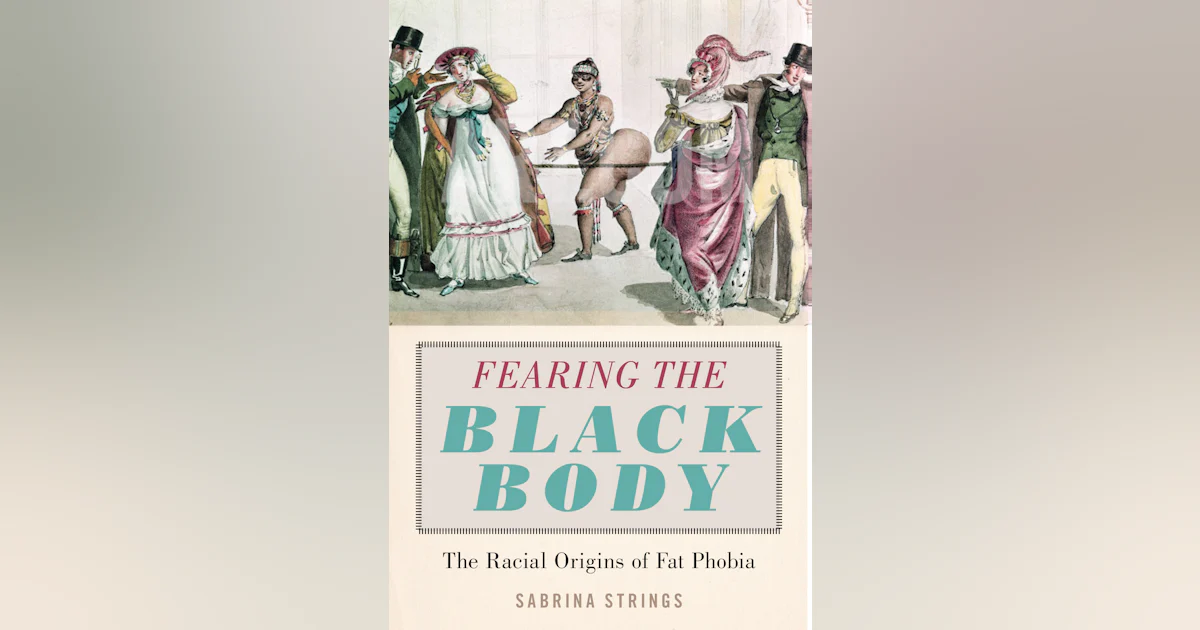
Fearing the Black Body
Winner, 2020 Body and Embodiment Best Publication Award, given by the American Sociological AssociationHonorable Mention, 2020 Sociology of Sex and Gender Di...
Anatomy of a Nature AI article
Edgy first paragraph in bold text saying something gently provocative but essentially brainless.
Georgie Newson - Thinking Collectives: Biological Naturalism and the Problem of Group Minds
Social Insects : Ecology and Behavioural Biology
1 online resource; Here is a guide to the ecology of social insects. It is intended for general ecologists and entomologists as well as for undergraduates and those about to start research on social insects; even the experienced investigator may find the comparison between different groups of social insects illuminating. Most technical terms are translated into common language as far as can be done without loss of accuracy but scientific names are unavoidable. Readers will become familiar with the name even though they cannot visualize the animal and could reflect that only a very few of the total species have been studied so far! References too are essential and with these it should be possible to travel more deeply into the vast research literature, still increasing monthly. When I have cited an author in another author's paper, this implies that I have not read the original and the second author must take responsi bility for accuracy! Many hands and heads have helped to make this book. I thank all my colleagues past and present for their enduring though critical support, and I thank with special pleasure: E.]. M. Evesham who fashioned the diagrams;]. Free, D.J. Stradling and]. P.E.C. Darlington who supplied photographs; D.Y. Brian and R.A. Weller who were meticulous on the linguistic side; and G. Frith and R.M. Jones who collated the references. List of plates 1. Fungus combs of Acromyrmex octospinosus and Macrotermes michaelseni. 13 2. Mouthparts of larval Myrmica; 1 Introduction -- 2 Food -- 2.1 Termites as decomposers -- 2.2 Wasps and ants as predators -- 2.3 Sugars as fuel save prey -- 2.4 Seed eaters -- 2.5 Leaf eaters -- 2.6 Pollen eaters -- 3 Foraging by individuals -- 3.1 Foraging strategy -- 3.2 Worker variability -- 4 Foraging in groups -- 4.1 Communication about food -- 4.2 Group slave-raiding -- 4.3 Tunnels and tracks -- 4.4 Nomadic foraging -- 5 Cavity nests and soil mounds -- 5.1 Cavities and burrows -- 5.2 Soil mounds -- 6 Nests of fibre, silk and wax -- 6.1 Mounds of vegetation and tree nests -- 6.2 Combs of cells -- 7 Microclimate -- 7.1 Environmental regulation -- 7.2 Metabolic regulation -- 8 Defence -- 8.1 Painful and paralysing injections -- 8.2 Toxic smears and repellants -- 9 Food processing -- 9.1 Mastication, extraction and regurgitation -- 9.2 Yolk food supplements -- 9.3 Head food glands -- 10 Early population growth -- 10.1 Food distribution -- 10.2 Colony foundation -- 10.3 The growth spurt -- 11 Maturation -- 11.1 Simple models of reproduction -- 11.2 Social control over caste -- 11.3 Males in social Hymenoptera -- 11.4 Maturation in general -- 12 Reproduction -- 12.1 Caste morphogenesis -- 12.2 Copulation and dispersal -- 12.3 Production -- 12.4 Summary -- 13 Evolution of insect societies -- 13.1 Theories of individual selection -- 13.2 Models of these theories -- 13.3 Group selection -- 13.4 Conclusions -- 14 Colonies -- 14.1 The colony barrier -- 14.2 Queen number and species ecology -- 14.3 Queen interaction and queen relatedness -- 15 Comparative ecology of congeneric species -- 15.1 Ant and termite races -- 15.2 Desert ants and termites -- 15.3 Ants and termites in grassland -- 15.4 Forest ants and termites -- 15.5 Wasps and bumblebees -- 15.6 Advanced bees -- 16 Communities -- 16.1 Temperate zone communities in grass and woodland -- 16.2 Desert communities -- 16.3 Tropical rain forest -- 16.4 Conclusions -- 17 Two themes -- 17.1 Plant mutualism -- 17.2 Social organization -- References -- Author index

A Nonideal Theory of Sexual Consent
Our autonomy can be compromised by limitations in our capacities, or by the power relationships within which we are embedded. If we insist that real consent requires full autonomy, then virtually no sex will turn out to be consensual. I argue that under conditions of compromised autonomy, consent must be socially and interpersonally scaffolded. To understand consent as an ethically crucial but nonideal concept, we need to think about how it is related to other requirements for ethical sex, such as the ability to exit a situation, trust, safety, broader social support, epistemic standing in the community, and more.
Oh no it's happening here too! Massive science threads and convos with zero involvement from women 😭 That was one of the weirdest, most alienating things about science twitter (and why perhaps I don't have as fond memories of it as some of my male colleagues do) and I'd hate it to be replicated here

