

Making sense of how public voting works in Eurovision Asia.
Eurovision branding over the years - Dawn
Since 2002, the winning country has created the concept and design for Eurovision. Here are some of the stories behind them.

How Israel Turned Eurovision’s Stage Into a Soft Power Tool
Israel’s efforts to influence Eurovision’s vote were broader and started years earlier than previously known.

How Approval Voting and Ranked Choice Voting Are Different | Center for Election Science
How Approval Voting and Ranked Choice Voting Are Different

What is Approval Voting? | Center for Election Science
What is Approval Voting?

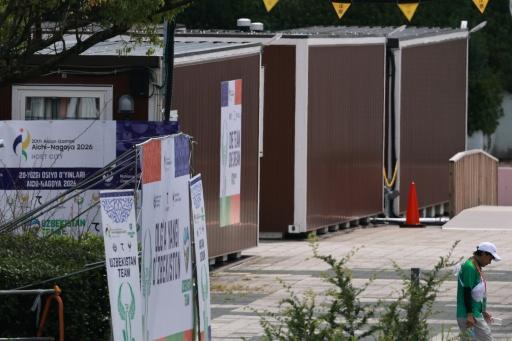
'Failing, chaotic, musical chairs': Teams slam Asian Games organisers
Several teams rounded on the organisation of the Asian Games in Japan on Thursday, with Thailand likening it to a "chaotic" game of "musical chairs" and South Korea saying...
How Media – Namely News, Ads and Social Posts – Can Shape an Election
How Media – Namely News, Ads and Social Posts – Can Shape an Election

Olympic Council of Asia president says politics have already entered into the Asian Games
The president of the Olympic Council of Asia acknowledged that politics — in the form of a welcoming ceremony involving Taiwan — had already entered into the Asian Games

Asian Games: Governing body urged to address participant surge: sources
TOKYO (Kyodo) -- As the number of athletes and officials expected to take part in the upcoming Asian Games is likely to exceed initial projections by

Mainstreaming the populist radical right? Online news exposure and voting behavior in the 2019 European Parliament election
How does media exposure relate to support for radical right populist parties (RRPPs)? We contribute to this classic debate by analyzing the web browsing histories and survey responses of six thousand study participants in France, Germany, Italy, Spain, and the UK during the 2019 European Parliament election. Linking direct measures of online news exposure to voting behavior allows us to assess the effects of the salience of issues politicized by RRPPs on their electoral support. The likelihood to vote for RRPPs was higher when the EU was more salient in individual media diets, while exposure to the less salient issue of immigration did not increase the propensity to vote for RRPPs. Alongside consistent results for other party families and interactions with pre-existing voting intentions, the findings indicate that the electoral effects of online media are contingent on the overall salience of a specific issue and voters’ predispositions.

Bridging Voting and Deliberation with Algorithms: Field Insights from vTaiwan and Kultur Komitee
Democratic processes increasingly aim to integrate large-scale voting with face-to-face deliberation, addressing the challenge of reconciling individual preferences with collective decision-making. This work introduces new methods that use algorithms and computational tools to bridge online voting with face-to-face deliberation, tested in two real-world scenarios: Kultur Komitee 2024 (KK24) and vTaiwan. These case studies highlight the practical applications and impacts of the proposed methods. We present three key contributions: (1) Preference-based Clustering for Deliberation (PCD), which enables both in-depth and broad discussions in deliberative settings by computing homogeneous and heterogeneous group compositions with balanced and adjustable group sizes; (2) Human-in-the-loop MES, a practical method that enhances the Method of Equal Shares (MES) algorithm with real-time digital feedback. This builds algorithmic trust by giving participants full control over how much decision-making is delegated to the voting aggregation algorithm as compared to deliberation; and (3) the ReadTheRoom deliberation method, which uses opinion space mapping to identify agreement and divergence, along with spectrum-based preference visualisation to track opinion shifts during deliberation. This approach enhances transparency by clarifying collective sentiment and fosters collaboration by encouraging participants to engage constructively with differing perspectives. By introducing these actionable frameworks, this research extends in-person deliberation with scalable digital methods that address the complexities of modern decision-making in participatory processes.

Permissioned Data Shapes: Polls - Nick's Blog
A poll is a space, a ballot is an address, and read_self is the ballot screen: voters cast and change their own votes while no voter's client can read anyone else's.
Democracy Tracker | The Global State of Democracy
Each report describes an event that affects the state of democracy in a given country, with assessments made relative to that country's context, not as comparisons or rankings between countries.
The simple but ingenious system Taiwan uses to crowdsource its laws
vTaiwan is a promising experiment in participatory governance. But politics is blocking it from getting greater traction.

The Art of Broad Listening
To revitalize democracy in the age of AI, we must pivot from one-way broadcasting to dynamic broad listening. Innovators in Taiwan and Japan are leading the way.

Opinion | Give ranked voting a shot. Our democracy would benefit.
Ranked-choice voting empowers the majority by allowing voters to order their choices.

Fifth shape in the atproto permissioned data series: polls. The member list is the electorate, your PDS holds only your own ballot, a vote's record key mirrors the poll's, and a leaked ballot proves nothing because permissioned commits are deniable.

Permissioned Data Shapes: Polls
ngerakines.leaflet.pub