

Every time I moved a community to a new platform, the exit cost members and history. Platforms come and go; the lock-in architecture underneath is why. Part of 'Apps as Views, Not Vaults': the things you make are yours; apps are just the viewers.
Your identity isn't your username
Your handle is a label; your identity is a key you own. atproto splits who you are from what you're called, so you can rename freely, prove who you are with a domain you control, and carry one identity across the apps you use. Part of 'Apps as Views, Not Vaults': the things you make are yours; apps are just the viewers.
Series: Apps as Views, Not Vaults | Guido X Jansen
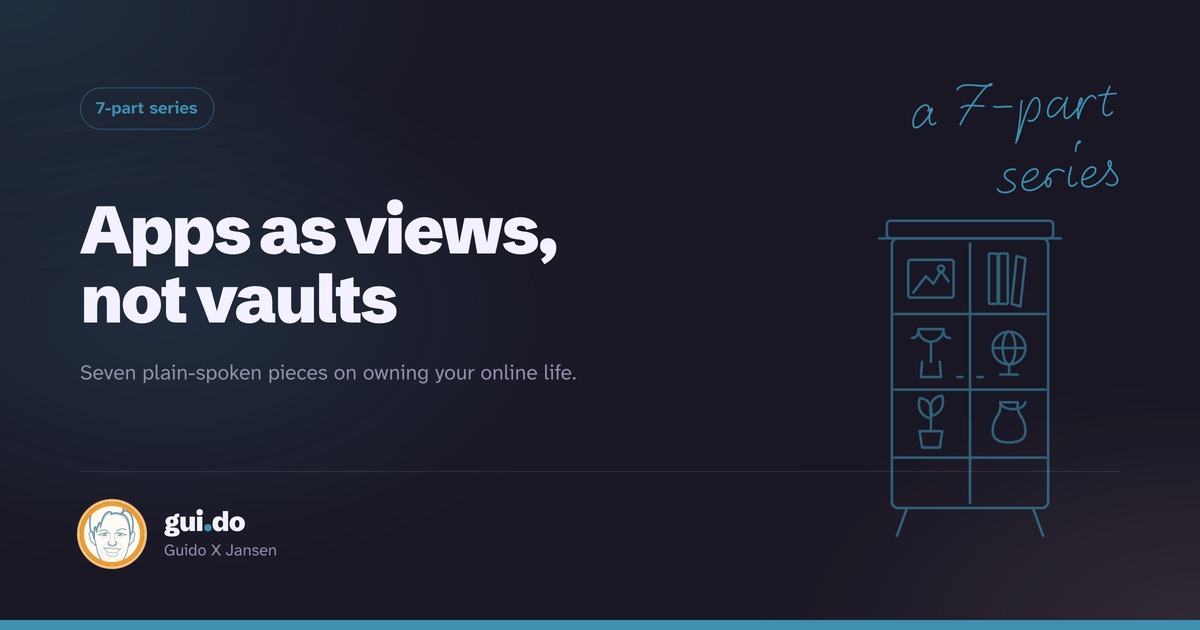
Your data lives in a bookshelf you own; apps are just the views that read from it. A seven-part series on what the AT Protocol flips, what it doesn't, and why the boring architecture really does impact you.
Series: Apps as Views, Not Vaults | Guido X Jansen
Your data lives in a bookshelf you own; apps are just the views that read from it. A seven-part series on what the AT Protocol flips, what it doesn't, and why the boring architecture really does impact you.
Here's my plan to save Twitter: let's buy it | Nathan Schneider
Corporate sharks are circling around the platform we love. But there is another way: shared ownership, where the community takes control

Building Apps With ATProto
Your platform is not an ecosystem
Another day, another exhortation to join an “ecosystem” that’s anything but. I could pick a hundred examples, but one that recently caught my eye was an ad placed in the Financial Times by the Singapore stock exchange, SGX Group, promising “multiple growth avenues, one trusted ecosystem”. SGX wants companies to list on its exchange rather than, say, the Hong Kong one which has more or less the same exclusive offer. SGX promises “access (to) Asia through our trusted ecosystem anchored in Singapore.” Ecosystems can be a lot of things. ‘Trusted’, by which they mean centrally policed to achieve defined, lower-risk outcomes, is not one of them. Calling built environments ‘ecosystems’ is common everywhere from financial services to supply chains to – quite a stretch, here – a retirement living complex. But it’s most often used in the tech world to describe the relations between software, services and hardware typically owned by a single company. For example, it’s how Google describes everything that hangs off the Android operating system. These kinds of proprietary and deterministic architectures are called ecosystems so often that we’ve stopped noticing. And that’s kind of the point. We need to start seeing this metaphor again, and what it’s hiding in plain sight. But first, a reminder of what an ecosystem actually is.
Nick's Blog
Stepping outside the shapes series for a deep dive: how space configuration decides which people and which apps get credentials. Here be dragons.
Symposium: A Skeptical View of Information Fiduciaries
In recent years, the concept of “information fiduciaries” has surged to the forefront of debates on platform regulation. In a forthcoming essay, we question the wisdom of applying a fiduciary framework to dominant digital platforms.

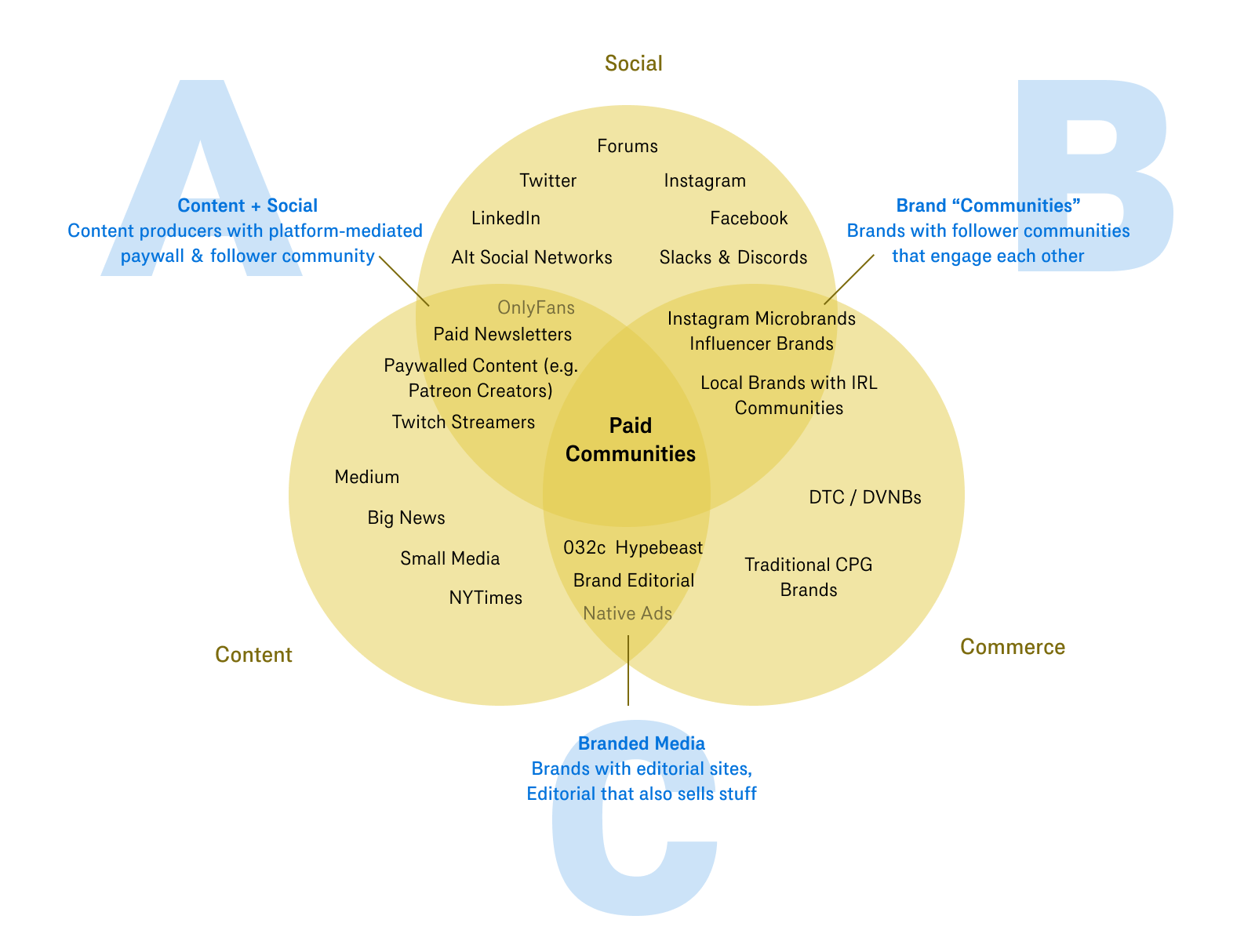
Come for the Network, Pay for the Tool
Paid groups, bespoke social networks, and the meaning of community for internet-native businesses.
atmosphere.community
The community hub for apps and people building on AT Protocol
Community ≠ Marketing: Why We Need Go-to-Community, Not Just Go-to-Market
Community is the “new” moat (or so some have said), and it’s true: Having a community helps protect against competitor companies or products entering your territory. Whether that community is a group of power users, open source contributors, creators, or even just a brand (or franchise)’s super fans, it lends greater brand awareness, higher switching... Read More
I see talk on here about the public being "platform brained", and a lot of that in my experience comes down to impatience. It's what you see when mainstream apps change layout. People have expectations about how apps are supposed to work, and learning something else is an imposed waste of effort.

jordan silver 🔵
My take on the "explaining atproto" discourse is that all the UX/filesystem/etc metaphors are still very verbose and that you can explain the same idea in a lot less words: It separates data from apps, so any app can use data from any other app. That fits in a tweet, with other sentences around it.
No one wants to own their data until the platform where their data lives enshittifies to the point of unusability and/or starts selling their data in ways they didn't expect. Like, 99% of ppl are here because Elon owns Twitter. I get why people don't care, but they tend to eventually every time.


