


A classic pattern in technology economics, identified by Joel Spolsky, is layers of the stack attempting to become monopolies while turning other layers into perfectly-competitive markets which are commoditized, in order to harvest most of the consumer surplus; discussion and examples.
The Path to a Sovereign Tech Stack is Via a Commodified Tech Stack | TechPolicy.Press
Strategic standardization of cloud infrastructure backed by procurement power and market forces is the right way to tame the hyperscalers, writes David Eaves.
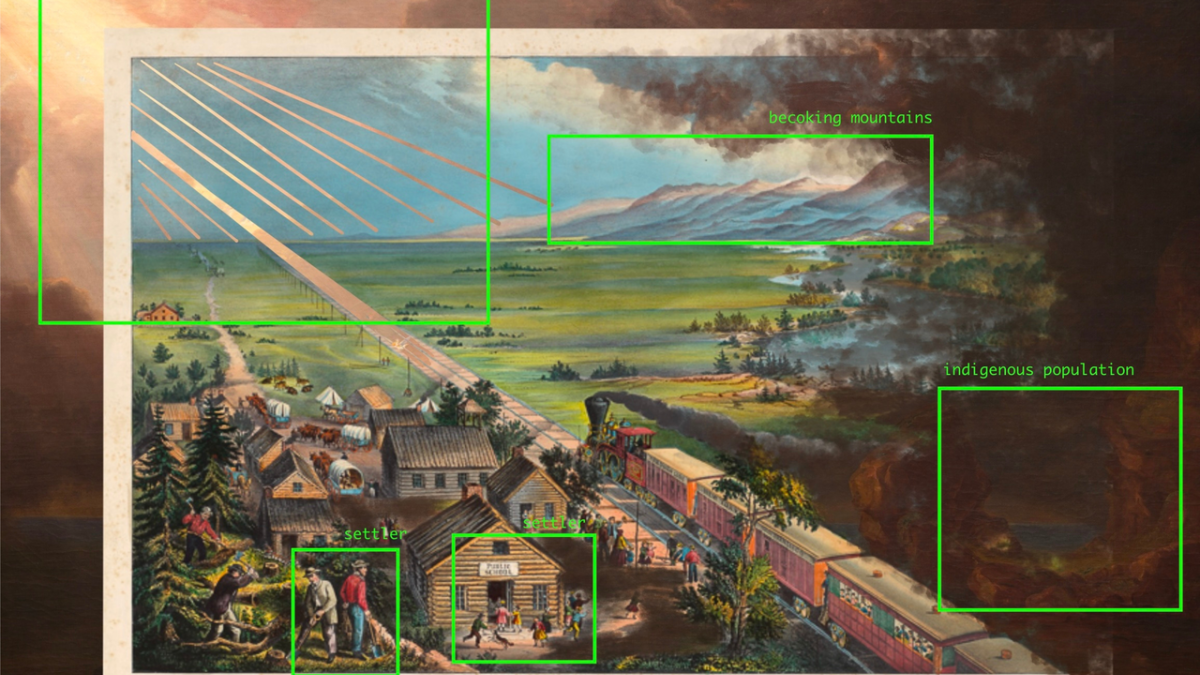
How the Tech World Turned Evil
Once upon a time, they were counterculture idealists bringing power to the people. Today they’re greedy monopolists who’d sooner destroy our democracy than be reined in by government in any way—and they have to be stopped.

Cyber-Marx: Cycles and circuits of struggle in high technology capitalism - Nick Dyer-Witheford
The complete text of Nick Dyer-Witheford's 1999 book, which provides an analysis of information-age capitalism and the movements currently dissolving it. In PDF format.

Technology and Below-the-Line Labor in the Copyfight over Intellectual Property
Andrew Ross, Technology and Below-the-Line Labor in the Copyfight over Intellectual Property, American Quarterly, Vol. 58, No. 3, Rewiring the "Nation": The Place of Technology in American Studies (Sep., 2006), pp. 743-766
Techno-solutionism
“techno-solutionism,” the simplification of complex societal problems into apps and algorithms. Ed-Tech’s Inequalities “Technological solutionism” is the related tendency to identify simple answers — in all domains, not just the tech sector — “before the questions have been fully asked” or the problems fully articulated. Take, for example: “the Internet has changed everything about how […]

Technocracy References
References and Revisions “Should Scientists and Engineers Run Society?” References [1] Wikipedia: “Technocracy.” [2] Academic Paper: Gunnell, John G. "The technocratic image and the theory of technocracy." Technology and culture 23.3 (1982): 392-416. [3] Academic Paper: Oh, Kyunghwan. "A non-co...

Design Rules, Volume 1: The Power of Modularity
We live in a dynamic economic and commerical world, surrounded by objects of remarkable complexity and power. In many industries, changes in products and t

Technological parables and iconic illustrations: American technocracy and the rhetoric of the technological fix
This paper traces the role of American technocrats in popularizing the notion later dubbed the ‘technological fix’. Channeled by their long-term ‘chief’, Howard Scott, their claim was that technolo...

Separating AI’s Technological Problems From its Capitalism Problems
Nathan E. Sanders and Bruce Schneier say integrating a technology as disruptive as AI responsibly requires deep structural reforms.

Cyber-Marx: Cycles and Circuits of Struggle in High Technology Capitalism
Cycles and Circuits of Struggle in High Technology Capitalism

Hacking Capitalism | A Guide To Exploiting The Tech Industry
This is an independently published book about modeling the tech industry as a system. Particularly this book will model computers, humans, and money and their subsequent relationships. Understand the alarming state of the tech industry for better or for worse.

How One 1990s Browser Decision Created Big Tech’s Data Monopolies (And How We Might Finally Fix It) - Above the Law
From the take-back-control dept

AI, Decomputing and the Interregnum
This paper treats AI as diagnostic for the deeper changes taking place in the existing order of things. It uses AI's alignment with both the political economy and with the dualisms that underpin it, including race, gender and anthropocentrism, to highlight the nihilistic character of the current restructuring. AI's scaling and accelerationism are taken as examples of the wider tactics being invoked by hegemonic power to maintain control under changing conditions. From this perspective, the massive build-out of data centres isn't simply a seizure of energy resources but a manifestation of an aggressive and misogynist technopolitics. The paper argues that a liberal push for digital sovereignty doesn't interrupt these dynamics but plays into the hands of emerging technofascism. It proposes instead the prefigurative tactic of 'decomputing', which draws on degrowth, deautomatisation and a convivial approach to technology. It explores decomputing as a means to mitigate both material and relational harms and as a decisive turn towards infrastructuring the common good. The paper concludes that AI is the contradiction that reveals many others, not least the gap between claims to legitimacy and the actuality of destructive violence, and proposes an alternative technopolitics of reciprocity that prioritises care and sustainability.
AI, Decomputing and the Interregnum
This paper treats AI as diagnostic for the deeper changes taking place in the existing order of things. It uses AI's alignment with both the political economy and with the dualisms that underpin it, including race, gender and anthropocentrism, to highlight the nihilistic character of the current restructuring. AI's scaling and accelerationism are taken as examples of the wider tactics being invoked by hegemonic power to maintain control under changing conditions. From this perspective, the massive build-out of data centres isn't simply a seizure of energy resources but a manifestation of an aggressive and misogynist technopolitics. The paper argues that a liberal push for digital sovereignty doesn't interrupt these dynamics but plays into the hands of emerging technofascism. It proposes instead the prefigurative tactic of 'decomputing', which draws on degrowth, deautomatisation and a convivial approach to technology. It explores decomputing as a means to mitigate both material and relational harms and as a decisive turn towards infrastructuring the common good. The paper concludes that AI is the contradiction that reveals many others, not least the gap between claims to legitimacy and the actuality of destructive violence, and proposes an alternative technopolitics of reciprocity that prioritises care and sustainability.
When (not if) the Tech Monopolies come for the Atmosphere, can we create the institutional structures to protect what we have? Right now we're nowhere near ready. No company harmed the web more than Google, not even close, while claiming to help which many believed. What can we learn and how fast?

kottke.org
“The Metric Is Not the Mission is a ten-part examination of how Big Tech moved from building and expanding the open internet to increasingly shaping it around its own metrics, incentives and assumptions.” techdirt.com/2026/09/21/the-metric-is-not-…
The idea of a "tech industry" has always relied on "computer" being a special kind of medium, akin to alchemy. And if tech demands to be king, AI hype has now elevated LLMs to a king of kings. But the solipsism has hit a dead end. The only way forward is to recognize that computers are not special.

LLMs are just normal technology. But tech is just a normal medium.
productpicnic.beehiiv.com
