


Applied Computer Science: On Murder Considered As STEM Field—using information theory to quantify the magnitude of Light Yagami’s mistakes in 𝐷𝑒𝑎𝑡𝘩 𝑁𝑜𝑡𝑒 and considering fixes
The identity of information science
Purpose. This paper offers a definition of the core of information science, which encompasses most research in the field. The definition provides a unique identity for information science and positions it in the disciplinary universe.Design/methodology/approach. After motivating the objective, a definition of the core and an explanation of its key aspects are provided. The definition is related to other definitions of information science before controversial discourse aspects are briefly addressed: discipline vs. field, science vs. humanities, library vs. information science and application vs. theory. Interdisciplinarity as an often-assumed foundation of information science is challenged.Findings. Information science is concerned with how information is manifested across space and time. Information is manifested to facilitate and support the representation, access, documentation and preservation of ideas, activities, or practices, and to enable different types of interactions. Research and professional practice encompass the infrastructures – institutions and technology –and phenomena and practices around manifested information across space and time as its core contribution to the scholarly landscape. Information science collaborates with other disciplines to work on complex information problems that need multi- and interdisciplinary approaches to address them.Originality/value. The paper argues that new information problems may change the core of the field, but throughout its existence, the discipline has remained quite stable in its central focus, yet proved to be highly adaptive to the tremendous changes in the forms, practices, institutions and technologies around and for manifested information.

Computer power and human reason : from judgment to calculation
xii, 300 pages : 24 cm; Includes bibliographical references and index

Physics Is Pointing Inexorably to Mind
So-called “information realism” has some surprising implications

Redressing the Balance: A Yin-Yang Perspective on Information Technology
Information is an essential aspect of how we interact with the world around us. We acquire information and then integrate it to build knowledge, understanding, and trust, which in turn serve in preparing actions. Information technology (IT) is supposed to support all these phases of information processing. But does it? An assessment of IT through the yin-yang lens from Chinese philosophy shows that over the last decades, support for the yin processes of building knowledge, understanding, and trust has been neglected, the focus of most research and development having been on the yang processes of acting. IT shares this imbalance with other aspects of Western and globalized culture. I discuss possible directions for re-establishing a yin-yang balance in IT, as a small contribution to redressing the balance in the world at large.

Integrated information theory
Integrated information theory (IIT) proposes a mathematical model for the consciousness of a system. It comprises a framework ultimately intended to explain why some physical systems are conscious, and to be capable of providing a concrete inference about whether any physical system is conscious, to what degree, and what particular experience it has; why they feel the particular way they do in particular states, and what it would take for other physical systems to be conscious. The theory inspired the development of new clinical techniques to empirically assess consciousness in unresponsive patients.

the information apocalypse · discrete blogarithm
My friend Aviv was recently the subject of a popular Buzzfeed article about the possibility of an impending “information apocalypse”. tl;dr: Aviv extrapolates from the fake news crisis that started in 2016 to a world in which anyone can create AI-assisted misinformation campaigns indistinguishable from reality to the average observer. From there, a series of possible dystopian scenarios arise, including:
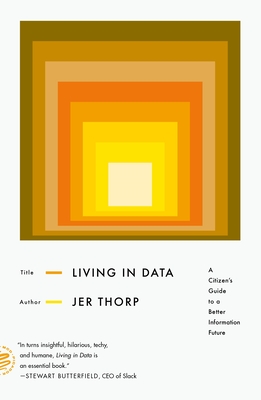
Living in Data: A Citizen's Guide to a Better Information Future (Paperback)
Jer Thorp’s analysis of the word “data” in 10,325 New York Times stories written between 1984 and 2018 shows a distinct trend: among the words most closely associated with “data,” we find not only its classic companions “information” and “digital,” but also a variety of new neighbors—from “scandal” and “misinformation” to “ethics,” “friends,” and “play.”To live in data in the twenty-first century
Tom Leinster : The categorical origins of entropy
“Computers enable fantasies” – On the continued relevance of Weizenbaum’s warnings
“The computer has long been a solution looking for problems—the ultimate technological fix which insulates us from having to look at problems.” – Joseph Weizenbaum (1983) Trying to kee…

The Gardener’s Vision of Data — Real Life
Data science reduces people to subjects that can be mined for truth

The Irrational Decision
How the computer revolution shaped our conception of rationality—and why human problems require solutions rooted in human intuition, morality, and judgment

What Is Entropy? A Measure of Just How Little We Really Know. | Quanta Magazine
Exactly 200 years ago, a French engineer introduced an idea that would quantify the universe’s inexorable slide into decay. But entropy, as it’s currently understood, is less a fact about the world than a reflection of our growing ignorance. Embracing that truth is leading to a rethink of everything from rational decision-making to the limits of machines.

Informatics of the Oppressed
An inquiry into the rich history of radical experiments to reorganize information.

Professor Chad Briggs Discusses Cognitive Warfare (The Gorgon Effect)
Politics of computing

📚 AI (+ nuance)

Researching all aspects of artificial intelligence and its realized and potential implications
Tech's right turn : the rise of reactionary politics in Silicon Valley and online

Technology is Not Values Neutral: Ending the Reign of Nihilistic Design

Cyber-Marx
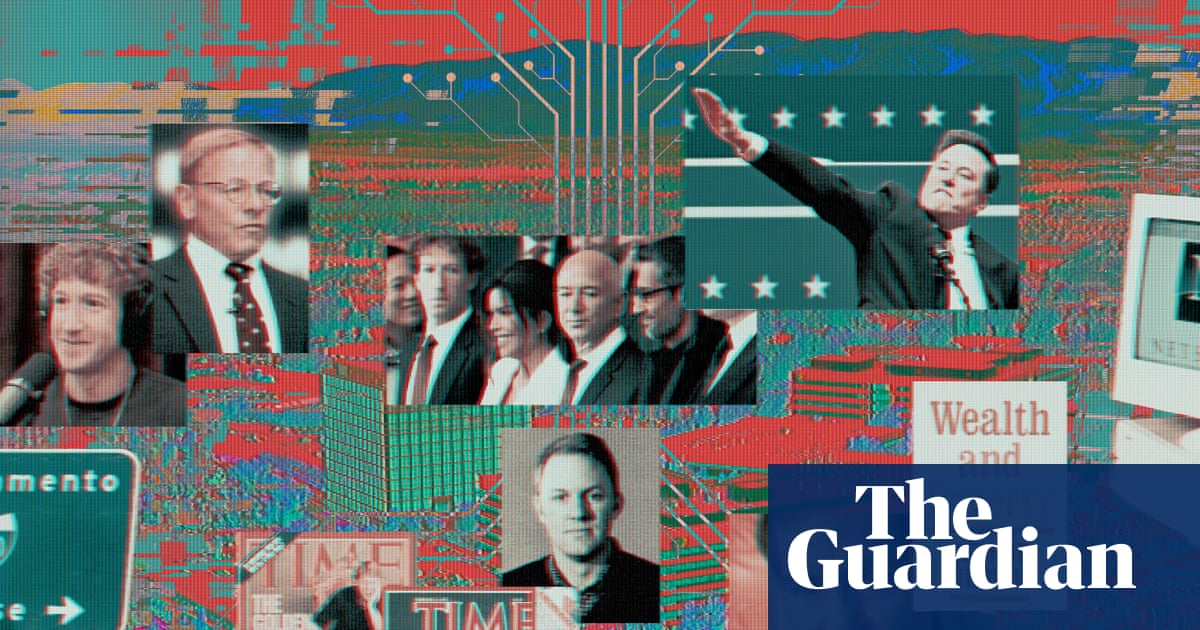
‘Headed for technofascism’: the rightwing roots of Silicon Valley

📏 When machines start calling the shots

Information Civics
Malleable Software (by Boris) — Semble
darkshapes
AI* perception/usage (by あ) — Semble
All intelligence is collective intelligence (by Ronen Tamari) — Semble

A Collectivist, Economic Perspective on AI
Knowing less about AI makes people more open to having it in their lives – new research