

Shirky: In Praise of Evolvable Systems
Clay Shirky's writings about the Internet, including Economics and Culture, Media and Community, Open Source, and Genetics As Information Science
Reclaiming Social Spaces: Are Open Source Platforms a Path for More Human Connection?
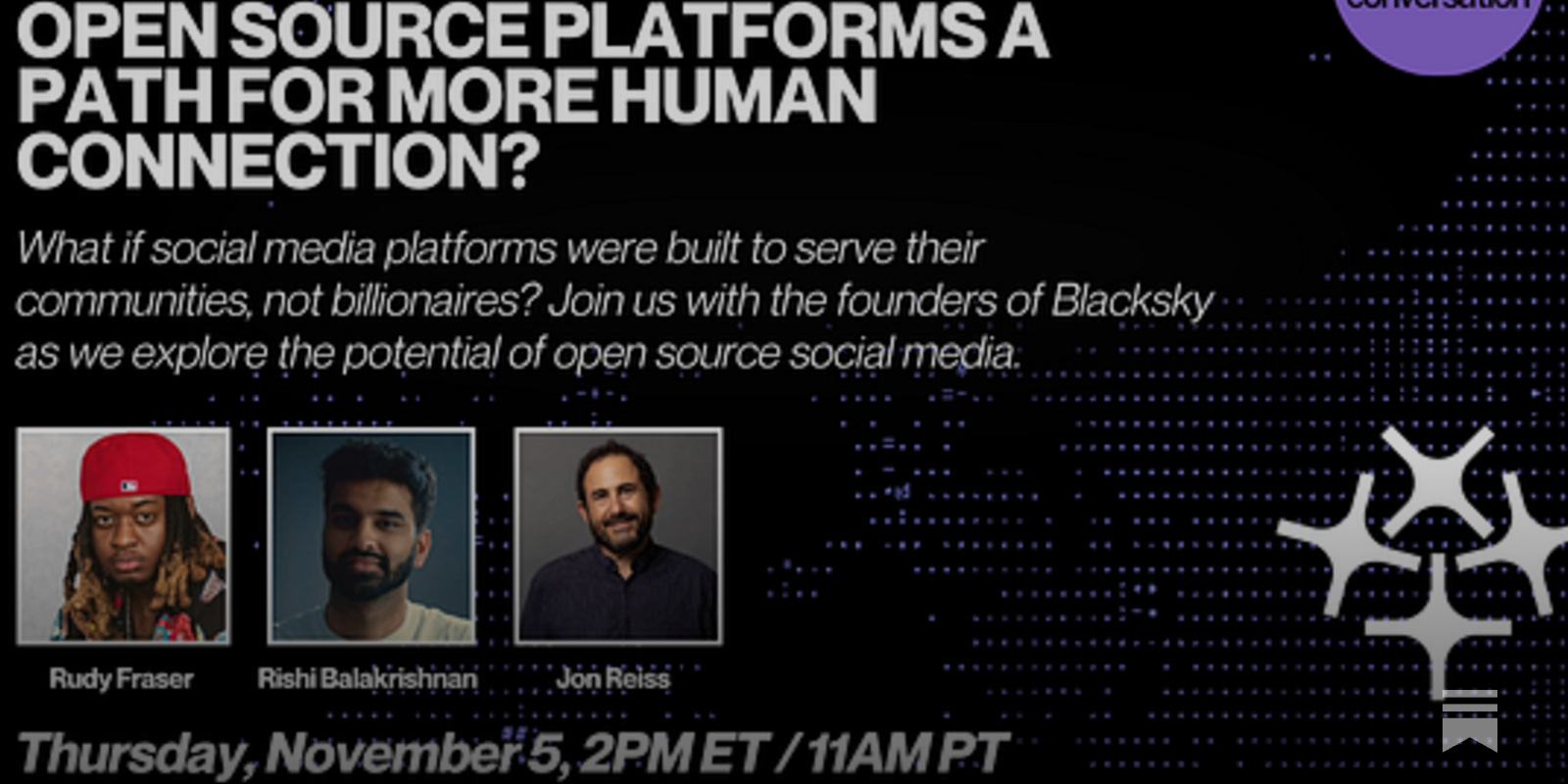
What if social media platforms were built to serve their communities, not billionaires? Join us with the founders of Blacksky as we explore the potential of open source social media.
Open Source Explained — Open Indie
Musings on the concept of ‘open source’, in the broadest possible definition of the term. Also an invitation to become a participant in ...

Embrace Open Source, For the Good of Nerdmanity | Fortune
More businesses are willing to use open source software for key projects.

Thoughts on Cyberpositionality: The Construction of Digital Communities in Digital Spaces, Damien Patrick Williams
I found Rebecca Monteleone, Martin Perez Comisso, and Elma Hajric’s “Cyberpositionality: Sociotechnical Location in the Digital Age” (2024) to be an extremely timely and important article which can…

Eaten by the Internet
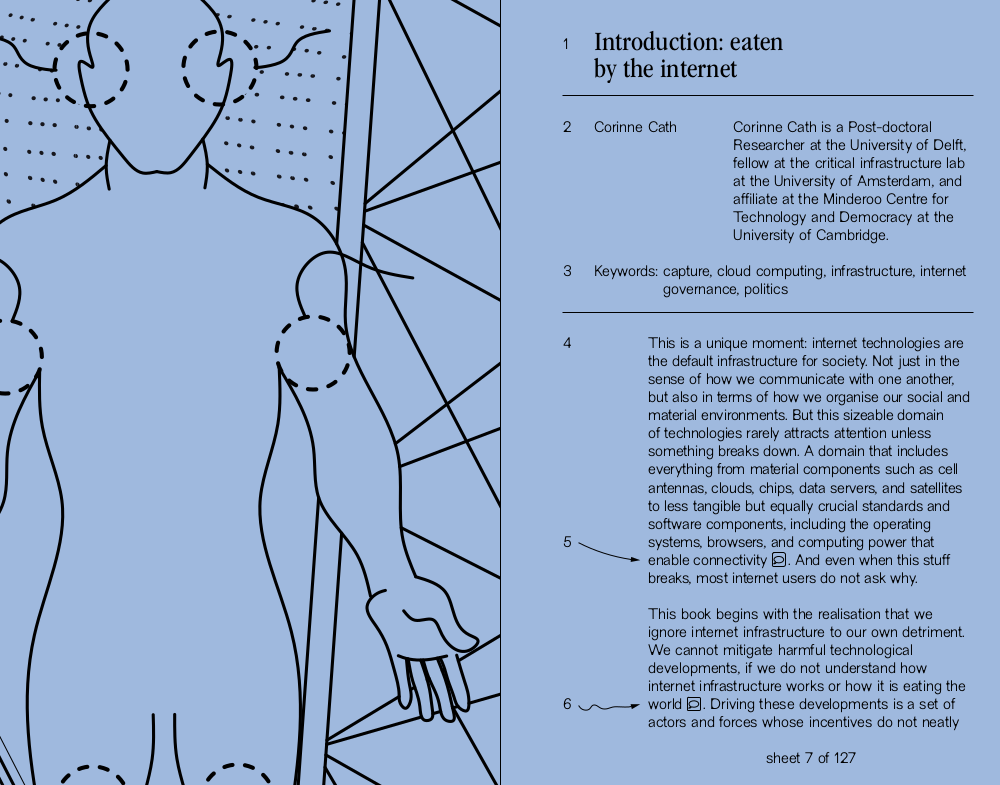
This book makes internet infrastructure visible as a force of political power, which is transforming the social world, from the bottom up—through fifteen chapters contributed by a global set of researchers, activists, and techies. We are living a unique moment: internet technologies are the default infrastructure for society, not just how we communicate but also how we organise our social life, politics, and economy, all the way down to our material environments, like cities. Our world is eaten by the internet. This means that those who control the internet control the bounds of public speech, economic production, social cohesion, and politics, making its infrastructure a core political terrain in the networked age. The book’s chapters cover a wide set of topics, spanning from the global politics of content moderation by internet infrastructure to the colonialism inherent in the race to plug the moon, from the harms wrought by blockchain companies in rural America to the particularities of online censorship across Asia. The chapters take on thorny topics, discussing power consolidation in the advertisement and cloud industry, the role of internet infrastructure in the war in Ukraine, and tech’s environmental impact—amongst others. In doing so, this book roots contemporary technology debates in the politics of internet infrastructure and urges us to ask how can we ensure our infrastructures sustain us, rather than consume us?
How open-source software took over the world | TechCrunch
It was just five years ago that there was an ample dose of skepticism from investors about the viability of open source as a business model. Fast-forward to today and we’ve witnessed the growing excitement in the space.
Clouded skies for open networks
Last week, I finished an essay about platform design affordances and content moderation expectations and community-level context collapse on Bluesky for Tech Policy Press and set it aside to cool before a last read-through. An hour later, the Trump administration brought to Bluesky a propaganda-zombie army made

Historical pragmatism and the internet
This article argues that the literature describing the internet revolution in the 1990s was characterized by the rhetoric of the technological sublime. This rhetoric suffered from three fatal flaws: (1) it was not sufficiently grounded in the historical development of technology; (2) it viewed the internet in isolation, failing to consider the wider technological context; and (3) it failed to examine the internet in view of the social, economic, religious and political circumstances of its users. Several examples from history are cited, demonstrating that changes in various systems for the production, dissemination and preservation of cultural information both border and deborder the world. The article suggests that if internet researchers take a pragmatic, historically grounded approach, they will discover that the introduction of internet technology can be seen to have similar consequences. While the technology overcomes many boundaries (of space and time, politics and economics), other social borders may be created at the same time. It is easier to see old boundaries coming down than to see new ones being erected. Rather than being swept by utopian or dystopian enthusiasms, the article insists that the really interesting discoveries are to be made in locating the subtle social shifts taking place, relatively unnoticed, as a consequence of technological change.

LURK
Welcome to LURK, we host, facilitate and archive discussions around net- and computational culture and politics, proto- and post-free culture practices, (experimental) (sound) (new media) (software) art, and things like that…
My FOSS Story - Andrew Gallant's Blog
I’d like to break from my normal tradition of focusing almost strictly on technical content and share a bit of my own personal relationship with Free and Open Source Software (FOSS). While everyone is different, my hope is that sharing my perspective will help build understanding, empathy and trust.
Working in Public: The Making and Maintenance of Open S…
An inside look at modern open source software developer…

Open Source and Free Software Considered Harmful — marisa's "blog"
(It's best to read this blog post after reading Steve Klabnik's The culture war at the heart of open source and What comes after “open so...


Cyberselfish the Book
Introduction Ravers and gilders. In which I describe something of the strange land of technolibertarianism (it's a culture, not a political party) that I will be guiding readers through.
🔭🖤🚀 Social media’s next evolution: decentralized, open-source, and scalable
How Blacksky grew to millions of users without spending a dollar

Clay Shirky's writings about the Internet, including Economics and Culture, Media and Community, Open Source