


The fall of New York and the urban crisis of affluence
The Death and Life of Great American Cities
The Death and Life of Great American Cities is a 1961 book by writer and activist Jane Jacobs. The book is a critique of 1950s urban planning policy, which it holds responsible for the decline of many city neighborhoods in the United States. The book is Jacobs' best-known and most influential work.

Urban America Reconsidered by David L. Imbroscio | Paperback | Cornell University Press
The aftermath of Hurricane Katrina laid bare the tragedy of American cities. What the storm revealed about the social conditions in New Orleans shocked many Americans. Even more shocking is how widespread these conditions are throughout much of urban...
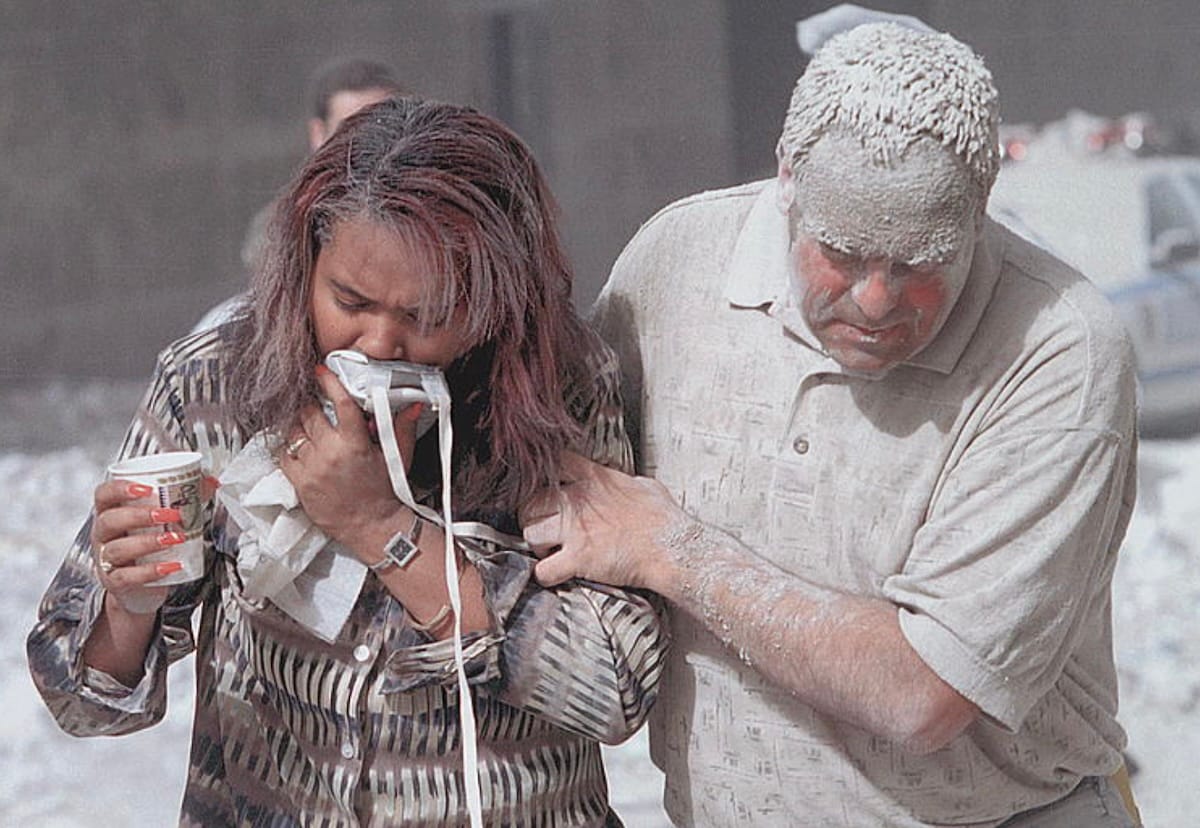
Confronting New York City's Lies About Toxic Air After 9/11
Plus, a selection of some of the best writing on 9/11, and more news to take you into the weekend.
Collapse — Oakland Public Library
Collapse — Dallett, Cassandra, — <p>COLLAPSE is a doomed love, temporary, free on bond, haunted by rage and regret, fueled by Hip-Hop beats, and clinging like the remains of the Ghost Ship fire--with the world burning around us, it is time and place, politics and anarchy, connection for the broken.</p><p>Poetry. California Interest.</p>
American Babylon
A gripping portrait of black power politics and the struggle for civil rights in postwar Oakland

Explosivity by Javier Arbona-Homar | East Bay Booksellers
How explosions across history reveal the violence embedded in San Francisco’s landscape Offering a novel approach to contemporary landscape studies, Explosivity unearths the hidden legacies of violence that have shaped the physical and cultural environment of the San Francisco Bay area.
Somebody Blew up Oakland: Dispossession as a Praxis of Racial Ordering
Author(s): Jones, Stephanie Delise | Advisor(s): Hironaka, Ann; Sojoyner, Damien | Abstract: In this dissertation, I investigate the relationship between underdevelopment and Black geographies. I then explore the consequences of this relationship on the city of Oakland. From 2019 to 2021, I conducted 68 in-depth field interviews of Black Oakland residents who detailed the processes and mechanisms by which California housing policy contributed to the displacement of Black subjects. Building on the work of scholars of Black geographies, I have interrogated the myth of development and the relationship to the dispossession of Black geographies. I theorize how racial capitalism produces vulnerable populations through housing in urban areas. The empirical contribution of my research is to provide a framework for Black geographies as people are being displaced. The theoretical contribution is to provide a conceptualization for Black geographies existing through abjections and placelessness as understood through residents of Oakland.I argue that the relationship between dispossession and refusal creates a distinct politic. In chapter two, I theorize the work of Moms for Housing to further understand Black knowledges of resistance to dispossession. Moms for Housing is used as a case study to highlight the many theoretical implications of dispossession occurring in Oakland. In chapter 3, I use two interviews from developers to demonstrate the contradictions in what I call the mythology of development. In chapter 4, I walk through the geographic stories of 2nd and 3rd generation Oakland residents and demonstrate each of the ways they feel locked out of the city as a result of the urban changes. In chapter 5, I demonstrate how communities resist dispossession and disposability. The city of Oakland lacks proactive implementation of equitable housing policy. The lack of action by the city of Oakland puts the onus on everyday residents to organize against their landlords, employers and the state.

Legacy cities and the changing nature of the good life - Ethan Zuckerman
America's legacy cities are shrinking, but they are as vital as our national parks. And they have much better food.

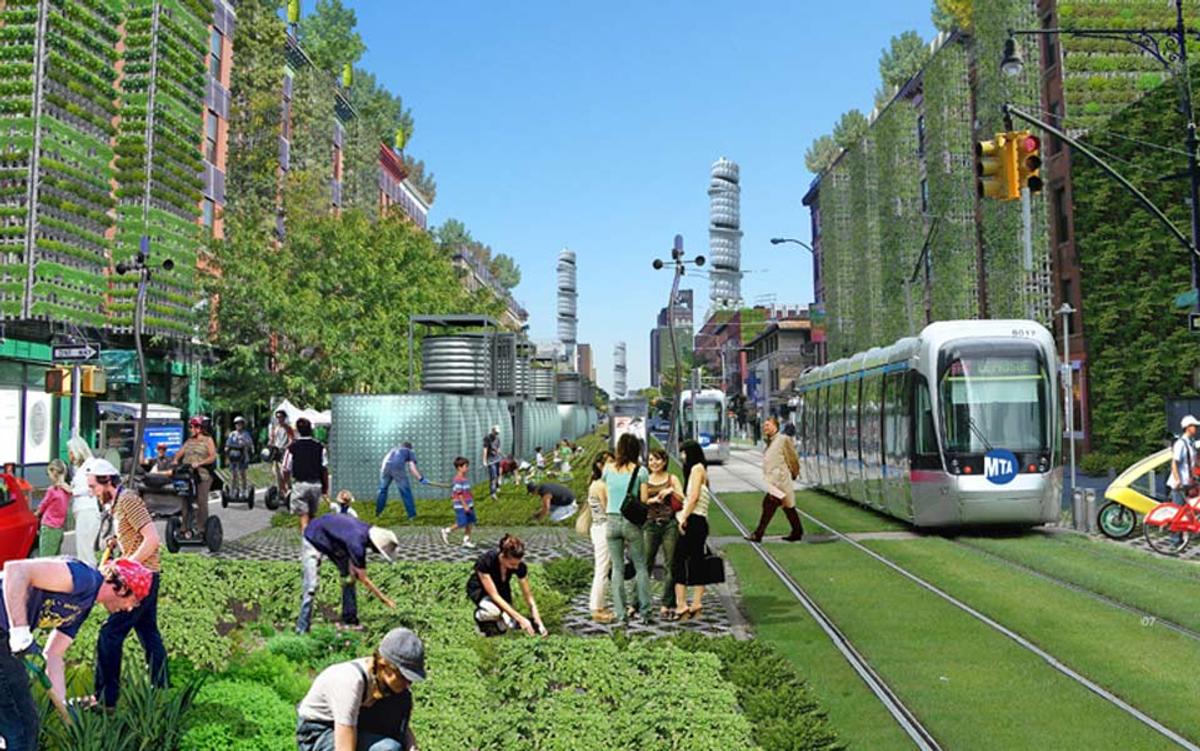
NYC: can this city-state be completely self-reliant? | Aeon Essays
Green living in NYC need not be simple living – think skyscraper farms, meat-production towers and revamped aqueducts
Defusing the Depopulation Bomb
Book Review: "After the Spike" by Dean Spears and Michael Geruso

What They Were Thinking - Tom Waits and Robert Frank - NYTimes.com
“I was trying to imagine myself as a real New Yorker.”

Flânerie without Politics: The Middle-Class Fetishization of the City
The middle-class spectacle of urban decay.

The ‘Extinction Rebellion’ Wants You to Wake Up
A dispatch from the environmental group’s New York City protest, featuring “die-ins,” Trump Tower and Fifth Avenue glitz

Stress and the city: Urban decay
Scientists are testing the idea that the stress of modern city life is a breeding ground for psychosis.

Maloney, Nadler ask NYC mayors what they knew about health hazards at Ground Zero
What did then-New York City Mayors Rudy Giuliani and Michael Bloomberg really know about the toxic threats posed by the ruins for the World Trade Center, and when did they know it? More than two decades after the catastrophic attacks, and…

Community Wealth Building — Urban Affairs Review
Scholars of urban politics have long debated the issue of what cities can and should do to promote the economic well-being of their residents. As the of election Zohran Mamdani illustrates, urban residents are increasingly demanding that city governments do more to address the increasingly exorbitant costs of housing, childcare, and transportation. One obvious solution is to raise taxes on the private holders of wealth. By the same token, his election has prompted handwringing on the right about the “inevitable” flight of capital out of New York City. Scholarship that runs the gamut from the public choice school associated with the “city limits” perspective (Peterson 1981) through to Marxian accounts (Logan and Molotch 1987) all recognize that the private ownership of wealth and the mobility of capital puts cities in a bind, especially in a context of highly circumscribed levels of federal urban spending. Though several scholars (Logan and Swanstrom 1990; Kantor and Savitch 1993; Schragger 2016) have demonstrated that cities have greater latitude to promote egalitarian public policies than these perspective allow, few would argue that the deep structural problems of economic and social inequality can be fully resolved by tax-and-spend liberalism (Imbroscio 2010).