Liberal democracy’s last stand against Big Tech
How the Tech World Turned Evil
Once upon a time, they were counterculture idealists bringing power to the people. Today they’re greedy monopolists who’d sooner destroy our democracy than be reined in by government in any way—and they have to be stopped.
Cyber-Marx: Cycles and circuits of struggle in high technology capitalism - Nick Dyer-Witheford
The complete text of Nick Dyer-Witheford's 1999 book, which provides an analysis of information-age capitalism and the movements currently dissolving it. In PDF format.

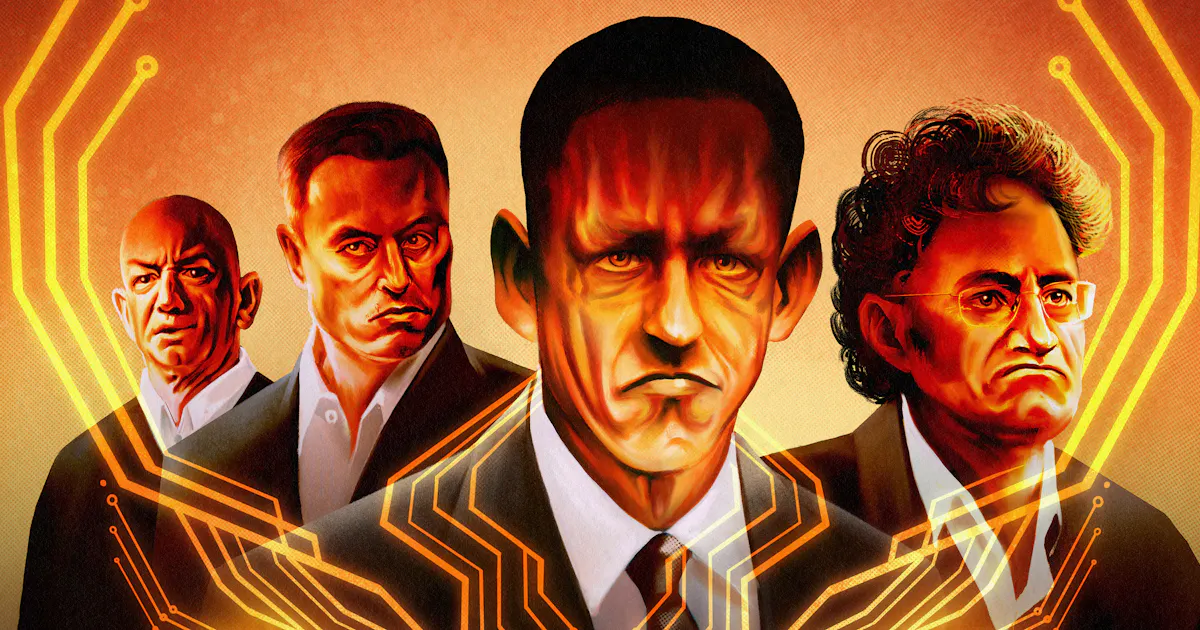
How the unholy alliance of Big Tech and the far right threatens the world
Far-right populists are the best chance for the tech oligarchs to hold onto power and wealth through the pursuit of ‘End Times Fascism’

Decentralization enables permissionless innovation
I’ve just started reading Inventing the Internet by Janet Abbate. The opening chapters are great, narrating Paul Baran’s efforts at RAND to design a nationwide communication network. Baran had one design goal for this network—survivability. Specifically, survivability in the face of nuclear catastrophe.

Radical markets: uprooting capitalism and democracy for a just society
Many blame today's economic inequality, stagnation, and political instability on the free market. The solution is to rein in the market, right? Radical Markets turns this thinking on its head. With a new foreword by Ethereum creator Vitalik Buterin and virtual reality pioneer Jaron Lanier as well as a new afterword by Eric Posner and Glen Weyl, this provocative book reveals bold new ways to organize markets for the good of everyone. It shows how the emancipatory force of genuinely open, free, and competitive markets can reawaken the dormant nineteenth-century spirit of liberal reform and lead to greater equality, prosperity, and cooperation. Only by radically expanding the scope of markets can we reduce inequality, restore robust economic growth, and resolve political conflicts. But to do that, we must replace our most sacred institutions with truly free and open competition Radical Markets shows how

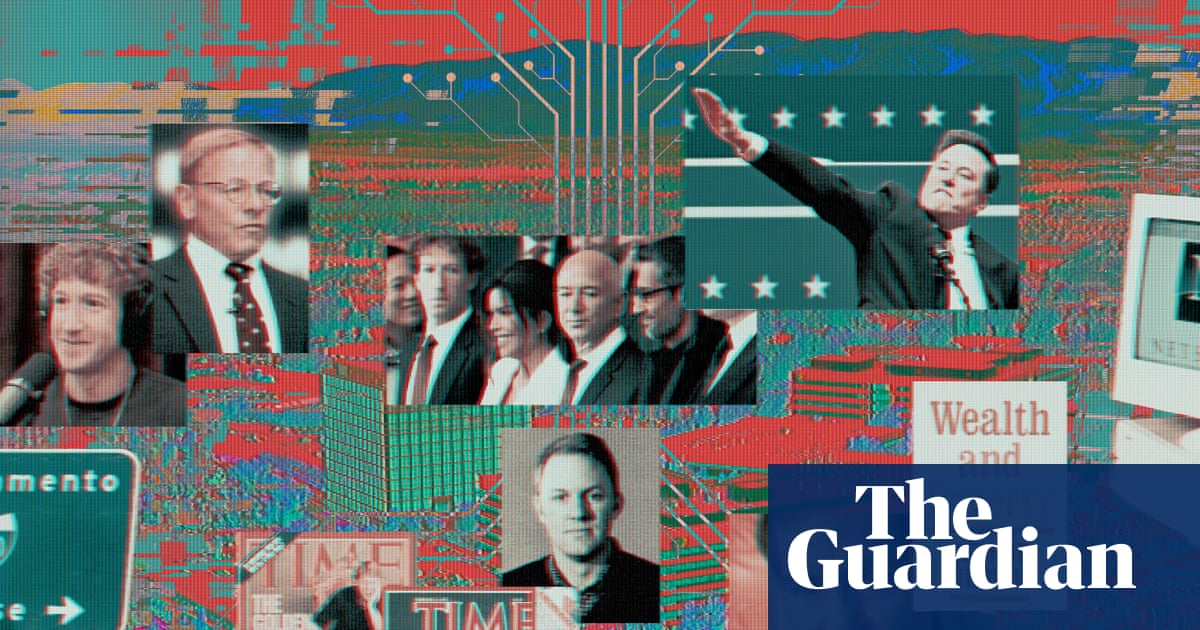
‘Headed for technofascism’: the rightwing roots of Silicon Valley
The industry’s liberal reputation is misleading. Its reactionary tendencies – celebrating wealth, power and traditional masculinity – have been clear since the dotcom mania of the 1990s
The Technological Republic: The Sunday Times bestseller from the great minds behind Palantir
The Sunday Times and #1 New York Times Bestseller‘The Technological Republic is far too important to ignore’ Times Literary SupplementSilicon Valley’s brightest minds once collaborated with governments to advance technologies, securing the West’s dominance on the global stage. But that relationship has corroded – with perilous repercussions for us all.Lifting the veil on tech giant Palantir and its broader political project, visionary co-founder and CEO Alexander C. Karp and his long-time deputy Nicholas W. Zamiska offer a searing critique of our collective culture of complacency. To regain geopolitical power and preserve our freedoms, we must tackle the world’s most pressing challenges – including the artificial intelligence arms race – together and head-on. Now is the time for the West to wake up.‘Bold and ambitious ... Essential reading’ Eric Schmidt‘Fascinating’ Financial Times‘A stirring manifesto’ Niall Ferguson‘Provocative and insightful’ Jamie Dimon
Writings and rehearsals by Nathan Schneider
Welcome. I’m a professor of media studies at the University of Colorado Boulder, where I direct the Media Economies Design Lab and teach and learn from our students. I’ve written a book each on online democracy, cooperative enterprise, the Occupy movement, and God, and I’ve edited ones about solidarity economies, crypto, and co-ops. Reporting articles for both magazines and academic journals keeps my notebooks filled. Working with others to build a democratic economy keeps me accountable.
The Myth of Capitalism Exposed
We need a revolution to cast off monopolies and restore entrepreneurial freedom. First of two excerpts from “The Myth of Capitalism.”

The New Utilities: Private Power, Social Infrastructure, and the Revival of the Public Utility Concept
From the renewed controversies over financial regulation and the problem of too-big-to-fail (TBTF) financial firms, to the clash over the FCC’s ‘net neutrality’

Big Tech’s attention economy can be reformed. Here’s how.
The business model is doing irreparable harm to society. But there is an alternative, and we don’t need to destroy the tech giants to get there.
Pluralistic: All (antitrust) politics are local (02 Sep 2025) – Pluralistic: Daily links from Cory Doctorow
The US government has abandoned antitrust. Today, companies facing antitrust jeopardy can just pay key Trumpland figures a million bucks, and they will make a discreet visit to the fifth floor of the DoJ building, have a little shoofty around the Antitrust Division and the whole thing will just…go away:
Technological parables and iconic illustrations: American technocracy and the rhetoric of the technological fix
This paper traces the role of American technocrats in popularizing the notion later dubbed the ‘technological fix’. Channeled by their long-term ‘chief’, Howard Scott, their claim was that technolo...

Big Tech
Big Tech is a name given to the largest technology companies in the United States, which dominate consumer computing technology around the world. The individual companies change, but the interests and practices of these companies largely remain the same, and are at odds with many of the principles of permacomputing.
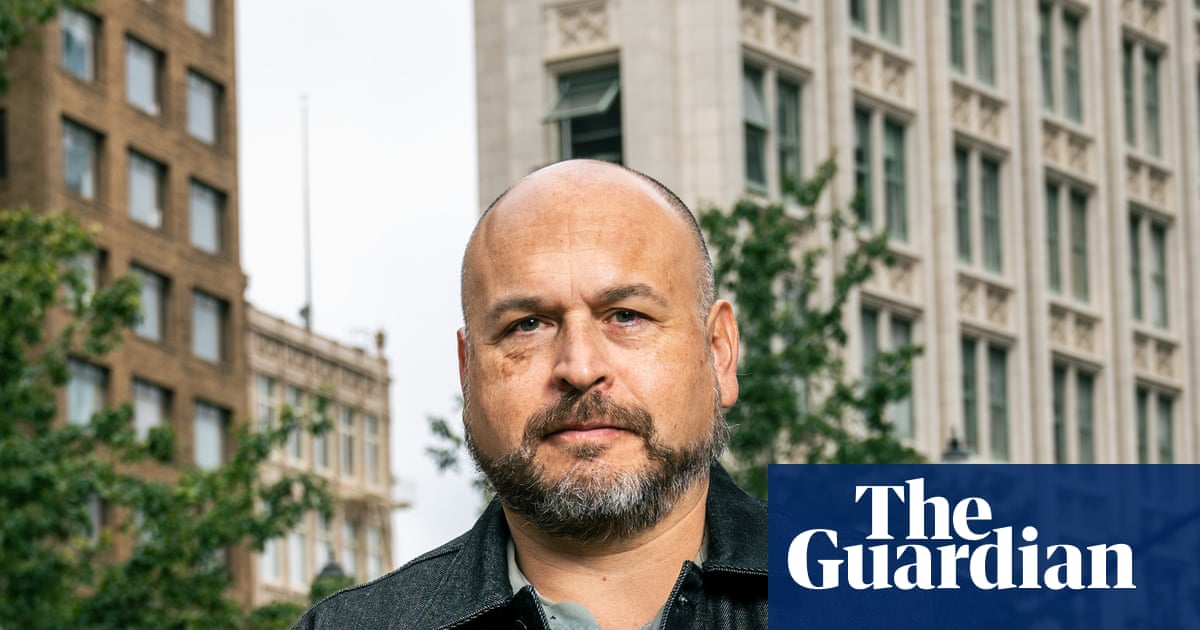
‘If we don’t fight back, we don’t have a future’: the journalist taking on the ‘tech fascists’ of Silicon Valley
As Elon Musk, Peter Thiel and their peers have grown richer and more influential, Gil Durán argues they have all but abandoned democracy – and found the perfect government to enable them
A Thesis on the History of the 21st Century: Technocracy, AI, and the End of the World
Reviewing a trio of books by a sextet of ruling-class ideologues, Mathias Fuelling finds an ambient anxiety hanging over a perceived crisis in American capitalism, with visions of bolstering a Silicon Valley-led technocracy fueled by AI investment reflecting American fears over the dawn of a "Chinese Century."