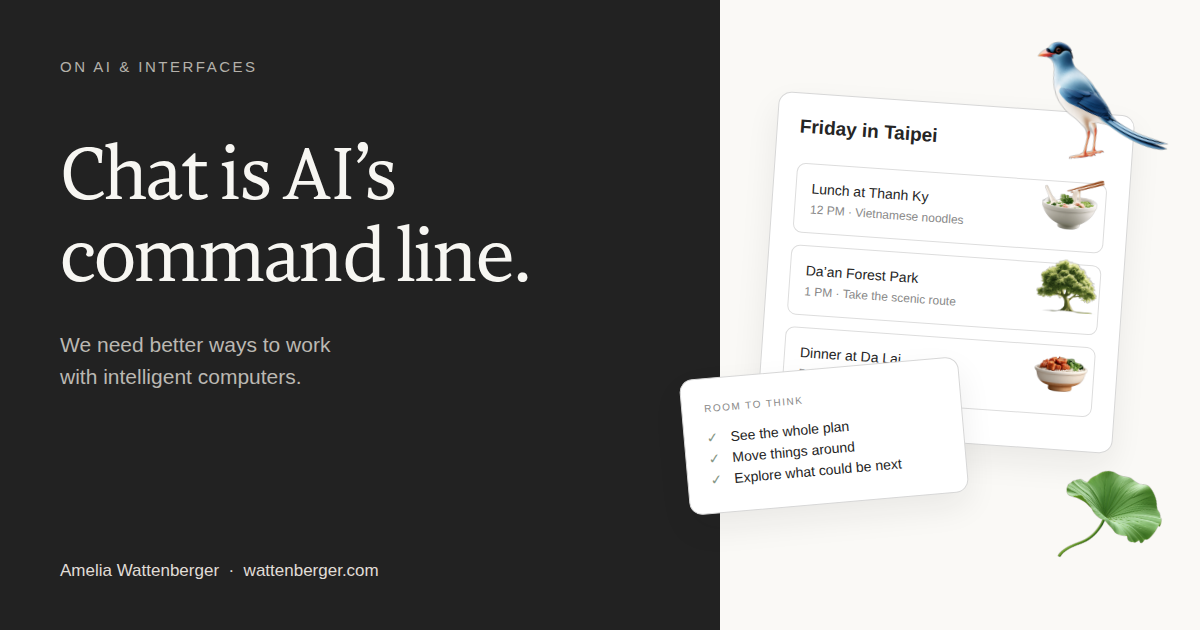
AI dev tooling can do better than chat interfaces
Writing effective tools for AI agents—using AI agents
Writing effective tools for AI agents—using AI agents

Agent Skills
AI coding agents take the shortest path to done, which usually means skipping the specs, tests, and reviews that make software reliable at scale. Agent Skill...

Ryan Singer on Twitter / X
Tools like Cursor hint at where AI-driven user interfaces are going. Chat is only 10%. Most of the output (and UI) is a domain-specific representation of the state of the work.In the case of AI coding, 90% of what you're looking at and thinking about is the IDE, the diffs, the… pic.twitter.com/z0nTUx4WnM— Ryan Singer (@rjs) June 13, 2025

Agentic Engineering Management
To what extent AI is OK to use in software development might be debated, but in general, the idea is not a controversial one anymore. The debate rather moved on from code completion and simple PR summarizations to Agentic Engineering, where an execution loop allows an AI Agent to function
AI Agents Are Thirsty for Power
Silicon Valley is shifting away from chatbot queries toward a future filled with resource-intensive agentic AI—and it's driving the data center buildout.

From chatbots to assistants: governance is key for AI agents
AI's shift into agentic technology ushers in a new set of governance and security challenges that will mean defining to what extent they should be autonomous

Why AI hasn’t replaced software engineers, and won’t
Coding agents as normal technology
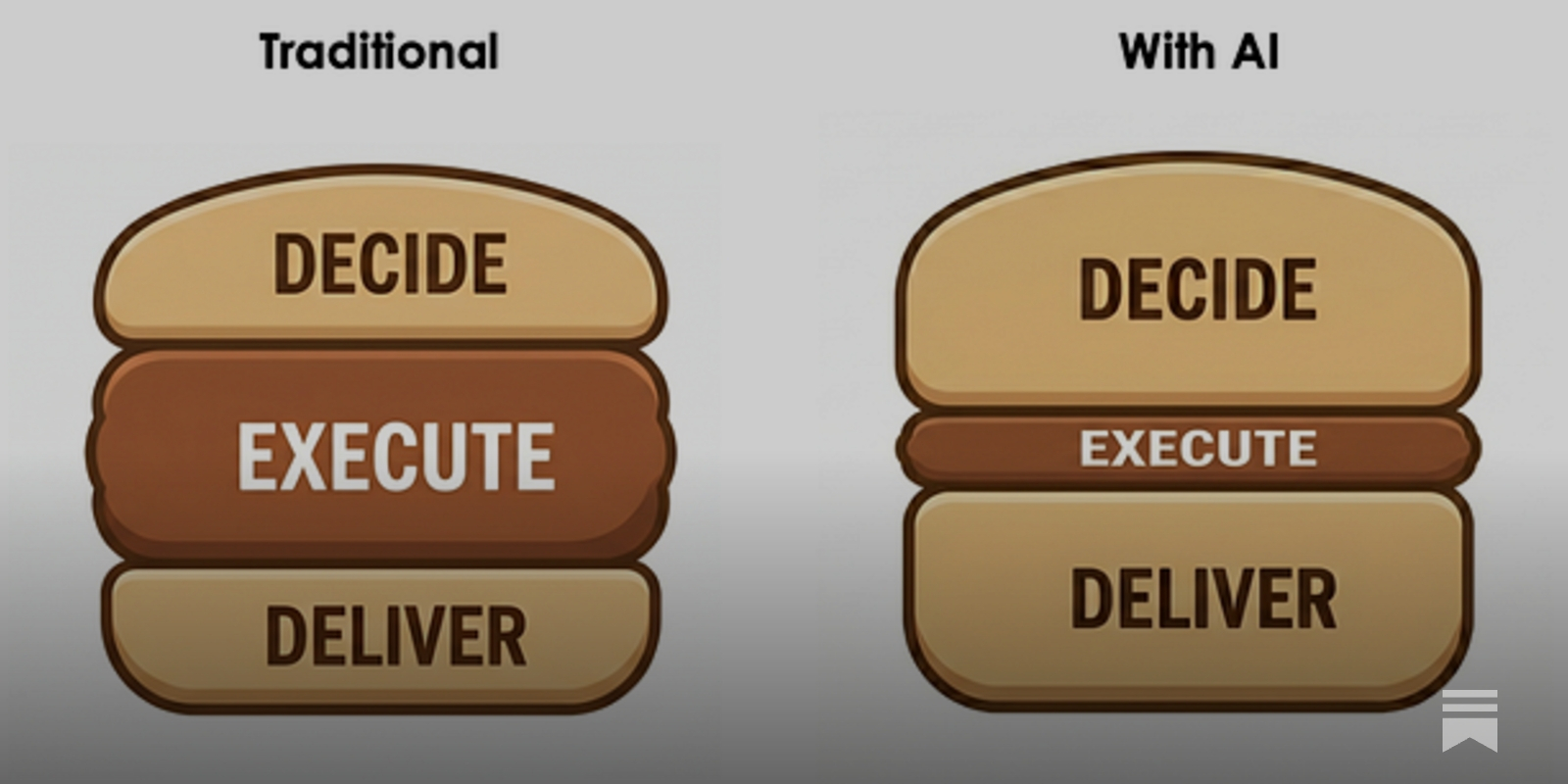
How to harness AI
"Coding agents" are complicated but intelligible

A tale of two Agent Builders
What two competing solutions to the same design problem tell about the future of designing AI interfaces.
The Rise of Agent Experience (AX)
The Landscape of Emerging AI Agent Architectures for Reasoning, Planning, and Tool Calling: A Survey
This survey paper examines the recent advancements in AI agent implementations, with a focus on their ability to achieve complex goals that require enhanced reasoning, planning, and tool execution capabilities. The primary objectives of this work are to a) communicate the current capabilities and limitations of existing AI agent implementations, b) share insights gained from our observations of these systems in action, and c) suggest important considerations for future developments in AI agent design. We achieve this by providing overviews of single-agent and multi-agent architectures, identifying key patterns and divergences in design choices, and evaluating their overall impact on accomplishing a provided goal. Our contribution outlines key themes when selecting an agentic architecture, the impact of leadership on agent systems, agent communication styles, and key phases for planning, execution, and reflection that enable robust AI agent systems.

Why Software Engineering Is Indispensable in the Age of Coding Agents
Can AI make Software Engineering (SE) -- the discipline -- obsolete? And can it make software engineers -- the professionals -- redundant? This paper argues that the rise of capable AI coding...
10 things I learned from burning myself out with AI coding agents
Opinion: As software power tools, AI agents may make people busier than ever before.

It's Time To Start Preparing APIs for the AI Agent Era
With agentic AI, integrations are no longer static and immutable concepts.

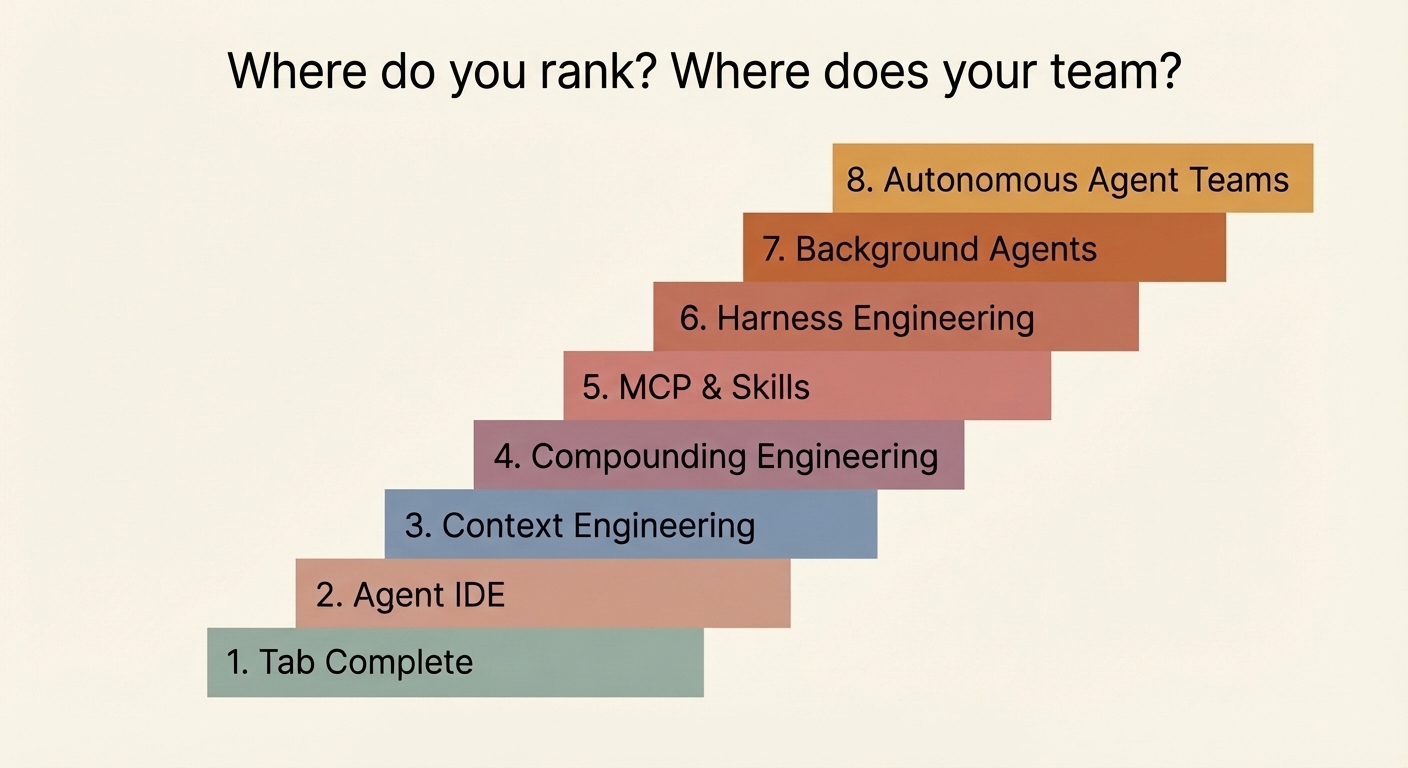
The 8 Levels of Agentic Engineering — Bassim Eledath
AI's coding ability is outpacing our ability to wield it effectively. That gap closes in levels — 8 of them. Here's the progression from tab complete to autonomous agent teams.