


Reprint: R1204F The author, whose biography of Steve Jobs was an instant best seller after the Apple CEO’s death in October 2011, sets out here to correct what he perceives as an undue fixation by many commentators on the rough edges of Jobs’s personality. That personality was integral to his way of doing business, Isaacson writes, but the real lessons from Steve Jobs come from what he actually accomplished. He built the world’s most valuable company, and along the way he helped to transform a number of industries: personal computing, animated movies, music, phones, tablet computing, retail stores, and digital publishing. In this essay Isaacson describes the 14 imperatives behind Jobs’s approach: focus; simplify; take responsibility end to end; when behind, leapfrog; put products before profits; don’t be a slave to focus groups; bend reality; impute; push for perfection; know both the big picture and the details; tolerate only “A” players; engage face-to-face; combine the humanities with the sciences; and “stay hungry, stay foolish.”
Steve Jobs
"FROM THE AUTHOR OF THE BESTSELLING BIOGRAPHIES OF BENJAMIN FRANKLIN AND ALBERT EINSTEIN, THIS IS THE EXCLUSIVE BIOGRAPHY OF STEVE JOBS. Based on more than forty interviews with Jobs conducted over two years--as well as interviews with more than a hundred family members, friends, adversaries, competitors, and colleagues--Walter Isaacson has written a riveting story of the roller-coaster life and searingly intense personality of a creative entrepreneur whose passion for perfection and ferocious drive revolutionized six industries: personal computers, animated movies, music, phones, tablet computing, and digital publishing. At a time when America is seeking ways to sustain its innovative edge, and when societies around the world are trying to build digital-age economies, Jobs stands as the ultimate icon of inventiveness and applied imagination. He knew that the best way to create value in the twenty-first century was to connect creativity with technology. He built a company where leaps of the imagination were combined with remarkable feats of engineering. Although Jobs cooperated with this book, he asked for no control over what was written nor even the right to read it before it was published. He put nothing off-limits. He encouraged the people he knew to speak honestly. And Jobs speaks candidly, sometimes brutally so, about the people he worked with and competed against. His friends, foes, and colleagues provide an unvarnished view of the passions, perfectionism, obsessions, artistry, devilry, and compulsion for control that shaped his approach to business and the innovative products that resulted. Driven by demons, Jobs could drive those around him to fury and despair. But his personality and products were interrelated, just as Apple's hardware and software tended to be, as if part of an integrated system. His tale is instructive and cautionary, filled with lessons about innovation, character, leadership, and values"--

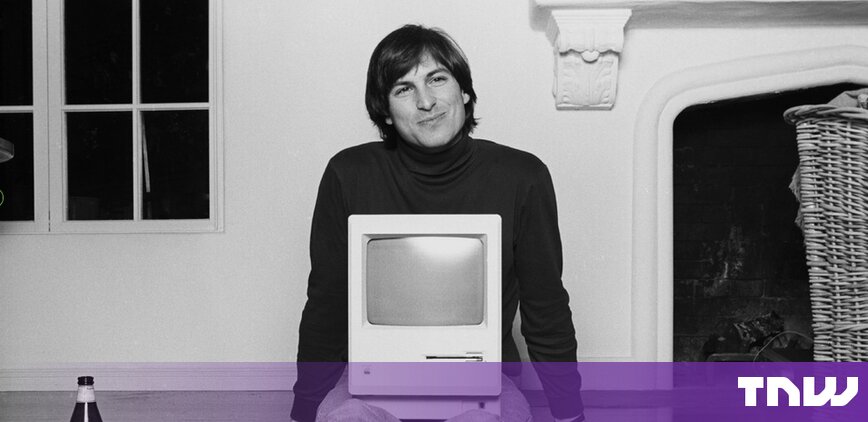
Steve Jobs Begs Designers in 1983 to Build Better Looking Computers
The Center for Design Innovation shared the tape of a rare speech recently that I thought was a fascinating snapshot of the transitional period from mainframe to personal computing. Jobs is typically charismatic in the speech, begging the attending designers to help Apple make computers that actually look good. This speech comes courtesy of a link […]
Was Steve Jobs a Role Model for Leaders?
According to this data, Jobs should be regarded as a statistical outlier and managerial anomaly.

The Hero Returns: Steve Jobs’ real genius
As the three-year anniversary of Steve Jobs’ passing approaches in October, complete lessons from his life and legacy are still far from…

Apple Turnaround
I spend a lot of time thinking about what Apple should be doing differently. I wrote Apple Turnover because so many of my notions kept running into a dead end: I could no longer bring myself to believe Apple would do these things without a change in leadership.

Steve Jobs was a "noticer" who could be harsh at times, sensitive at others
New anecdotes bring new details, like he was "really, really, really good 1-on-1."

Tim Cook on Shaping the Future of Apple
In a frank conversation, the Apple CEO offers new insight into his leadership—and explains how he has refashioned the world’s most creative company (from its privacy policy to its Oscar-winning movies to what’s coming next) on his own exacting terms.

Steve Jobs Envisioned the iPad in 1983
Visionary is one of the most frequently used words to describe Steve Jobs. Nearly a year after he passed away, historians are still digging up treasures from his life that confirm that assessment. The Next Web writes of a speech Jobs gave in 1983 at the Center for Design innovation.

Here’s why Apple believes it’s an AI leader—and why it says critics have it all wrong
Apple AI chief and ex-Googler John Giannandrea dives into the details with Ars.
Jeff Bezos’ email to his employees shows Amazon’s leadership problems are only beginning
Just as The New York Times’ scathing indictment of Amazon and its workplace culture hit the internet earlier this month—before the print edition was even in many readers’ hands—Amazon’s CEO Jeff Bezos sent a memo to his employees in an effort to contain the impact. Perhaps admirably, he acknowledged the controversy and encouraged his employees “to give this . . . article a careful read.”

How Steve Jobs Became a Billionaire | Fortune
It wasn't Apple that made him his first billion, as a book by Pixar ex-CFO Lawrence Levy explains.

Scott Galloway - The Four - What To Do
The scent of Musk: Power, charisma and paranoia in Silicon Valley
Simon Sinek: Why Leaders Eat Last
In this in-depth talk, ethnographer and leadership expert Simon Sinek reveals the hidden dynamics that inspire leadership and trust. In biological terms, leaders get the first pick of food and other spoils, but at a cost. When danger is present, the group expects the leader to mitigate all threats even at the expense of their personal well-being. Understanding this deep-seated expectation is the key difference between someone who is just an “authority” versus a true “leader.” For more on this topic, check out Sinek’s latest book Leaders Eat Last: Why Some Teams Pull Together and Others Don’t now available for pre-order. About Simon Sinek A trained ethnographer and the author of Start With Why: How Great Leaders Inspire Everyone to Take Action, Simon Sinek has held a life-long curiosity for why people and organizations do the things they do. Studying the leaders and companies that make the greatest impact in the world and achieve a more lasting success than others, he discovered the formula that explains how they do it. Sinek’s amazingly simple idea, The Golden Circle, is grounded in the biology of human decision-making and is changing how leaders and companies think and act. His innovative views on business and leadership have earned him invitations to meet with an array of leaders and organizations, including Microsoft, Dell, SAP, Intel, Chanel, Members of the United States Congress, and the Ambassadors of Bahrain and Iraq. Sinek recently became an adjunct staff member of the RAND Corporation, one of the most highly regarded think tanks in the world. He also works with the non-profit Education for Employment Foundation to help create opportunities for young men and women in the Middle East region. He lives in New York, where he teaches graduate level strategic communications at Columbia University.

What the hell is going on with Apple?
The commonly held belief is that Apple charges ridiculously high prices for its products because they’re well-built, beautiful objects that the company generally stands behind. As founder Steve Jobs loved to say, Apple’s products “just work.”
