Back in the 1990s, computer engineer and Wall Street “quant” were the hot occupations in business. Today data scientists are the hires firms are competing to make. As companies wrestle with unprecedented volumes and types of information, demand for these experts has raced well ahead of supply. Indeed, Greylock Partners, the VC firm that backed Facebook and LinkedIn, is so worried about the shortage of data scientists that it has a recruiting team dedicated to channeling them to the businesses in its portfolio. Data scientists are the key to realizing the opportunities presented by big data. They bring structure to it, find compelling patterns in it, and advise executives on the implications for products, processes, and decisions. They find the story buried in the data and communicate it. And they don’t just deliver reports: They get at the questions at the heart of problems and devise creative approaches to them. One data scientist who was studying a fraud problem, for example, realized it was analogous to a type of DNA sequencing problem. Bringing those disparate worlds together, he crafted a solution that dramatically reduced fraud losses. In this article, Harvard Business School’s Davenport and Greylock’s Patil take a deep dive on what organizations need to know about data scientists: where to look for them, how to attract and develop them, and how to spot a great one.
How to Do Ambitious Research in the Modern Era
Collaboratory at Columbia: An Aspen Grove of Data Science Education · Issue 3.4, Fall 2021
Many universities recognize the rapidly growing impact of data science in all fields of study and the professions and seek to embed this expertise widely across their educational offerings. There is often broad interest in developing new data science curricula, with some universities even allocating funds toward this purpose. Yet, it is often unclear what resources are needed for effective data science education, and how resources ought to be prioritized. Although university leadership might be aware of a growing number of successful data science acceleration programs and pedagogical models, many of which are either general purpose or specific to a particular discipline, there remains a lack of clarity about how these models might address their own specific needs. This article presents the Collaboratory Program at Columbia University (termed “the Collaboratory”), which is both a set of “data science in context” educational approaches, as well as a meta-model for an accelerator program that allows different institutions to respond flexibly to their own disciplinary heterogeneity in terms of data science educational needs. The novelty of the Collaboratory lies in its crowd-sourcing approach to creating new data science pedagogy and its ability to kindle transdisciplinary collaboration in doing so. By offering seed funding, it fosters proactive efforts to embed data science “in context” into more traditional domains through a cohort of compelling, transdisciplinary, crowd-sourced data science education proposals each year. Collaboratory educational offerings are required to be developed through a partnership between two faculty members, a data scientist and a domain expert from another field, or a larger team with complementary expertise. Over the past 5 years, the Collaboratory has supported the development of a wide spectrum of data science pedagogical models spread across more than 40 academic departments, centers, institutes, and professional schools at Columbia University. As a result, the Collaboratory has to date served the learning needs of more than 4,000 students. Furthermore, it has cultivated a thriving ecosystem that includes a funding mechanism and a community-support structure that all contribute to its agility and success. Here, we offer our experience and best practices in developing and managing the Collaboratory, which, we hope, will contribute to a blueprint for data science education leaders everywhere.

Living in Data: A Citizen's Guide to a Better Information Future (Paperback)
Jer Thorp’s analysis of the word “data” in 10,325 New York Times stories written between 1984 and 2018 shows a distinct trend: among the words most closely associated with “data,” we find not only its classic companions “information” and “digital,” but also a variety of new neighbors—from “scandal” and “misinformation” to “ethics,” “friends,” and “play.”To live in data in the twenty-first century

Can “Conscious Data Contribution” Help Users to Exert “Data Leverage” Against Technology Companies?
Tech users currently have limited ability to act on concerns regarding the negative societal impacts of large tech companies. However, recent work suggests that users can exert leverage using their role in the generation of valuable data, for instance by withholding their data contributions to intelligent technologies. We propose and evaluate a new means to exert this type of leverage against tech companies: "conscious data contribution" (CDC).
Data Science in 2020: Computing, Curricula, and Challenges for the Next 10 Years
In the past 10 years, new data science courses and programs have proliferated at the collegiate level. As faculty and administrators enter the race to provide data science training and attract new ...

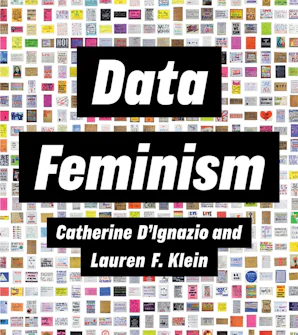
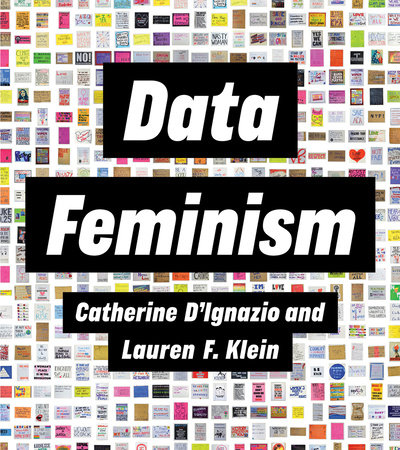
Data Feminism
Today, data science is a form of power. It has been used to expose injustice, improve health outcomes, and topple governments. But it has also been used to d...
Governing by dismantling: tech oligarchy and the stifling of public data infrastructure
Published in Science as Culture (Ahead of Print, 2026)

Data Feminism
A new way of thinking about data science and data ethics that is informed by the ideas of intersectional feminism.Today, data science is a form of power. I
Doing Data Science on the Shoulders of Giants: The Value of Open Source Software for the Data Science Community · Issue 2.2, Spring 2020
Open source software is ubiquitous throughout data science, and enables the work of nearly every data scientist in some way or another. Open source projects, however, are disproportionately maintained by a small number of individuals, some of whom are institutionally supported, but many of whom do this maintenance on a purely volunteer basis. The health of the data science ecosystem depends on the support of open source projects, on an individual and institutional level.

3 Powerful Takeaways from the National Workshop on Data Science Education
As the field flourishes, there is much we can do to benefit its countless students.

An AI job boom? Here’s what the tedious, temporary work in data labelling is actually like
Interviews with data workers in China and Australia reveal the precarious, exploitative conditions of this new branch of the gig economy.

An AI job boom? Here’s what the tedious, temporary work in data labelling is actually like
Interviews with data workers in China and Australia reveal the precarious, exploitative conditions of this new branch of the gig economy.
Who Will Keep Research Data Infrastructure Open and Running?
The scientific community must consider the longevity of open research infrastructure—why it might fail and how to prevent it.

Who Will Keep Research Data Infrastructure Open and Running?
The scientific community must consider the longevity of open research infrastructure—why it might fail and how to prevent it.
Highlights of the National Academies Report on "Undergraduate Data Science: Opportunities and Options” · Issue 1.1, Summer 2019
An interview with Laura Haas and Alfred Hero by Robert Lue

Is the Left Making a ‘Massive Strategic Blunder’ on Data Centers?
A conversation with Holly Jean Buck, author of a buzzy story about Bernie Sanders’ proposal for a national data center moratorium.