Prioritize their personal development.
High-Performing Teams Need Psychological Safety: Here’s How to Create It
The highest-performing teams have one thing in common: psychological safety — the belief that you won’t be punished when you make a mistake. Studies show that psychological safety allows for taking moderate risks, speaking your mind, being creative, and sticking your neck out without fear of having it cut off — just the types of behavior that lead to market breakthroughs. So how can you increase psychological safety on your own team? First, approach conflict as a collaborator, not an adversary. When conflicts come up, avoid triggering a fight-or-flight reaction by asking, “How could we achieve a mutually desirable outcome?” Speak human-to-human, but anticipate reactions, plan countermoves, and adopt a learning mindset, where you’re truly curious to hear the other person’s point of view. Ask for feedback to illuminate your own blind spots. If you create this sense of psychological safety on your own team starting now, you can expect to see higher levels of engagement, increased motivation to tackle difficult problems, more learning and development opportunities, and better performance.

Superteams
FEATURED ON THE COVER OF HARVARD BUSINESS REVIEW SHORTLISTED FOR THE SABEW 2026 BEST IN BUSINESS BOOK AWARDS “An outstanding book.” —NPR “A valuable guide for teams and managers seeking to improve performance.” —The Wall Street Journal “A rare read that introduces fresh ideas about how to make groups more than the sum of their parts.” —Adam Grant, bestselling author of Think Again “The ultimate playbook for how to build exceptional teams.” —Fast Company What do the best teams do differently? To find out, award-winning social psychologist Ron Friedman surveyed thousands of teams and pinpointed the precise habits that separate the best from the rest. The results upend everything we think we know about teamwork. It turns out that the most successful teams aren’t the ones that collaborate most, get along best, or put in the longest hours. What really sets them apart is the way they manage their energy and attention, bring out the best in one another, and keep improving over time. Blending eye-opening discoveries with unforgettable stories, Superteams takes you inside the writers’ room of Succession and Bridgerton, the recording studio of ABBA and Fleetwood Mac, the kitchens of Michelin-starred restaurants, the laboratories of Nobel Prize-winning scientists, the locker rooms of NBA and NFL teams, and the boardrooms of the world's most innovative companies. You will learn: - A simple rule that instantly cuts meeting time in half - Why the secret to better teamwork is less teamwork - The one question that makes team decisions up to 30% smarter - The only office perk that improves performance (spoiler: it’s not coffee) - How personal productivity hacks make teamwork harder - Why feeling like the smartest person in the room is a red flag - Why top performers care more about disappointing their peers than their boss - How the best teams avoid burnout without working fewer hours - The science of truly restorative breaks, evenings, and vacations - How to build a team that keeps getting better (even when you’re not in charge) Smart, insightful, and relentlessly practical, this is your science-backed guide to turning your team into a Superteam.

A Guide to Measuring Engineering Team Performance
“You can’t manage what you can’t measure.” While software development practices constantly change, there will always be a tier of truly top engineering teams who stand above…

How finishing what you start makes teams more productive and predictable
Hot takes and cold truths on software, startups, and the lies we tell ourselves.
Managing Yourself: What Brain Science Tells Us About How to Excel
Reprint: R1012L Millions of people are struggling at work. Some are in the wrong jobs. Others feel no connection to their colleagues or engagement with their tasks. The result is rampant dissatisfaction and underachievement. Hallowell, a child psychiatrist specializing in learning differences, describes the Cycle of Excellence, a plan for helping people achieve peak performance. It consists of five steps: Select a job that reflects what you like to do and what you do best and that adds value to the organization. Research has shown that good job fit reduces stress and increases satisfaction and performance. Connect with the people around you. Robust relationships in the workplace galvanize people and build their engagement with their jobs. Small talk may seem trivial, but it pays big dividends. Play on the job. It sounds like an oxymoron, but people do their best—and are most satisfied—when they’re imaginatively involved with their work. And when you’re hard at play, you’re building your brain. Grapple and Grow —that is, work hard to achieve a difficult task. The stress you may feel as you engage with a tough assignment and connect with others to complete it is not the toxic kind. Shine in the acknowledgment of your achievements. Praise releases chemicals that make us feel good, and it fills our uniquely human need to be of value, to matter. If you aren’t getting it, ask for it. The need for recognition is fundamental to optimal human performance.
The New Science of Building Great Teams
Why do some teams consistently deliver high performance while other, seemingly identical teams struggle? Led by Sandy Pentland, researchers at MIT’s Human Dynamics Laboratory set out to solve that puzzle. Hoping to decode the “It factor” that made groups click, they equipped teams from a broad variety of projects and industries (comprising 2,500 individuals in total) with wearable electronic sensors that collected data on their social behavior for weeks at a time. With remarkable consistency, the data showed that the most important predictor of a team’s success was its communication patterns. Those patterns were as significant as all other factors—intelligence, personality, talent—combined. In fact, the researchers could foretell which teams would outperform simply by looking at the data on their communication, without even meeting their members. In this article Pentland shares the secrets of his findings and shows how anyone can engineer a great team. He has identified three key communication dynamics that affect performance: energy, engagement, and exploration. Drawing from the data, he has precisely quantified the ideal team patterns for each. Even more significant, he has seen that when teams map their own communication behavior over time and then make adjustments that move it closer to the ideal, they can dramatically improve their performance.
Habits of High-Functioning Teams
I often struggle to explain what it means to be part of a high-functioning software team. Sure, there are mountains of literature, and an entire genre of LinkedIn thought leadership that professes all kinds of guidelines and heuristics about what makes teams work, but in my experience, it’s hard to internalize these ideas and follow someone else’s model if you’ve never seen what good looks like.
The "Yips" in Baseball: Psychological Causes and Cures - Baseball Scouter
Demystifying the baseball yips: learn what they are, why they happen, and a practical four-week plan with mental skills and graded drills to restore smooth, confident throws under pressure.

How to Create a Great Team Culture (and Why It Matters): Build safety, share vulnerability, establish purpose.: Queue: Vol 17, No 1
As leader of the team, you have significant influence over your team's culture. You can institute policies and procedures that help make your team happy and productive, monitor team successes, and continually improve the team. Another important part of ...

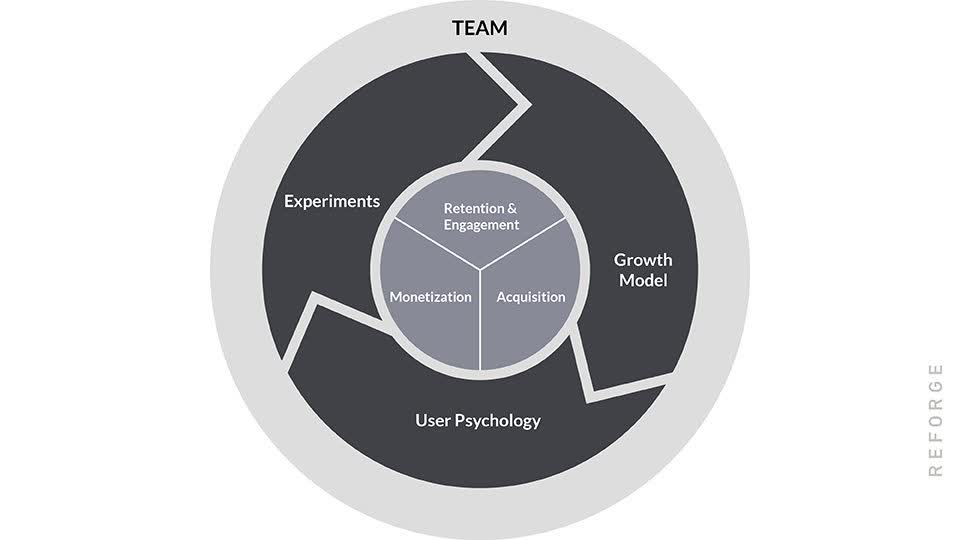
Building Growth: Product, Process, and Team | Reforge Blog
Reforge drives team performance, with the most actionable learning from vetted operators that your team will actually use and apply.
To unlock your team, reset your culture.
"I believe there are a lot of excellent individuals working in flawed cultures." Here's a path to resetting them and finding your way to high performance.
How teams can master setting goals in an ever-changing environment - Inside Atlassian
Here are a few ways your team can set a course for their goal and stay on track no matter how—or how quickly—the goalposts move.

Manage your priorities and energy.
Back when I was managing at Uber, I latched onto a thinking tool that I drilled into the teams I worked with: reach the right outcomes by prioritizing the company first, your team second, and yourself third. This “company, team, self” framework proved a helpful decision-making tool, and at the time I felt it almost always led to the correct decision. It also helped me articulate why I disagreed with some of my peers’ decisions, which violated this hierarchy by placing individual or team preferences over the company’s priorities.

What Amazing Bosses Do Differently
Job satisfaction is often directly related to the relationships we have with our bosses. But how can managers help their employees have satisfying work experiences? Start by managing individuals, not teams, which means personalizing your interactions with individuals and being accessible for one-on-one conversations. Next, go big on meaning: inspire your employees with a vision, set challenging goals, and pump up their confidence so they believe they can win. You should also focus on feedback, using regular – at least weekly – conversations to give lots of coaching. Amazing leaders don’t just talk, they listen. Instead of promoting your own views too strongly, ask questions to enlist your team in generating solutions to problems. Finally, be consistent in your management style, vision, expectations, feedback, and openness to new ideas. These five key practices require attentiveness. Put time into helping your team grow, and the pay-off will be worth it.

Burnout From an Organizational Perspective (SSIR)
Instead of pressuring already-stressed individuals to fix themselves, true wellness requires organization-level interventions. <meta property=