


Research shows they’re more successful in three important ways.
Opinion | Why Some Teams Are Smarter Than Others (Published 2015)
It’s about listening, empathy and having more women.

The Task Space: An Integrative Framework for Team Research
Research on teams spans many contexts, but integrating knowledge from heterogeneous sources is challenging because studies typically examine different tasks that cannot be directly compared. Most investigations involve teams working on just one or a handful of tasks, and researchers lack principled ways to quantify how similar or different these tasks are from one another. We address this challenge by introducing the “Task Space,” a multidimensional space in which tasks—and the distances between them—can be represented formally, and use it to create a “Task Map” of 102 crowd-annotated tasks from the published experimental literature. We then demonstrate the Task Space’s utility by performing an integrative experiment that addresses a fundamental question in team research: when do interacting groups outperform individuals? Our experiment samples 20 diverse tasks from the Task Map at three complexity levels and recruits 1,231 participants to work either individually or in groups of three or six (180 experimental conditions). We find striking heterogeneity in group advantage, with groups performing anywhere from three times worse to 60% better than the best individual working alone, depending on the task context. Critically, the Task Space makes this heterogeneity predictable: it significantly outperforms traditional typologies in predicting group advantage on unseen tasks. Our models also reveal theoretically meaningful interactions between task features; for example, group advantage on creative tasks depends on whether the answers are objectively verifiable. We conclude by arguing that the Task Space enables researchers to integrate findings across different experiments, thereby building cumulative knowledge about team performance. This paper was accepted by Sameer Srivastava, organizations. Funding: The authors thank the Alfred P. Sloan Foundation [Grant #202-13924] and the MIT Wade Fund for their generous support of this research. Supplemental Material: The online appendix and data files are available at https://doi.org/10.1287/mnsc.2023.03544 .

Home
Research, expert perspectives, and product announcements from Atlassian on how teams can work smarter with AI. Subscribe for monthly insights on the future of teamwork.
Shifting the Level of Selection in Science
Criteria for recognizing and rewarding scientists primarily focus on individual contributions. This creates a conflict between what is best for scientists’ careers and what is best for science. In this article, we show how the theory of multilevel selection provides conceptual tools for modifying incentives to better align individual and collective interests. A core principle is the need to account for indirect effects by shifting the level at which selection operates from individuals to the groups in which individuals are embedded. This principle is used in several fields to improve collective outcomes, including animal husbandry, team sports, and professional organizations. Shifting the level of selection has the potential to ameliorate several problems in contemporary science, including accounting for scientists’ diverse contributions to knowledge generation, reducing individual-level competition, and promoting specialization and team science. We discuss the difficulties associated with shifting the level of selection and outline directions for future development in this domain.

The New Science of Building Great Teams
Why do some teams consistently deliver high performance while other, seemingly identical teams struggle? Led by Sandy Pentland, researchers at MIT’s Human Dynamics Laboratory set out to solve that puzzle. Hoping to decode the “It factor” that made groups click, they equipped teams from a broad variety of projects and industries (comprising 2,500 individuals in total) with wearable electronic sensors that collected data on their social behavior for weeks at a time. With remarkable consistency, the data showed that the most important predictor of a team’s success was its communication patterns. Those patterns were as significant as all other factors—intelligence, personality, talent—combined. In fact, the researchers could foretell which teams would outperform simply by looking at the data on their communication, without even meeting their members. In this article Pentland shares the secrets of his findings and shows how anyone can engineer a great team. He has identified three key communication dynamics that affect performance: energy, engagement, and exploration. Drawing from the data, he has precisely quantified the ideal team patterns for each. Even more significant, he has seen that when teams map their own communication behavior over time and then make adjustments that move it closer to the ideal, they can dramatically improve their performance.

What Google Learned From Its Quest to Build the Perfect Team (Published 2016)
New research reveals surprising truths about why some work groups thrive and others falter.

What Google Learned From Its Quest to Build the Perfect Team (Published 2016)
New research reveals surprising truths about why some work groups thrive and others falter.
Home - Inside Atlassian
Research, expert perspectives, and product announcements from Atlassian on how teams can work smarter with AI. Subscribe for monthly insights on the future of teamwork.
Home - Inside Atlassian
Research, expert perspectives, and product announcements from Atlassian on how teams can work smarter with AI. Subscribe for monthly insights on the future of teamwork.
The Illusion of Asymmetric Insight
The Misconception: You celebrate diversity and respect others’ points of view. The Truth: You are driven to create and form groups and then believe others are wrong just because they are oth…

3 Mental Shifts Highly Successful People Make Right Before Their Careers Take Off
Prioritize "clarity over cleverness."

The Surprising Value of Obvious Insights | MIT Sloan Management Review
Confirming what people already believe can sometimes help organizations overcome barriers to change.
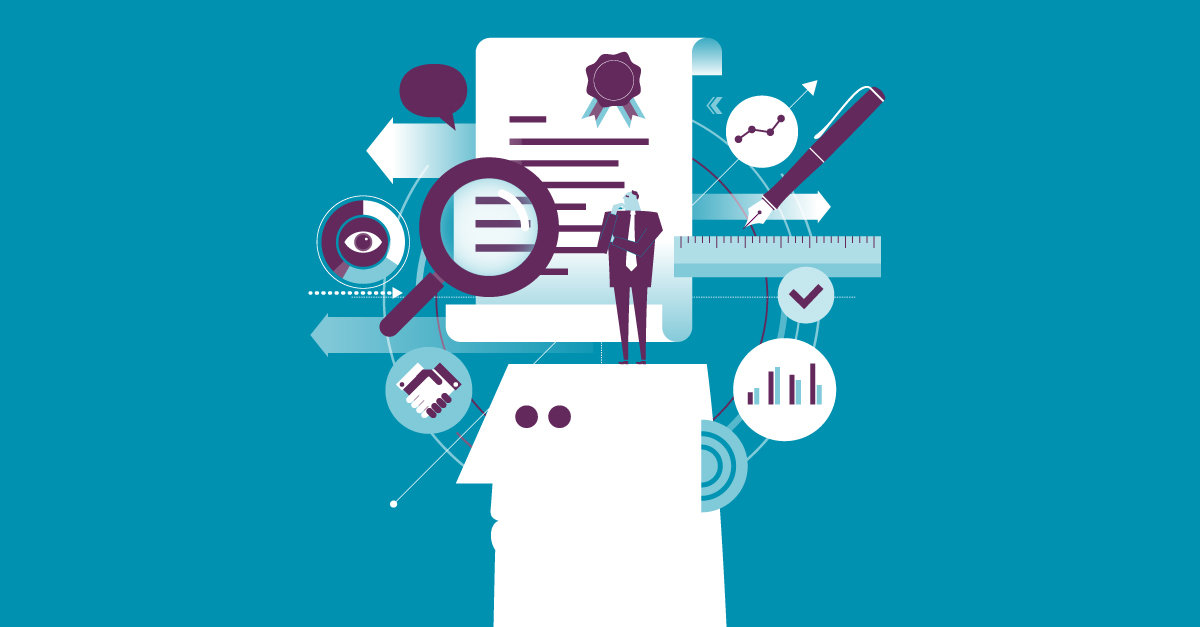
The Social Physics of Conversation: Why Communication Patterns Matter
Discover how communication patterns shape team performance, innovation, and collective intelligence. Learn why idea flow matters more than talent alone.
Redundancy Protects Human Collaborations from Failure
In the name of efficiency, organizations and governments around the world are increasingly trimming redundancy---personnel or overlapping capabilities beyond what routine operations require. Drawing on distributed computing and cognitive science, we challenge this view. Using queueing simulations and a preregistered multiplayer experiment (N = 832 in 187 teams of 3–6), we show that redundancy improves performance through two distinct routes. Adding collaborators to a team improves resilience, with larger teams completing more tasks when members became temporarily unable to contribute. Giving team members overlapping capabilities also improved efficiency, with teams in which collaborators could perform multiple roles completing substantially more work. These findings suggest that efforts to improve short-term efficiency by reducing redundancy may come at a cost, quietly eroding a team’s capacity to withstand unexpected failures.
3 tactics for leading a team through uncertainty
Lessons learned leading a team through a bumpy acquisition.

Collective Intelligence Research

Explorations into the idea that a group of humans is "more intelligent" than the sum of their "IQ" (i.e. "groups of individuals doing things collectively that seem intelligent")
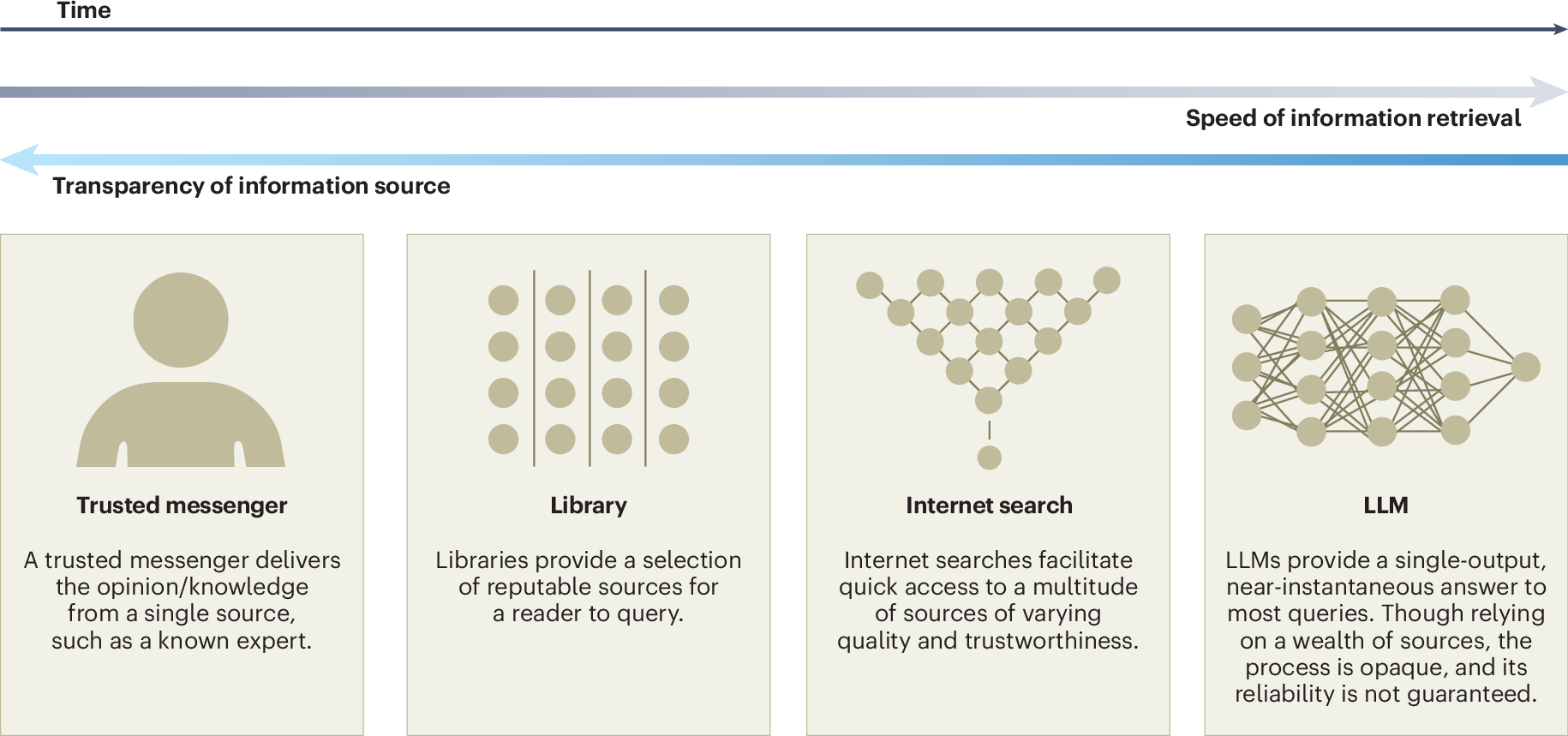
How large language models can reshape collective intelligence

Sharing Notes about Collective Intelligence — Pop Junctions

Socially Minded Intelligence: How Individuals, Groups, and Artificial Intelligence Can Make Each Other Smarter (or Not)

Profile: Adrien Treuille

NOVA | The Wisdom of the Crowds | Season 45 | Episode 6
Mapping Citizen Science through the Lens of Human-Centered AI