


In the face of escalating complexities, organizations are increasingly relying on teams to tackle these intricate issues and drive pivotal organizational decisions. To extract maximum value from team dynamics, leaders must remain mindful of potential biases that may impact team dynamics and to actively steer and fine-tune team processes. Specifically, the authors urge leaders to address a decision-making bias they call the solution fixation trap, which emerges when a team rushes into discussing possible solutions before fully understanding the problem at hand. The authors discuss the study that helped them uncover this bias, explain what the solution fixation trap looks like, and discuss what leaders can do to protect their teams from it.
Habits of High-Functioning Teams
I often struggle to explain what it means to be part of a high-functioning software team. Sure, there are mountains of literature, and an entire genre of LinkedIn thought leadership that professes all kinds of guidelines and heuristics about what makes teams work, but in my experience, it’s hard to internalize these ideas and follow someone else’s model if you’ve never seen what good looks like.
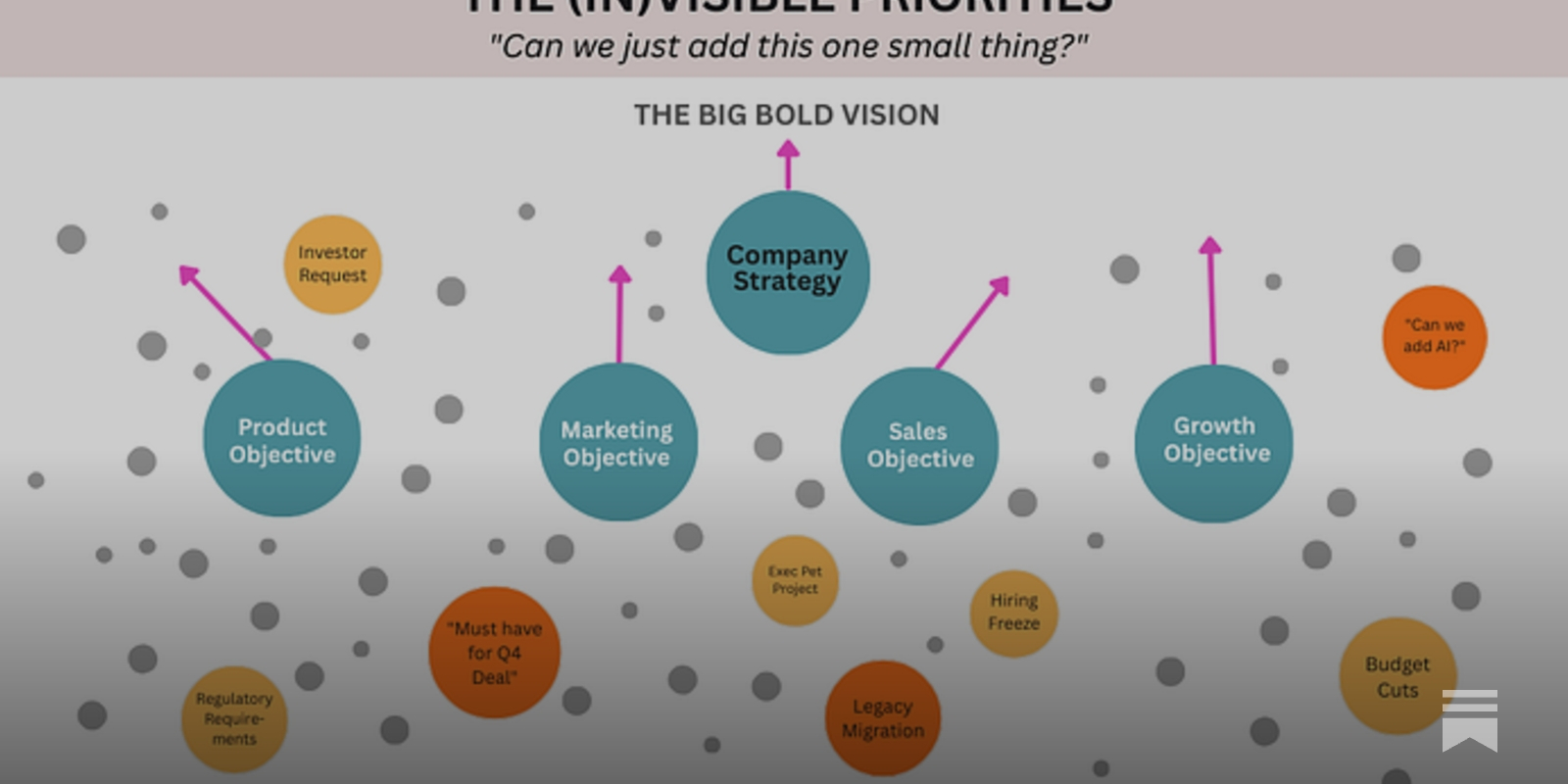
The Illusion of Decisiveness
Why product teams spin in chaos despite a "clear" strategy
Adopt and scale Team Topologies: platform-as-a-product, templates, more. — Team Topologies - Organizing for fast flow of value
Accelerate value with Team Topologies: measure cognitive load, define team boundaries, apply inverse Conway, readiness assessments, and more for fast delivery.

3 tactics for leading a team through uncertainty
Lessons learned leading a team through a bumpy acquisition.

Why Good Leaders Fail
The risk of sudden leadership failure can be headed off by early detection of challenges and better supports.

The Value of Getting Closer to the Work
Scaling The core problem of scaling a team is that not everyone can know everything. Scaling is the work of systematizing that – so that things are understandable, knowable. It’s turnin…

The Task Space: An Integrative Framework for Team Research
Research on teams spans many contexts, but integrating knowledge from heterogeneous sources is challenging because studies typically examine different tasks that cannot be directly compared. Most investigations involve teams working on just one or a handful of tasks, and researchers lack principled ways to quantify how similar or different these tasks are from one another. We address this challenge by introducing the “Task Space,” a multidimensional space in which tasks—and the distances between them—can be represented formally, and use it to create a “Task Map” of 102 crowd-annotated tasks from the published experimental literature. We then demonstrate the Task Space’s utility by performing an integrative experiment that addresses a fundamental question in team research: when do interacting groups outperform individuals? Our experiment samples 20 diverse tasks from the Task Map at three complexity levels and recruits 1,231 participants to work either individually or in groups of three or six (180 experimental conditions). We find striking heterogeneity in group advantage, with groups performing anywhere from three times worse to 60% better than the best individual working alone, depending on the task context. Critically, the Task Space makes this heterogeneity predictable: it significantly outperforms traditional typologies in predicting group advantage on unseen tasks. Our models also reveal theoretically meaningful interactions between task features; for example, group advantage on creative tasks depends on whether the answers are objectively verifiable. We conclude by arguing that the Task Space enables researchers to integrate findings across different experiments, thereby building cumulative knowledge about team performance. This paper was accepted by Sameer Srivastava, organizations. Funding: The authors thank the Alfred P. Sloan Foundation [Grant #202-13924] and the MIT Wade Fund for their generous support of this research. Supplemental Material: The online appendix and data files are available at https://doi.org/10.1287/mnsc.2023.03544 .

Against optimization
One of the most inescapable edicts when leading a team is the order to optimize the system towards the organization’s goals.


Home
Research, expert perspectives, and product announcements from Atlassian on how teams can work smarter with AI. Subscribe for monthly insights on the future of teamwork.
How to build internal culture on a T&S team
T&S Insider’s practical, step-by-step guide to building a T&S team that takes accountability, surfaces problems early and doesn't shy away from asking leadership hard questions.

Why AI Makes Things Worse for Enterprise Teams, by Paul Ford
Why are so few engineering teams reaping the benefits of AI? On this week’s episode, Paul presents Rich with the findings from a recent report from CircleCI and

Case Studies — Team Topologies - Organizing for fast flow of value
Examples of Team Topologies used in industry
Home - Inside Atlassian
Research, expert perspectives, and product announcements from Atlassian on how teams can work smarter with AI. Subscribe for monthly insights on the future of teamwork.
Home - Inside Atlassian
Research, expert perspectives, and product announcements from Atlassian on how teams can work smarter with AI. Subscribe for monthly insights on the future of teamwork.