


Despite a surge in generative AI use across workplaces, most companies are seeing little measurable ROI. One possible reason is because AI tools are being used to produce “workslop”—content that appears polished but lacks real substance, offloading cognitive labor onto coworkers. Research from BetterUp Labs and Stanford found that 41% of workers have encountered such AI-generated output, costing nearly two hours of rework per instance and creating downstream productivity, trust, and collaboration issues. Leaders need to consider how they may be encouraging indiscriminate organizational mandates and offering too little guidance on quality standards. To counteract workslop, leaders should model purposeful AI use, establish clear norms, and encourage a “pilot mindset” that combines high agency with optimism—promoting AI as a collaborative tool, not a shortcut.
Companies Are Being Torn Apart by AI "Workslop," Stanford Research Finds
Not only is AI hampering productivity, but it's also blowing up collaboration and souring employee dynamics.

AI Doesn’t Reduce Work—It Intensifies It
One of the promises of AI is that it can reduce workloads so employees can focus more on higher-value and more engaging tasks. But according to new research, AI tools don’t reduce work, they consistently intensify it: In the study, employees worked at a faster pace, took on a broader scope of tasks, and extended work into more hours of the day, often without being asked to do so. That may sound like a win, but it’s not quite so simple. These changes can be unsustainable, leading to workload creep, cognitive fatigue, burnout, and weakened decision-making. The productivity surge enjoyed at the beginning can give way to lower quality work, turnover, and other problems. To correct for this, companies need to adopt an “AI practice,” or a set of norms and standards around AI use that can include intentional pauses, sequencing work, and adding more human grounding.

Does AI Actually Boost Developer Productivity? (100k Devs Study) - Yegor Denisov-Blanch, Stanford
AI Is Turning Workplaces Into Hopeless Gridlock
Office workers find that they are being flooded by AI generated workslop that's paradoxically making them less productive.

When Using AI Leads to “Brain Fry”
As firms increasingly incentivize employees to build and oversee complex teams of agents—for example, by measuring and rewarding token consumption as a proxy for performance—people are finding themselves pushed to their cognitive limits. Participants in a recent study described a “buzzing” feeling or a mental fog with difficulty focusing, slower decision-making, and headaches. The authors call this phenomenon “AI brain fry,” defined as mental fatigue from excessive use or oversight of AI tools beyond one’s cognitive capacity. This AI-associated mental strain carries significant costs in the form of increased employee errors, decision fatigue, and intention to quit. The findings also show how AI-driven workflows can be designed to diminish burnout and point toward specific manager, team, and organizational practices to avoid mental fatigue even as AI work intensifies.

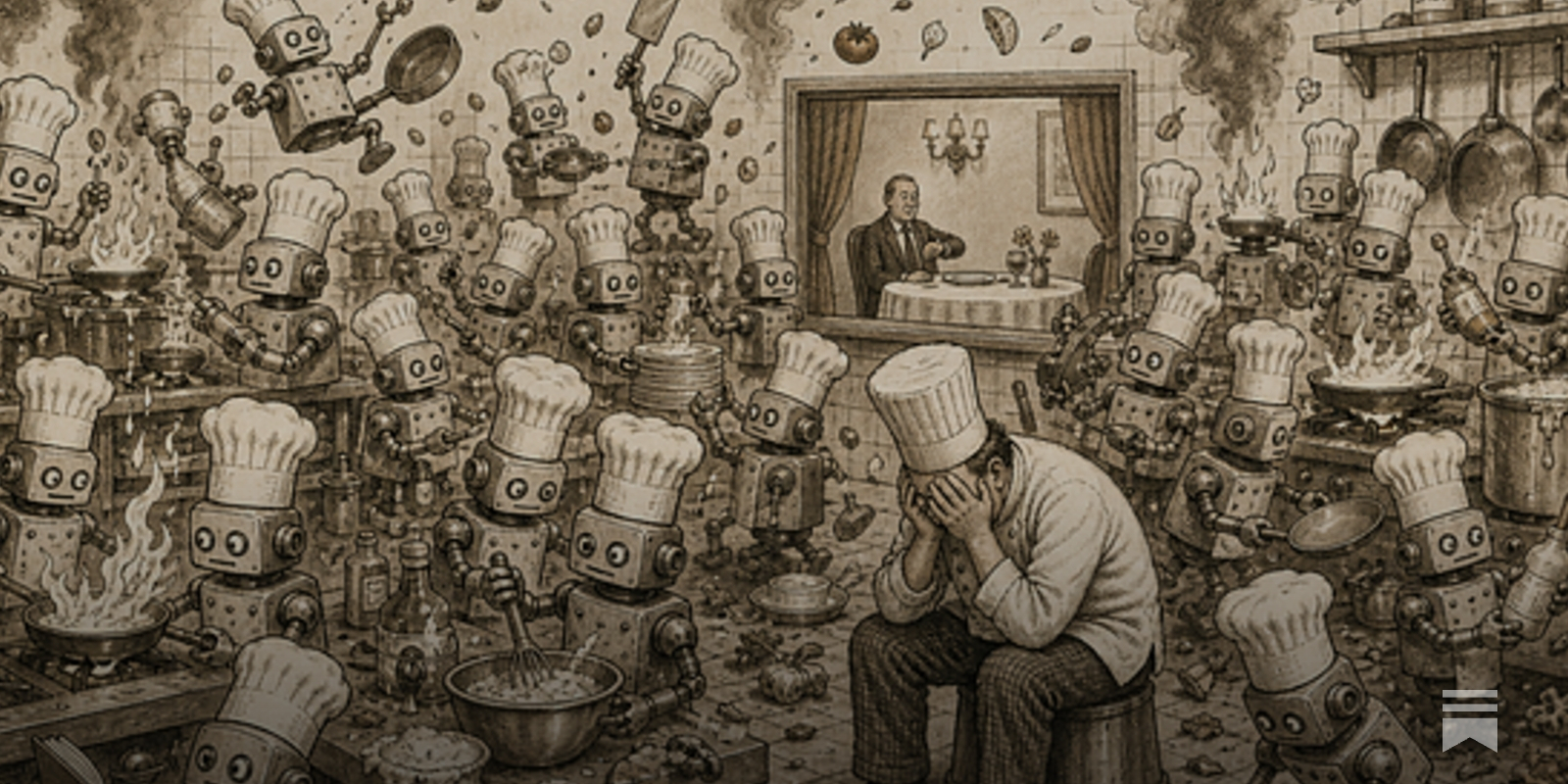
AI boosts worker productivity — but does that translate to final outputs? | MIT Sloan
A new study found that developers using AI tools can write much more code than those working without AI, but they don’t release as much new software.

The Productivity Is Real. The Scaling Isn't.
What running an AI agent team taught me about why organizations can't do what one person can.

AI Completely Failing to Boost Productivity, Says Top Analyst
AI may or may not excel at a lot of things, but from an economic standpoint, it's definitely not making us more productive.

AI Is Forcing Employees to Work Harder Than Ever
Another new study adds to the understanding that AI is actually making work more demanding for employees instead of making it easier.

No Vibes Allowed: Solving Hard Problems in Complex Codebases – Dex Horthy, HumanLayer
There’s a Mass Rebellion Against AI in the Workplace
Only nine percent of office workers trust their company's AI tools with "business-critical" tasks, a new survey found.

The AI productivity myth is more harmful than you think
Perceived productivity may be up thanks to AI, but there's debt collecting in the shadows.
AI security issues dominate corporate worries, spending
Two reports illustrate how business leaders are thinking about and budgeting for generative AI.

Half of Americans report using AI services, with information and productivity leading use cases
New Epoch AI/Ipsos poll reveals high AI engagement, diverse use cases, and emerging workplace integration

Appearing Productive in The Workplace — No One's Happy
AI can produce work that looks expert without being expert. The failure arrives in two shapes, and both are reshaping the workplace.