


As firms increasingly incentivize employees to build and oversee complex teams of agents—for example, by measuring and rewarding token consumption as a proxy for performance—people are finding themselves pushed to their cognitive limits. Participants in a recent study described a “buzzing” feeling or a mental fog with difficulty focusing, slower decision-making, and headaches. The authors call this phenomenon “AI brain fry,” defined as mental fatigue from excessive use or oversight of AI tools beyond one’s cognitive capacity. This AI-associated mental strain carries significant costs in the form of increased employee errors, decision fatigue, and intention to quit. The findings also show how AI-driven workflows can be designed to diminish burnout and point toward specific manager, team, and organizational practices to avoid mental fatigue even as AI work intensifies.
AI Use at Work Is Causing “Brain Fry,” Researchers Find, Especially Among High Performers
The increased speed and multitasking that AI allows at work is leading to many workers experiencing "brain fry," a new study found.

‘AI fatigue’ is settling in as companies’ proofs of concept increasingly fail. Here’s how to prevent it | Fortune
Along with the excitement about the possibilities of generative AI is a great deal of pressure for leaders and employees participating in projects.

AI-Generated “Workslop” Is Destroying Productivity
Despite a surge in generative AI use across workplaces, most companies are seeing little measurable ROI. One possible reason is because AI tools are being used to produce “workslop”—content that appears polished but lacks real substance, offloading cognitive labor onto coworkers. Research from BetterUp Labs and Stanford found that 41% of workers have encountered such AI-generated output, costing nearly two hours of rework per instance and creating downstream productivity, trust, and collaboration issues. Leaders need to consider how they may be encouraging indiscriminate organizational mandates and offering too little guidance on quality standards. To counteract workslop, leaders should model purposeful AI use, establish clear norms, and encourage a “pilot mindset” that combines high agency with optimism—promoting AI as a collaborative tool, not a shortcut.

AI overuse could spark "brain fry," new research finds
The mental strain associated with AI carries "significant costs," researchers find.
AI Doesn’t Reduce Work—It Intensifies It
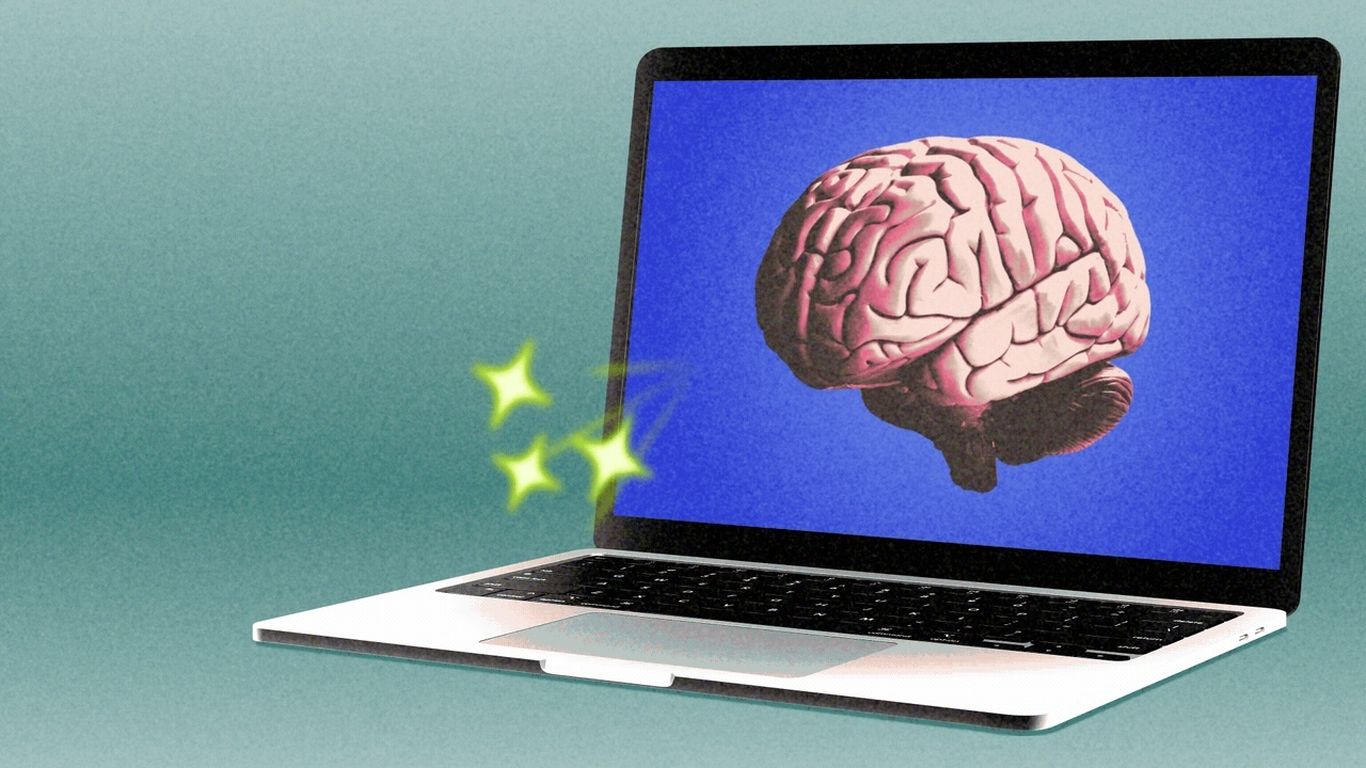
One of the promises of AI is that it can reduce workloads so employees can focus more on higher-value and more engaging tasks. But according to new research, AI tools don’t reduce work, they consistently intensify it: In the study, employees worked at a faster pace, took on a broader scope of tasks, and extended work into more hours of the day, often without being asked to do so. That may sound like a win, but it’s not quite so simple. These changes can be unsustainable, leading to workload creep, cognitive fatigue, burnout, and weakened decision-making. The productivity surge enjoyed at the beginning can give way to lower quality work, turnover, and other problems. To correct for this, companies need to adopt an “AI practice,” or a set of norms and standards around AI use that can include intentional pauses, sequencing work, and adding more human grounding.

Researchers Studied What Happens When Workplaces Seriously Embrace AI, and the Results May Make You Nervous
Introducing AI in the workplace can create a vicious cycle that leaves employees overburdened and burned out.

Companies Are Being Torn Apart by AI "Workslop," Stanford Research Finds
Not only is AI hampering productivity, but it's also blowing up collaboration and souring employee dynamics.

AI Use Appears to Have a "Boiling Frog" Effect on Human Cognition, New Study Warns
A new study claims to offer the first causal link between AI dependency and cognitive erosion. Researchers warn of long-term implications.

There’s a Mass Rebellion Against AI in the Workplace
Only nine percent of office workers trust their company's AI tools with "business-critical" tasks, a new survey found.

Arvind Narayanan (@aisnakeoil)
There’s a big, under-appreciated reason why people may have very different experiences and opinions about using AI for work — are they using it for tasks they’re already an expert at, or tasks they can’t do themselves? The former leads to a growth cycle and the latter leads to a dependence spiral. When I use AI to do something I’m an expert at, like coding, I treat it as a tool. I can build quickly, maintaining an understanding of the code, knowing that if necessary, I can fix the code myself. It feels empowering. It frees up my time to think about the complex, judgment-oriented parts of software engineering that I can’t or won’t delegate to AI. That means my own skills improve rapidly, and I get to climb the ladder of complexity and develop higher-level skills, much more so than when I write the code myself. I feel in control. I can lock in and achieve a flow state — when AI is working, I’m reviewing, building understanding, and planning the next steps. I never get the feeling that the tool is about to replace me. This is the growth cycle. (Of course, the growth cycle is not automatic. I still need to exercise agency to use AI responsibly. But it’s the same challenge with any productivity-enhancing technology, and those who’ve navigated such transitions before are well-equipped to navigate it with AI as well.) On the other hand, if I use it for tasks I don’t understand and haven’t learned to perform myself, I have no choice but to treat it as a superintelligence. If something breaks, the best I can do is ask AI to fix it and hope for the best. I generally can’t evaluate the quality of the output myself. The only way to find out if it's any good is if and when the work is ultimately reviewed by an actual expert. The experience is confusing, unsettling and disempowering. And forget about flow state. By over-relying on AI, I risk losing whatever skill I had at the task in the first place, even if it boosts productivity in the short term. This is the dependence spiral. It’s no wonder that entry-level workers and students preparing to enter the workforce find themselves in a bind. To compete with the AI-enabled productivity of more seasoned workers, they must adopt AI themselves, but doing so risks the dependence spiral. I have some thoughts on solutions that I will share in later posts, but I think having a clear diagnosis of the problem is a useful first step.

AI fatigue is real and nobody talks about it | Siddhant Khare
You're using AI to be more productive. So why are you more exhausted than ever? The paradox every engineer needs to confront.
AI security issues dominate corporate worries, spending
Two reports illustrate how business leaders are thinking about and budgeting for generative AI.
Does AI Actually Boost Developer Productivity? (100k Devs Study) - Yegor Denisov-Blanch, Stanford
‘Deskilling’: a dangerous side effect of AI use
Workers are increasingly reliant on the new technology
The Impact of AI Coding Assistants on Software Engineering: A Longitudinal Study
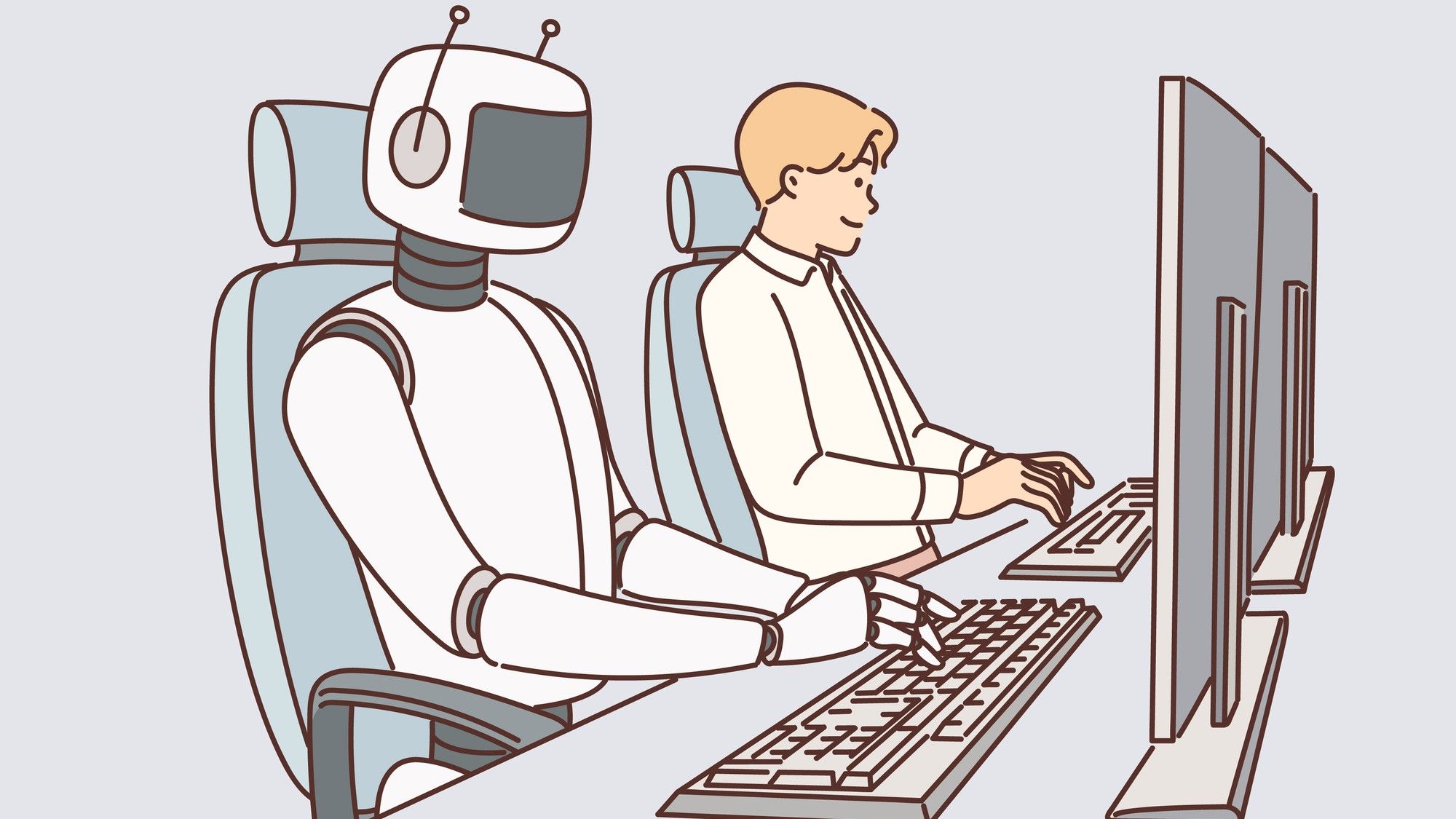
AI coding assistants have become prolific in recent years. Through a longitudinal mixed-methods investigation, we examined how professional software engineers perceive the effects of AI coding assistants in regard to task focus, developer experience, and productivity. Two questionnaires were administered six months apart, yielding 158 eligible participants at the first time point, 101 at the second, and a matched longitudinal cohort of 95. Participants reported spending less time on most development tasks, with 82% reporting less on writing code. We find broader shift in focus from creation to verification activities. We propose a new category of work we term supervisory engineering work, encompassing the direction, evaluation, and correction of AI output. We also identified a productivity-experience paradox: productivity perceptions held stable, with 84% reporting improvement at both time points, yet among matched participants, the proportion reporting worsened developer experience in at least one dimension nearly doubled from 14% to 27%, with flow state and cognitive load eroding while feedback loops improved. These findings suggest that AI coding assistants are impacting both the nature of software engineering work and how engineers experience it.

Karpathy says developers have 'AI Psychosis.' Everyone else is next.
Anthropic’s Mythos, Gen Z’s backlash, and Meta’s token binge all point to the same shift: developers are feeling AI first, but not for long.
