

Many schools and teachers around the world want to teach their students programming. Initially this is often done with playful tools, ranging from the Bee-Bot robot to Scratch Junior or Scratch. After using such tools, kids often want to move to more powerful, textual programming languages, like Python.
Our Python-programmable secondary school robots
In 2018, the French Higher Committee on Curricula decided to make Python the official computer language in secondary schools. We help you find the right Python robotics platfom for your students.
Python Tutorial | Learn Python Programming Language - GeeksforGeeks
Your All-in-One Learning Portal: GeeksforGeeks is a comprehensive educational platform that empowers learners across domains-spanning computer science and programming, school education, upskilling, commerce, software tools, competitive exams, and more.



python/python: High-level dynamically-typed programming language
High-level dynamically-typed programming language. Run python/python with Wasmer or deploy it to Wasmer Edge - python/python
Ruby Programming Language - GeeksforGeeks
Your All-in-One Learning Portal: GeeksforGeeks is a comprehensive educational platform that empowers learners across domains-spanning computer science and programming, school education, upskilling, commerce, software tools, competitive exams, and more.
Motivating Adult Learners by Introducing Programming Concepts with Scratch
Novice programmers usually fail to combine abstract concepts and knowledge into program design, even though they know the syntax and semantics of individual statement. Adult novice programmers with little computer background knowledge might face more ...

Python overtakes French as the most popular ‘language’ taught in primary schools
A year ago today the Computing curriculum was introduced by the government. Python now overtakes French as the most popular 'language' taught in primay schools.

Crafting Interpreters
Ever wanted to make your own programming language or wondered how they are designed and built?
Its Time for a New Programming Language
Today, when compared to any other point in programming history, we find ourselves spoiled for choice when it comes to programming…

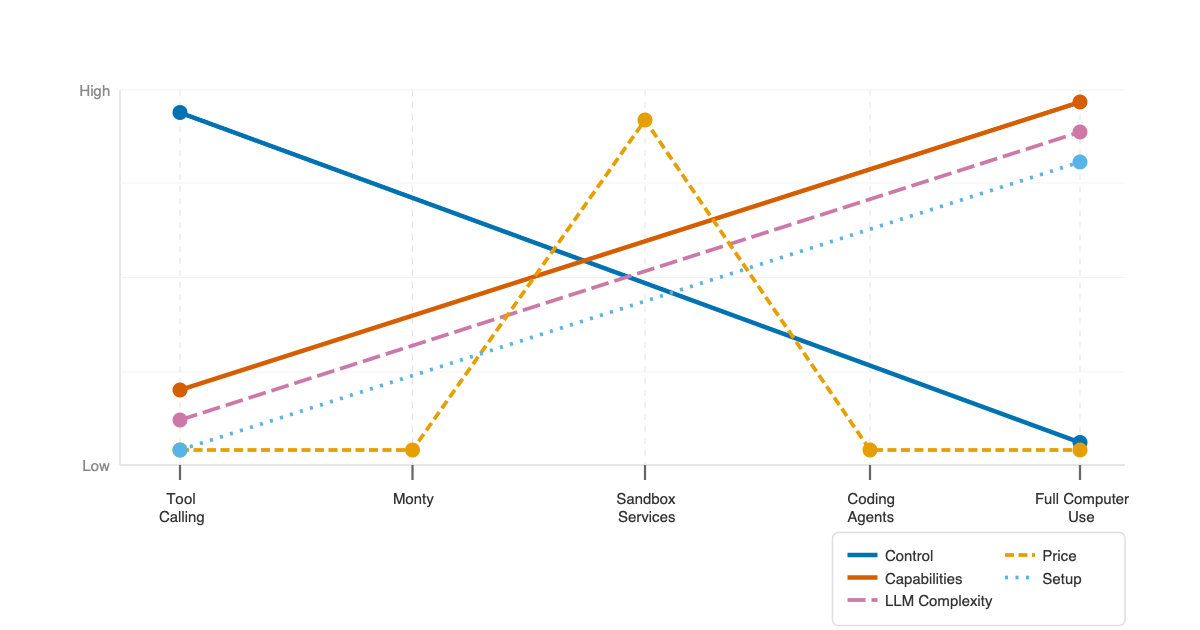
Pydantic Monty: A Minimal Python Sandbox for AI Agents | Pydantic
Meet Monty — a secure, minimal Python interpreter written in Rust for running AI-generated code. Learn where it sits between tool calling and full computer use, and why CodeMode matters for AI agents.
Scratch is a big deal
While none of us were paying attention, Scratch has transformed from a programming language for kids to a massive online community of self-guided, student-pr...

Learnable Programming
Here's a trick question: How do we get people to understand programming?
Executable Archaeology of Programs That Model Programming: Reanimating the Heuristic Compiler (1961) and KBEmacs (1984)
Early AI programs were often also theories of how people think, and programs that wrote programs were, in part, theories of how people program. Here we report on the reanimation of two such programs that offer two seemingly different theories of programming and were developed for quite different purposes. The first, Herbert Simon's Heuristic Compiler (1961), was an experimental model of programming as problem-solving, applying the means-ends analysis methods of the General Problem Solver to investigate the nature of the programming task. The second, KBEmacs (1984), was a working prototype of an intelligent programming assistant developed by MIT's Programmer's Apprentice project, built on the view that expert programmers recognize and combine familiar patterns, or "cliches." It let a programmer build up programs by combining cliches through a stylized English command language. We approach both through the methodology of Executable Archaeology, the study of historical computational systems by running their original code, a process we call "reanimation." Our reanimation of the Heuristic Compiler reproduces the compiled code appearing in Simon's 1963 paper, and our reanimation of KBEmacs reproduces the SQRT sequence of its December 1984 self-test. Examined side by side, the two theories turn out to have much in common: the Heuristic Compiler also works by adapting existing routines, and Simon later argued that search alone requires a large body of programming knowledge. To highlight the reflexivity of this project, we deliberately used a modern AI-assisted programming tool, Anthropic's Claude Code (Opus 5.5), to carry out much of the detailed reanimation work, building on a significant base of existing software. The explicit, executable theories of programming that both systems embodied are largely absent from today's far more capable AI coding assistants.

madhadron - The seven programming ur-languages
I regularly hear people asking which programming language to learn, and then reeling off a list of very similar languages (“Should I learn Java, C#, C++, Python, or Ruby?”). In response I usually tell them that it doesn’t really matter, as long as they get started. There are fundamentals behind them.