

Photos of Women's and Men's Bodies at nearly every combination of Height and Weight
Incident gout and weight change patterns: a retrospective cohort study of US adults
Although the relationship between obesity and incident gout has been clarified, the influence of weight changes during the transition from early adulthood to midlife and the different weight change patterns in specific age ranges on the incidence of gout in later life remain unknown. Therefore, we aimed to investigate the association between weight change patterns across adulthood and incident gout.

Your Quantified Body, Your Quantified Self | WNYC
What happens when we start thinking of ourselves as walking, breathing, calorie-consuming piles of data? We asked hundreds of people to weigh in (figuratively speaking).

The Website Obesity Crisis
This is the text version of a talk I gave on October 29, 2015, at the Web Directions conference in Sydney. [53 minute video].
Gender Shades: Intersectional Accuracy Disparities in Commercial Gender Classification
Recent studies demonstrate that machine learning algorithms can discriminate based on classes like race and gender. In this work, we present an approach to evaluate bias present in automated facial analysis algorithms and datasets with respect to phenotypic subgroups. Using the dermatologist approved Fitzpatrick Skin Type classification system, we characterize the gender and skin type distribution of two facial analysis benchmarks, IJB-A and Adience. We find that these datasets are overwhelmingly composed of lighter-skinned subjects (79.6% for IJB-A and 86.2% for Adience) and introduce a new facial analysis dataset which is balanced by gender and skin type. We evaluate 3 commercial gender classification systems using our dataset and show that darker-skinned females are the most misclassified group (with error rates of up to 34.7%). The maximum error rate for lighter-skinned males is 0.8%. The substantial disparities in the accuracy of classifying darker females, lighter females, darker males, and lighter males in gender classification systems require urgent attention if commercial companies are to build genuinely fair, transparent and accountable facial analysis algorithms.
What if Doctors Stopped Prescribing Weight Loss?
Focusing on body size isn’t making people healthier. Some clinicians are trying a different approach

Can you be obese and healthy? Maybe, but not for long | Aeon Essays
The medical evidence is overwhelming – obesity is bad for you and it would be a major mistake to give up fighting it

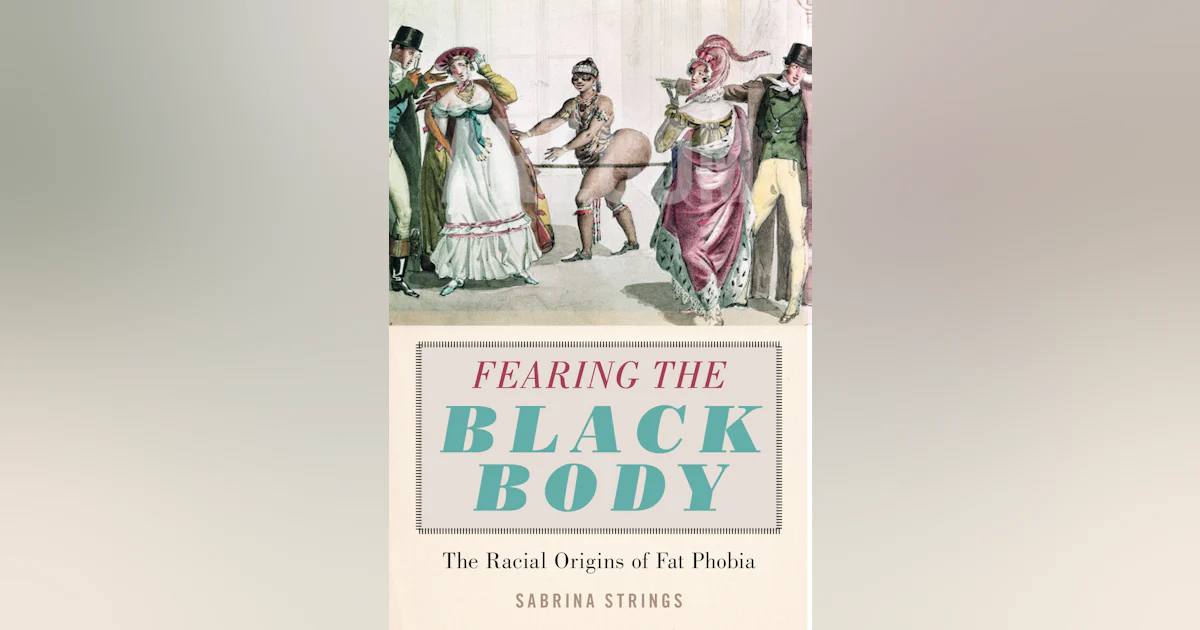
Fearing the Black Body
Winner, 2020 Body and Embodiment Best Publication Award, given by the American Sociological AssociationHonorable Mention, 2020 Sociology of Sex and Gender Di...
Womens, Mens and Kids Clothing & Accessories | UNIQLO US
Shop womens fashion from UNIQLO. Buy quality, affordable clothing ranging from XXS to plus sizes for workout, casual or formal styles.


Losing It in the Anti-Dieting Age (Published 2017)
The agonies of being overweight — or running a diet company — in a culture that likes to pretend it only cares about health, not size.

The obesity paradox is more about muscles than weight
In other words: lift weights if you want to live.

How Men’s Bodies Change When They Become Fathers (Published 2020)
Hint: They don’t just get “dad bods.”

New perspectives on body size and shape evolution in dinosaurs
ABSTRACT Diversity in the body shapes and sizes of dinosaurs was foundational to their widespread success during the Mesozoic era. The ability to quantify body size and form reliably is therefore critical to the study of dinosaur biology and evolution. Body mass estimates for any given fossil animal are, in theory, most informative when derived from volumetric models that account for the three‐dimensional shapes of the entire body. In addition to providing estimates of total body mass, volumetric approaches can be used to determine the inertial properties of specific body segments and the overall distribution of mass throughout the body, each of which are essential for the modelling and interpretation of form–function relationships and their associations with ecology. However, the determination of body volumes in fossil taxa is often subjective, and may be sensitive to varied artistic inference. This highlights the need for an approach to body mass estimation in which body segment volumes are systematically constrained by quantitative scaling relationships between the hard tissues that fossilise and the soft tissues only observable in extant taxa. To this end, we used recently published skeletal to soft tissue volumetric scaling factors derived from CT data of extant sauropsids to estimate body segment mass properties from skeletal models of 52 non‐avian dinosaurs representing the majority of major clades and body plans. The body masses estimated by this study range from less than 200 g in the tiny avialan Yixianornis to over 60 tonnes in the giant sauropod Patagotitan , which is currently the largest dinosaur known from mostly complete skeletal remains. From our models, we infer that many previous reconstructions of soft tissue envelopes may be too small, and that many dinosaurs were therefore heavier than previous estimates. Our models generally overlap with the range of body mass estimates derived from limb bone shaft dimensions, but with considerable quantitative variability among major clades. This suggests that different taxa either differed in skeletal to soft tissue volume ratios, or that their limb bone dimensions varied relative to body mass, perhaps related to differences in locomotor dynamics and postural evolution. Our models also allowed us to investigate variation in mass distribution and body proportions across different dinosaurs from a perspective grounded in extant anatomical data, framing long‐standing hypotheses about their form, function, and behaviour in a quantitative context. For example, reconstructed disparity in whole‐body centres of mass reflects a broad array of postures in different dinosaur clades, while the lack of strong positive allometry in the dimensions of the weight‐bearing limb segments relative to total body mass corroborates previous studies suggesting an overall decrease in dinosaur locomotor performance as body size increased.

Association Between Eating Speed and Metabolic Syndrome in a Three-Year Population-Based Cohort Study
Background Metabolic syndrome has received increased global attention over the past few years. Eating behaviors, particularly eating speed, have long been of interest as factors that contribute to the development of obesity and diabetes. The aim of this study was to assess the relationship between eating speed and incidence of metabolic syndrome among middle-aged and elderly Japanese people. Methods A total of 8941 community residents from Soka City in Saitama Prefecture, aged from 40 to 75 years and without a diagnosis of metabolic syndrome, participated in the baseline survey in 2008 and were followed until 2011. Anthropometric measurements and lifestyle factors were measured at baseline and follow-up. The association between eating speed and incidence of metabolic syndrome was evaluated using Cox proportional hazards models adjusted for potential confounding variables. Results During the 3-year follow-up, 647 people were diagnosed with metabolic syndrome (25.0 cases/1000 person-years). The incidence rates of metabolic syndrome among non-fast-eating and fast-eating participants were 2.3% and 3.1%, respectively. The multivariate-adjusted hazard ratio for incidence of metabolic syndrome in the fast-eating group compared to the not-fast-eating group was 1.30 (95% confidence interval [CI], 1.05–1.60) after adjustment for the potential confounding factors. Eating speed was significantly correlated with waist circumference and high-density lipoprotein cholesterol (HDL-C) components of metabolic risk factors. Hazard ratios in the fast-eating group compared with the reference group were 1.35 (95% CI, 1.10–1.66) for waist circumference and 1.37 (95% CI, 1.12–1.67) for HDL-C. Conclusions Eating speed was associated with the incidence of metabolic syndrome. Eating slowly is therefore suggested to be an important lifestyle factor for preventing metabolic syndrome among the Japanese.

❤️🩹 Fitness and Health

Fitness and health related bookmarks, highlights, and comments.
Noise — binaural beats generator
burrito.space/overrun

Summit Bag

Your Fit. Your Way. | A Mobile App That Makes Motivation Easier | Yes.Fit
Wandrer

CityStrides