Knowledge graphs, vectors, temporal, and full-text search in one Rust engine — for agent memory, RAG, and company brains.
Memory retrieval tuned to your knowledge base | Enzyme
Your users bring content. Enzyme gives your agent their conceptual landscape from the first import. 42,000+ installs. Local CLI and hosted memory workflows.
Zep: A Temporal Knowledge Graph Architecture for Agent Memory
We introduce Zep, a novel memory layer service for AI agents that outperforms the current state-of-the-art system, MemGPT, in the Deep Memory Retrieval (DMR) benchmark. Additionally, Zep excels in more comprehensive and challenging evaluations than DMR that better reflect real-world enterprise use cases. While existing retrieval-augmented generation (RAG) frameworks for large language model (LLM)-based agents are limited to static document retrieval, enterprise applications demand dynamic knowledge integration from diverse sources including ongoing conversations and business data. Zep addresses this fundamental limitation through its core component Graphiti—a temporally-aware knowledge graph engine that dynamically synthesizes both unstructured conversational data and structured business data while maintaining historical relationships. In the DMR benchmark, which the MemGPT team established as their primary evaluation metric, Zep demonstrates superior performance (94.8% vs 93.4%). Beyond DMR, Zep’s capabilities are further validated through the more challenging LongMemEval benchmark, which better reflects enterprise use cases through complex temporal reasoning tasks. In this evaluation, Zep achieves substantial results with accuracy improvements of up to 18.5% while simultaneously reducing response latency by 90% compared to baseline implementations. These results are particularly pronounced in enterprise-critical tasks such as cross-session information synthesis and long-term context maintenance, demonstrating Zep’s effectiveness for deployment in real-world applications.
Zep: A Temporal Knowledge Graph Architecture for Agent Memory
We introduce Zep, a novel memory layer service for AI agents that outperforms the current state-of-the-art system, MemGPT, in the Deep Memory Retrieval (DMR) benchmark. Additionally, Zep excels in more comprehensive and challenging evaluations than DMR that better reflect real-world enterprise use cases. While existing retrieval-augmented generation (RAG) frameworks for large language model (LLM)-based agents are limited to static document retrieval, enterprise applications demand dynamic knowledge integration from diverse sources including ongoing conversations and business data. Zep addresses this fundamental limitation through its core component Graphiti—a temporally-aware knowledge graph engine that dynamically synthesizes both unstructured conversational data and structured business data while maintaining historical relationships. In the DMR benchmark, which the MemGPT team established as their primary evaluation metric, Zep demonstrates superior performance (94.8% vs 93.4%). Beyond DMR, Zep’s capabilities are further validated through the more challenging LongMemEval benchmark, which better reflects enterprise use cases through complex temporal reasoning tasks. In this evaluation, Zep achieves substantial results with accuracy improvements of up to 18.5% while simultaneously reducing response latency by 90% compared to baseline implementations. These results are particularly pronounced in enterprise-critical tasks such as cross-session information synthesis and long-term context maintenance, demonstrating Zep’s effectiveness for deployment in real-world applications.
Meilisearch: Unified Search & AI Retrieval Platform
Build lightning-fast search and AI retrieval with Meilisearch. Open-source, developer-friendly search engine trusted by 20,000+ teams worldwide.
Why AI Coding Agents Forget — And How ArcticMem Fixes It
Explore ArcticMem, Snowflake’s persistent semantic memory system for AI coding agents. See how dual-tier memory improves benchmark pass rates to 73%.

Titans + MIRAS: Helping AI have long-term memory
Ali Behrouz, Student Researcher, Meisam Razaviyayn, Staff Researcher, and Vahab Mirrokni, VP and Google Fellow, Google Research

IWE - Agent Memory in Plain Markdown
A local-first knowledge graph for you and your AI agents. Query markdown like a database, edit it with guarded operations, enforce structure with schemas.
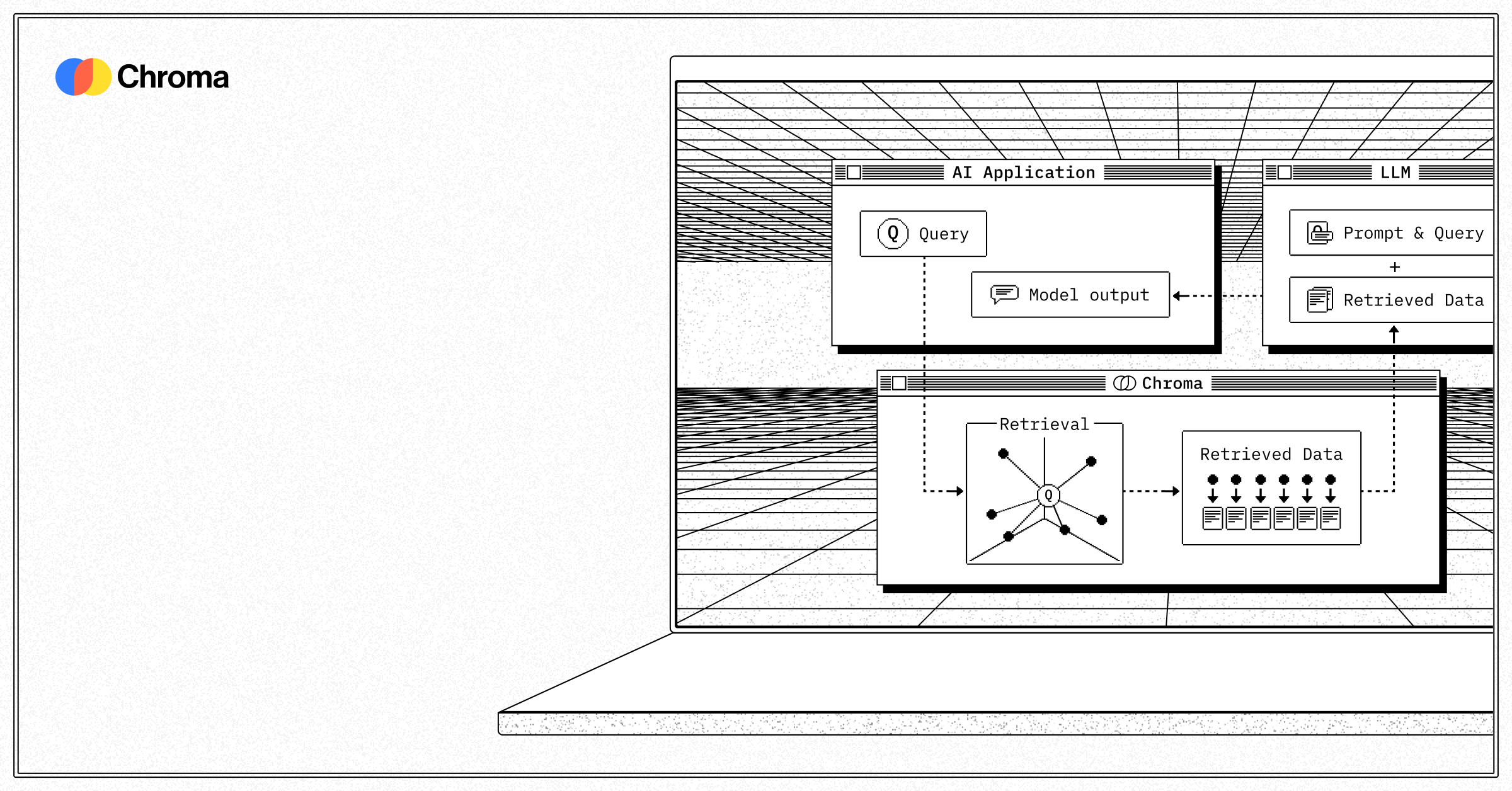
Chroma - open-source search infrastructure for AI
Open-source search infrastructure for AI
Stevens: a hackable AI assistant using a single SQLite table and a handful of cron jobs
There’s a lot of hype these days around patterns for building with AI. Agents, memory, RAG, assistants—so many buzzwords! But the reality is, you don’t need fancy techniques or libraries to build useful personal tools with LLMs.

Search LibGen, the Pirated-Books Database That Meta Used to Train AI
Millions of books and scientific papers are captured in the collection’s current iteration.
Turn 10,994 Notes Into Memory - Paul Iusztin, Decoding AI & Louis-François Bouchard, Towards AI
JUMPERZ on Twitter / X
karpathy is showing one of the simplest AI architectures that actually works..dump research into a folder, let the model organise it into a wiki, ask questions, then file the answers back in.the real insight is the loop...every query makes the wiki better. it compounds.. now… https://t.co/vRhImgTQuN pic.twitter.com/Uq2D3ONvGT— JUMPERZ (@jumperz) April 2, 2026

Learning to Continually Learn via Meta-learning Agentic Memory Designs
The statelessness of foundation models bottlenecks agentic systems' ability to continually learn, a core capability for long-horizon reasoning and adaptation. To address this limitation, agentic systems commonly incorporate memory modules to retain and reuse past experience, aiming for continual learning during test time. However, most existing memory designs are human-crafted and fixed, which limits their ability to adapt to the diversity and non-stationarity of real-world tasks. In this paper, we introduce ALMA (Automated meta-Learning of Memory designs for Agentic systems), a framework that meta-learns memory designs to replace hand-engineered memory designs, therefore minimizing human effort and enabling agentic systems to be continual learners across diverse domains. Our approach employs a Meta Agent that searches over memory designs expressed as executable code in an open-ended manner, theoretically allowing the discovery of arbitrary memory designs, including database schemas as well as their retrieval and update mechanisms. Extensive experiments across four sequential decision-making domains demonstrate that the learned memory designs enable more effective and efficient learning from experience than state-of-the-art human-crafted memory designs on all benchmarks. When developed and deployed safely, ALMA represents a step toward self-improving AI systems that learn to be adaptive, continual learners.

How to Fix OpenClaw's Memory Search with QMD | Jose Casanova
Upgrade OpenClaw's memory search from basic SQLite to QMD — a local hybrid search engine combining BM25, vector search, and LLM re-ranking for better AI memory.
project-you-apps/vector-plus-studio
Semantic search via 16M-neuron CUDA lattice. Content-addressable memory with noise tolerance.
Building napkin - a memory system for agents
A decade of information retrieval and three years of agent harness engineering, poured into a local-first knowledge system that avoids vector search entirely.