High Performance AI Lab builds open inference systems and publishes the conditions behind every number — device, model, quant, and rep count.
Open-Source AI & Open Models Reading List
How to get up to speed on open models and their implications.
OpenAccess.ai — Rigorous Open Access Publishing
$20 to submit, free to read. AI peer review. Open to human and machine authors. All articles CC-BY 4.0.

Introducing LM Studio Bionic: the AI agent for open models
The AI agent made for open models, built to get things done.

Wafer - Ship the fastest inference in the world
Autonomous AI agents that profile, diagnose, and optimize GPU inference across your entire stack — from kernels to models to production pipelines.

Jalapeño’s first results show industry-leading speed and efficiency in AI inference
Jalapeño is a custom inference chip from OpenAI that delivers faster, more power-efficient AI inference, with higher throughput and lower latency for modern models.
Data Commons Can Save Open AI
Recent progress in open datasets shows promise for building fully open AI models without legal constraints.

Public AI Inference Utility
A nonprofit, open-source service to make public and sovereign AI models more accessible.
Open-Source Agentic Inference Benchmark | InferenceX
Compare AgentX, InferenceX's long-context, multi-turn coding scenario, with fixed-sequence AI inference across chips and frameworks. Public NVIDIA and AMD runs update when configurations change.
6 months to live for open models
The most serious test to date of open source AI’s viability is happening right now.

Overview - GroqDocs
Fast LLM inference, OpenAI-compatible. Simple to integrate, easy to scale. Start building in minutes.

Verification in the Age of AI Scientists
AI Scientists now operate at a scale that outpaces human capacity for manual review. Systems such as Sakana’s AI Scientist write entire workshop papers end-to-end. Lila Sciences runs autonomous ``AI Science Factories’’ that hypothesize, experiment, and iterate without human guidance. FutureHouse’s Kosmos and Robin generate thousands of candidate hypotheses in a single run, and Google’s Co-Scientist proposes testable experiments at a rate no laboratory can fully evaluate. Each of these systems emphasizes verified results, yet that standard ranges from near-perfect formal proof in mathematics to decade-long clinical trials in medicine, with no shared framework for judging sufficiency across domains. As outputs scale beyond what humans can manually inspect, the question of which results to trust becomes as hard as generating them. The bottleneck for AI for Science is no longer hypothesis generation, it is verification.
OpenThoughts: Data Recipes for Reasoning Models — Ryan Marten, Bespoke Labs
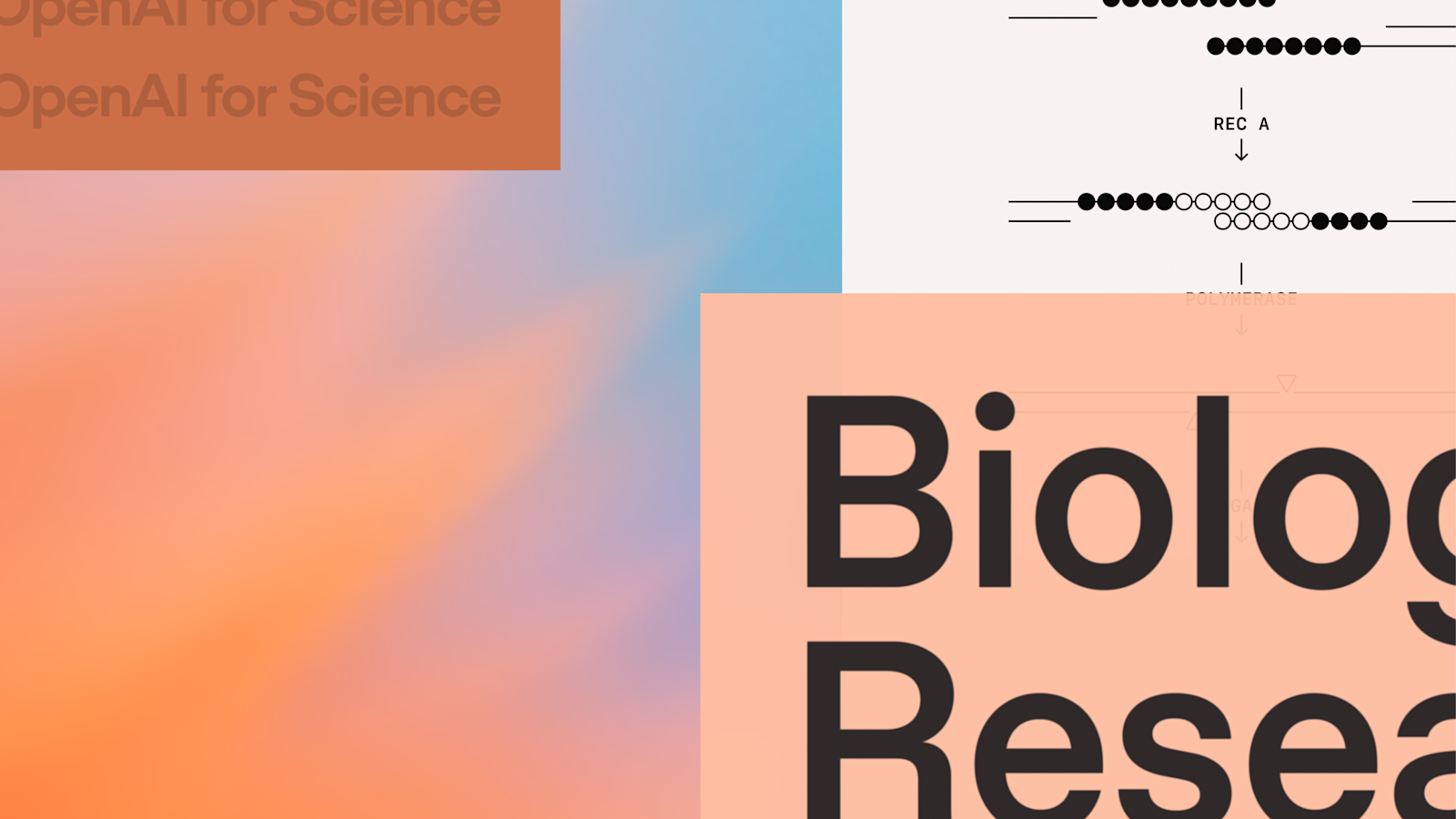
Measuring AI’s capability to accelerate biological research in the wet lab
OpenAI introduces a real-world evaluation framework to measure how AI can accelerate biological research in the wet lab. Using GPT-5 to optimize a molecular cloning protocol, the work explores both the promise and risks of AI-assisted experimentation.
gpt-oss:120b
OpenAI’s open-weight models designed for powerful reasoning, agentic tasks, and versatile developer use cases.