"Two hundred and fifty thousand workers under the Kafala system in Lebanon are currently struggling to survive in an exploitative system."
A Theory of Forced Labour Migration
This book focuses on labour dislocation and migration of Palestinians between 1967 and 1990. In particular, it highlights the social transformations in the occupied Palestinian territory where Palestinian labour was permitted to work in Israel from 1968 onwards.
US Labor & Imperialism Pt. 2: Zionism w/ Jeff Schuhrke (Palestine Pt. 16)
The Rise and Fall of the Palestinian-Arab Middle Class Under the British Mandate, 1920–39
The Palestinian-Arab middle class under the Mandate may be characterized as bourgeois and educated, similarly to bourgeois classes that have developed in the West in the Modern era. The bourgeois characteristics of the Palestinian-Arab middle class, and their influence on its historical trajectory during the Mandate era, have not been studied in depth yet. This article aims to focus on a local aspect of the rise of the middle class in the region in that period: the rise of the Palestinian-Arab middle class under the Mandate, until the Palestinian-Arab Revolt (1936–9). The main hypothesis is that particular bourgeois social and cultural characteristics prevented the middle class full incorporation into the Palestinian-Arab National Movement, and even led to estrangement between the middle class and the national leadership, as well as members of lower strata, especially the villagers. Members of the middle class, mostly Christians but Muslims as well, espoused in their daily life modern habits, ideas, and customs, as a means to distinguish between themselves and other classes, similarly to their parallels in the West, and like their contemporaries elsewhere in the Eastern Mediterranean, as has demonstrated by Watenpaugh. Those gaps reached their climax during the years of revolt.
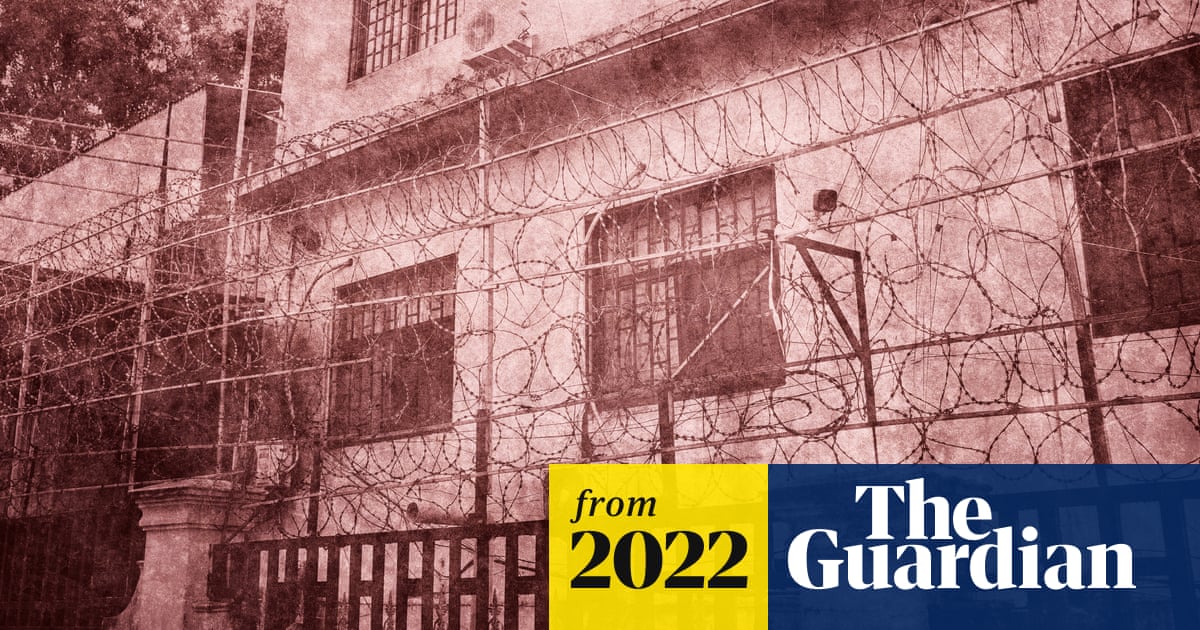
Sold to gangs, forced to run online scams: inside Cambodia’s cybercrime crisis
Thousands of people from Taiwan, Vietnam and Thailand have been tricked into slavery and are unable to leave a ‘living hell’
Egypt, The New Republic: Hunger strikes on the rigs, digital sweatshops & factories cleared for capital
Labor dispatch!
Labor-Value Commodity Chains: The Hidden Abode of Global Production - Monthly Review
Intan Suwandi is a frequent contributor to Monthly Review. This article is adapted from her book, Value Chains: The New Economic Imperialism, winner of the 2018 Paul M. Sweezy-Paul A.... READ MORE


The living hell of Equatorial Guinea’s missing prisoners and their families
The living hell of Equatorial Guinea’s missing prisoners and their families

Capitalist Realism and the Eviction of Culture: Notes from Ljubljana
I’d like to thank everyone who came out to Nova pošta last Thursday evening to my lecture on Mark Fisher’s Capitalist Realism, recently translated into Slovenian by Pika Golob and Nina …

Arizona Exploiting Prisoner Labor for Profit | Prison Legal News
A new constitutional amendment proposed to Congress in June 2023 would remove the exception for prisoners to the U.S. ban on slavery. The effort follows a report from Arizona in December 2022, which found that private firms in the state used over two dozen undocumented migrant workers they could never legally hire but for the fact they were incarcerated by the state Department of Correction, Rehabilitation and Reentry (DCRR).
Visualizing the discrimination faced by Palestinian refugees in
Palestinian refugees in Lebanon remain barred from 70 professions.


Seeing like a state: how certain schemes to improve the human condition have failed
Compulsory ujamaa villages in Tanzania, collectivizatio…

Kawaakibi Foundation
Kawaakibi Foundation is an accelerator for thinkers and doers, with a focus on empowering communities across the Middle East and North Africa

Gamified Capitalism and 21st Century Fascism w/ Max Haiven
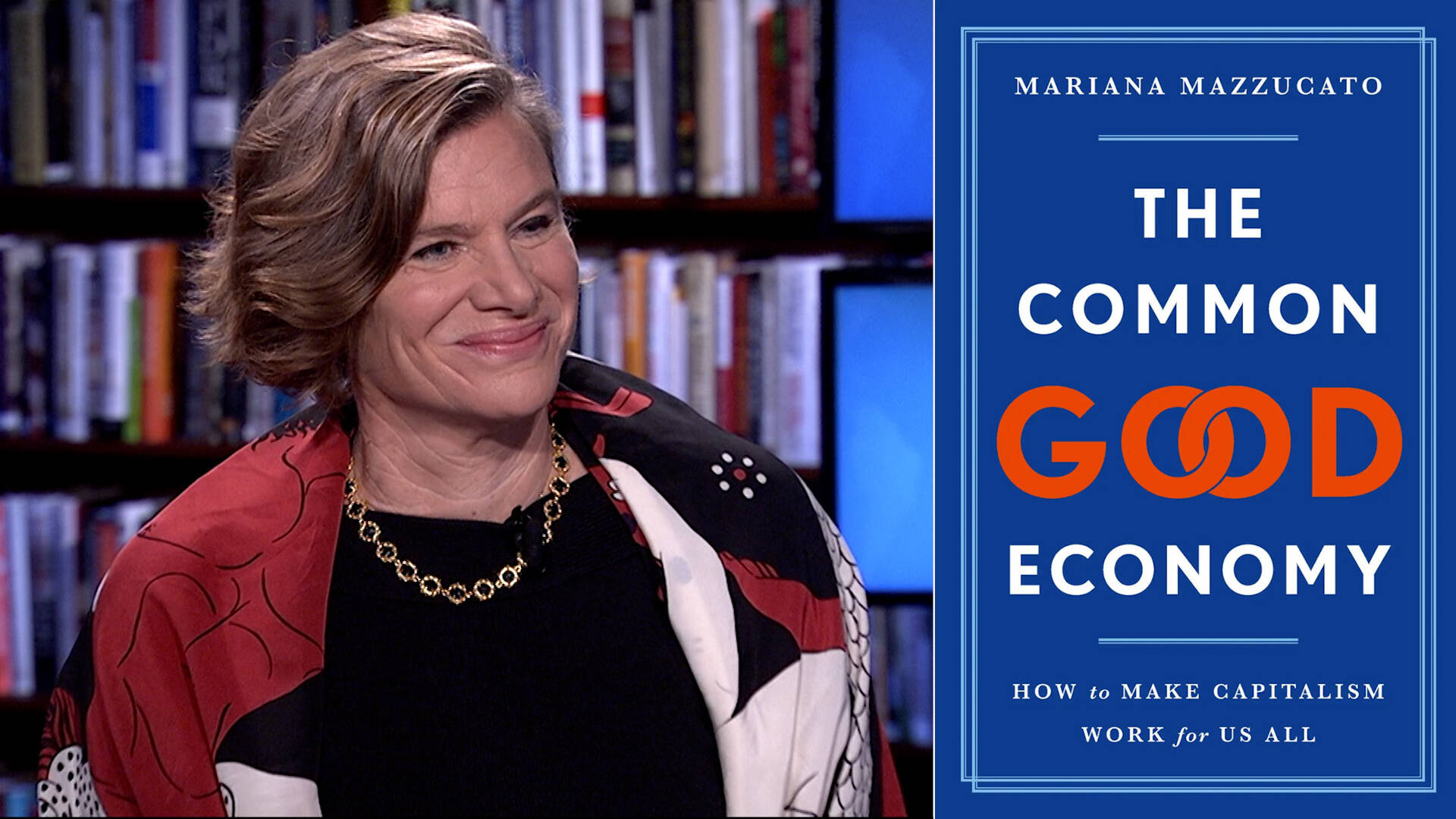
“The Common Good Economy”: Mariana Mazzucato on Fixing Capitalism
We speak with the economist Mariana Mazzucato, author of the new book The Common Good Economy: A New Compass.