Looking for an artist for your next project? Our human artist directory is full of over 400 artists who have pledged not to use gen AI.
AI Artists Have No Role Models
Prompt Engineers Lack Any Canon, Don't You? AI artists have an existential problem: they consume only their own work, severing the dialogue of culture that…
Glaze - Protecting Artists from Generative AI
The Omg Lol Times · We have to talk about AI “art”
Note: In this post I’m going to use the term “AI” as a lazy shorthand for “generative content creation via large-scale pre-trained models” because time is tight and I’ve got arthritis. I know it’s not really “AI”, but please, let me give my typing fingers a break here.
The Myth of the Instant Cake Mix
How to think about creative tooling in the new world of generative AI

Why A.I. Isn’t Going to Make Art
To create a novel or a painting, an artist makes choices that are fundamentally alien to artificial intelligence.
In spite of hype, many companies are moving cautiously when it comes to generative AI | TechCrunch
Companies are extremely interested in generative AI as vendors push potential benefits, but turning that desire from a proof of concept into a working product is proving much more challenging.

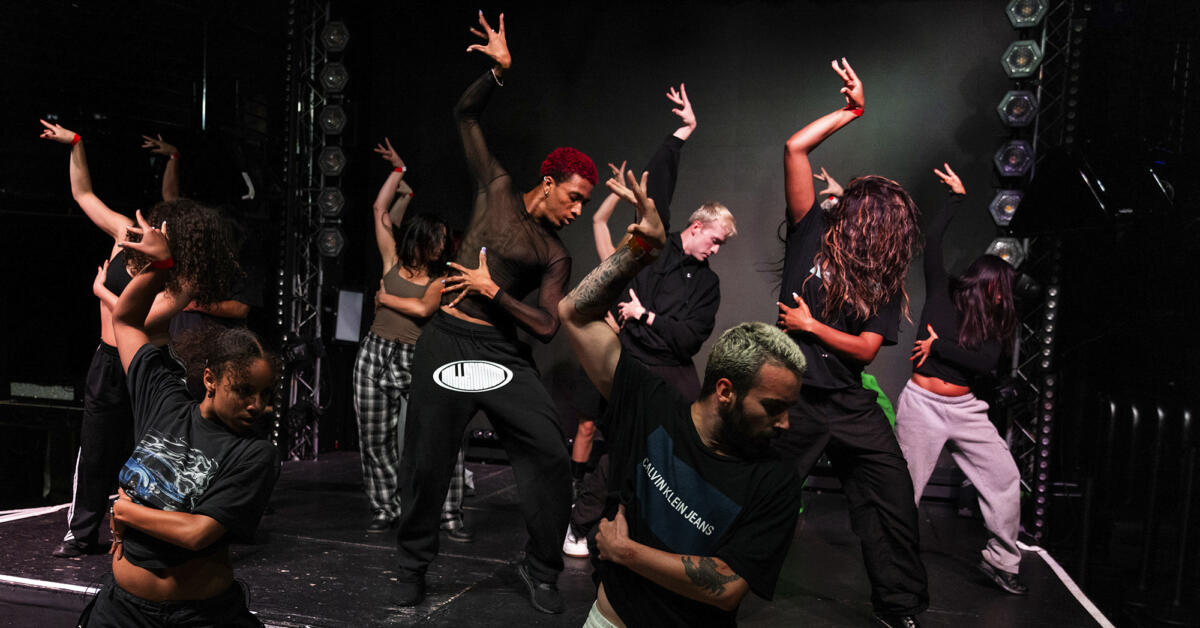
Generative AI is eating culture. See how close it’s getting to disrupting dance – The Markup
Dancers say their craft can’t be duplicated by AI. Our tests show they’re right — for now.
Meet the academics refusing to use generative AI
Researchers say they have their reasons for avoiding AI tools — and they’re sick of arguing about it.
Meet the academics refusing to use generative AI
Researchers say they have their reasons for avoiding AI tools — and they’re sick of arguing about it.
Ars Technica's policy on generative AI
How Ars Technica uses, and doesn't use, generative AI.
51 Ways to Spell the Image Giraffe: The Hidden Politics of Token Languages in Generative AI
Generative AI models don't operate on human languages – they speak in **tokens**. Tokens are computational fragments that deconstruct lan...

Pluralistic: Copyright won't solve creators' Generative AI problem (09 Feb 2023)
The media spectacle of generative AI (in which AI companies' breathless claims of their software's sorcerous powers are endlessly repeated) has understandably alarmed many creative workers, a group that's already traumatized by extractive abuse by media and tech companies.
Hello Local Business, Your AI Ads Are Costing You Customers
'Even if this was a genre popularised by human artists, it would still look like shit'

Glaze: Protecting Artists from Style Mimicry by Text-to-Image Models
Recent text-to-image diffusion models such as MidJourney and Stable Diffusion threaten to displace many in the professional artist community. In particular, models can learn to mimic the artistic style of specific artists after "fine-tuning" on samples of their art. In this paper, we describe the design, implementation and evaluation of Glaze, a tool that enables artists to apply "style cloaks" to their art before sharing online. These cloaks apply barely perceptible perturbations to images, and when used as training data, mislead generative models that try to mimic a specific artist. In coordination with the professional artist community, we deploy user studies to more than 1000 artists, assessing their views of AI art, as well as the efficacy of our tool, its usability and tolerability of perturbations, and robustness across different scenarios and against adaptive countermeasures. Both surveyed artists and empirical CLIP-based scores show that even at low perturbation levels (p=0.05), Glaze is highly successful at disrupting mimicry under normal conditions (>92%) and against adaptive countermeasures (>85%).

Unmasking Synthetic Realities in Generative AI: A Comprehensive...
The rapid advancement of Generative Artificial Intelligence has fueled deepfake proliferation-synthetic media encompassing fully generated content and subtly edited authentic material-posing...
Why so many game developers don't want to use generative AI
With credits ranging from Dispatch and Marvel Rivals to Uncharted and Dragon Age, over 30 devs share their thoughts on gen AI