A practical guide for organizers, communities, and individuals defending democracy.
Activist Handbook | Campaigning guides for activists ✊
We write guides for activists. Learn how to become a social activist, plan a political campaign strategy, and start a grassroots movement.
We Need To Rethink Democracy
Election Defense Scenarios - Freedom Trainers
Election Defense Scenarios is a field guide for protecting democracy. This resource walks readers through eighteen detailed scenarios — from voter roll purges and redistricting attacks to armed intimidation at polling places and post-election certification battles — giving organizers, poll workers, community leaders, and everyday citizens the knowledge they need before a crisis hits. Each […]

Fighting Back: A Citizen’s Guide to Resistance
Ordinary people have more power than they know.
For Stressed Out Organizers: Asking The Right Questions
In this moment of mass mobilization and widespread repression, it’s important for organizers to reflect on what we are building together and what leadership means to us. I wanted to share some questions from the Let This Radicalize You workbook that I think could be useful to activists and
The Dispersion of Power: A Critical Realist Theory of Democracy
Abstract The Dispersion of Power is an urgent call to rethink centuries of conventional wisdom about what democracy is, why it matters, and how to make it better. Drawing from history, social science, psychology, and critical theory, it explains why elections do not and cannot realize the classic ideal of popular rule, and why prevailing strategies of democratic reform often make things worse. Instead, Bagg argues, we should see democracy as a way of protecting public power from capture—an alternative vision that is at once more realistic and more inspiring. Despite their many shortcomings, real-world elections do prevent the most extreme forms of tyranny, and are therefore indispensable. In dealing with the vast inequalities that remain, however, we cannot rely on standard solutions such as electoral reform, direct democracy, deliberation, and participatory governance. Instead, Bagg shows, protecting and enriching democracy requires addressing underlying inequalities of power directly. In part, this entails substantive policies attacking the advantages of wealthy elites. Even more crucially, deepening democracy requires the organization of oppositional, countervailing power among ordinary people. Neither task is easy, but historical precedents exist in both cases—and if democracy is to survive contemporary crises, leaders and citizens alike must find ways to revive and reinvent these essential democratic practices for the twenty-first century.

Building on the Fight Oligarchy Tour: It’s Time to Reboot America
A Call for a Big-Tent Movement
From Fragments to Force: A Call to Unite the Pro-Democracy Movement
There is no shortage of organizations, campaigns, and visionary individuals working to defend and renew American democracy.

⚖️ How can we govern speech fairly on anti-democratic platforms?
Maybe citizen assemblies are a start!

Conclave Democracy
What divine authority can teach us about democratic principles.

Activist or protester?
How to keep you and your communications safe wherever your campaigning takes you. The revolution may not be tweeted, but modern activism is nonetheless often reliant on online organizing. This playlist will teach you how to understand the risks activists face and how to protect against them.
Governable Spaces: Democratic Design for Online Life – Writings and rehearsals by Nathan Schneider
Read the free, open access editionBuy: Amazon, Bookshop, Narrow Gauge Book Co-op, UC Press
Citizen Participation (@oliverescobar.bsky.social)
Professor of Public Policy and Democratic Innovation | University of Edinburgh | Working on #democracy #participation #deliberation #commons #governance #power #research | RT≠ endorse | Own views | Profile: https://www.sps.ed.ac.uk/staff/oliver-escobar
Workshop: Creating Shared Goals with Emergent Strategy
Join us for the first of our Direct Democracy workshop series 📅 Creating Shared Group Goals · February 18, 2022 12:00 AM → February 18, 2022 1:30 AM (UTC) Starting in February, the Brigade Network will be convening a series of six public, monthly workshops on community organizing and how to create distributed leadership, deliberation, and clear decisionmaking processes. This workshop is free and open to the public. Its lessons will be specific to Brigade organizing, but applicable to people who...

Analytical Democratic Theory: A Microfoundational Approach
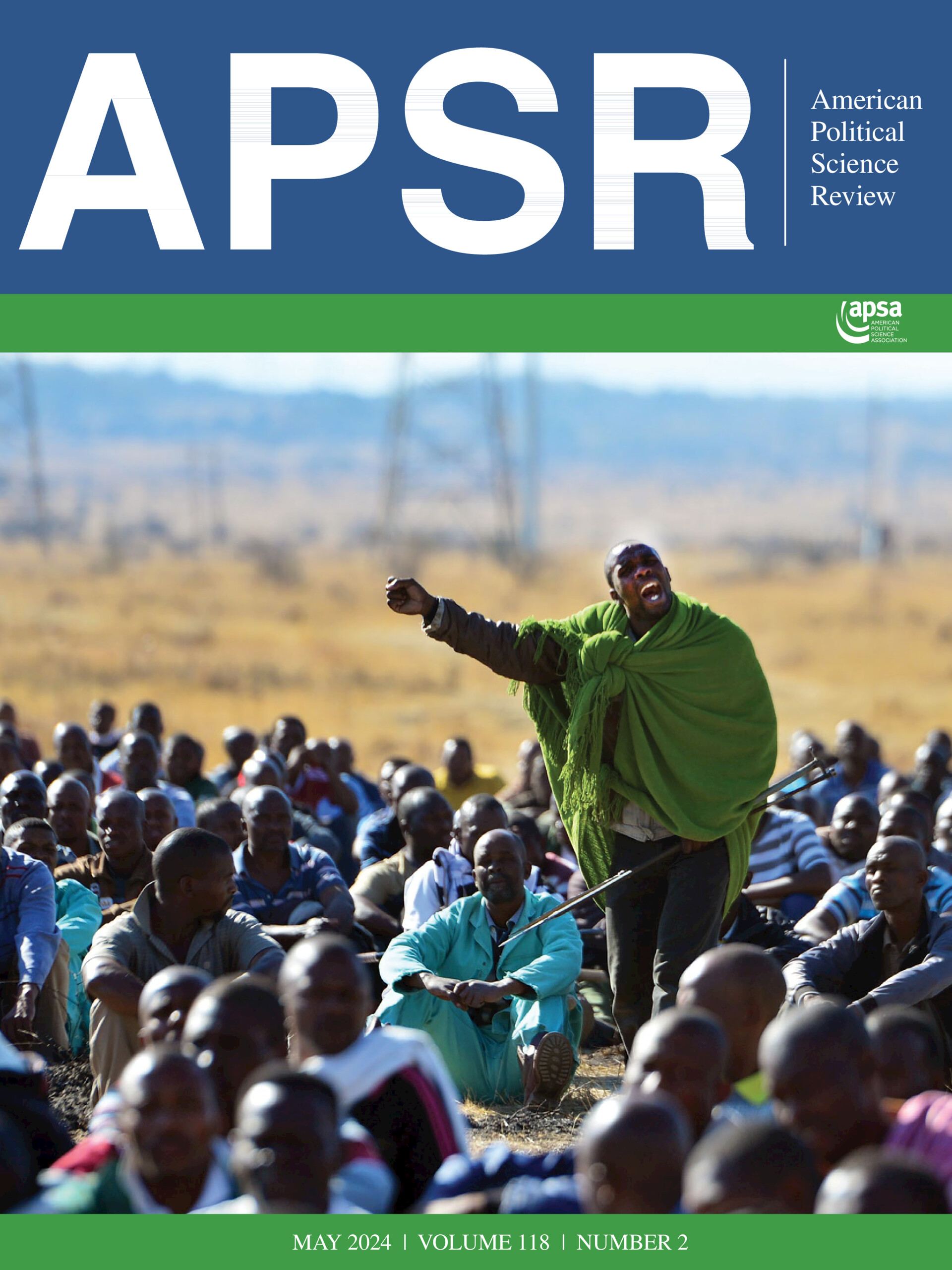
A prominent and publicly influential literature challenges the quality of democratic decision making, drawing on political science findings with specific claims about the ubiquity of cognitive bias to lament citizens’ incompetence. A competing literature in democratic theory defends the wisdom of crowds, drawing on a cluster of models in support of the capacity of ordinary citizens to produce correct outcomes. In this Letter, we draw on recent findings in psychology to demonstrate that the former literature is based on outdated and erroneous claims and that the latter is overly sanguine about the circumstances that yield reliable collective decision making. By contrast, “interactionist” scholarship shows how individual-level biases are not devastating for group problem solving, given appropriate conditions. This provides possible microfoundations for a broader research agenda similar to that implemented by Elinor Ostrom and her colleagues on common-good provision, investigating how different group structures are associated with both success and failure in democratic decision making. This agenda would have implications for both democratic theory and democratic practice.