


Building a future for publishing that keeps authors and readers at its heart.
Write. Publish. Keep what's yours. | Offprint
Offprint is where independent writers publish, grow an audience, and keep both for the long haul.


Paper's back | Paul Stephenson | Offprint
Get all episodes of the Sunset Chronicles in print now

Monumental | Paul Stephenson | Offprint
Sunset 5.3 is here! Plus, why this newsletter has a new home.

Introducing Aris: The publishing platform for the Post-PDF Era - Aris
We're building the future of academic publishing: tools that make it easy to create, share, and preserve knowledge in formats designed for the web, not the printing press.
The Drain of Scientific Publishing
The domination of scientific publishing in the Global North by major commercial publishers is harmful to science. We need the most powerful members of the research community, funders, governments and Universities, to lead the drive to re-communalise publishing to serve science not the market.

Neal Stephenson - Termination Shock
The personal website of author Neal Stephenson, unless it's been hacked.

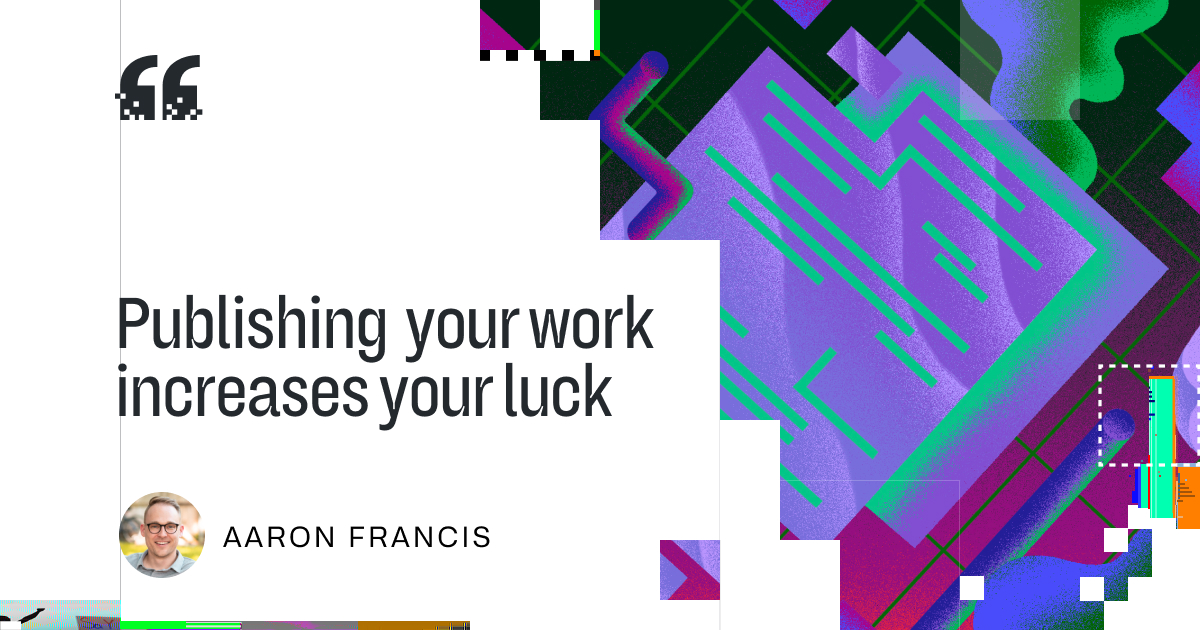
Publishing your work increases your luck
In 12 months, @aarondfrancis changed his life by bypassing fear and embracing risk. Now, he’s working his dream job @tuple. Get his full story on The ReadME Project:
The Voice of the ‘Intellectual Dark Web’
Claire Lehmann’s online magazine, Quillette, prides itself on publishing “dangerous” ideas other outlets won’t touch. How far is it willing to go?

Minimum Queue Publishing - Wesley's notes
A strategy for writing more often without losing momentum

Scientific Publishing: Enough is Enough
Why we're no longer funding journal publications

Scientific Publishing: Enough is Enough
Why we're no longer funding journal publications
Why the Stockholm Declaration will never work
Abstract The Stockholm Declaration calls for a moral reformation of scientific publishing—replacing commercial publishers with scholar-led journals, rewarding quality over quantity and instituting independent oversight. While noble in spirit, it fundamentally misdiagnoses the disease. The crisis of science stems not from paper mills or profit motives but from systemic incentives that reward volume, novelty and prestige over validity and reliability. Non-profit ownership will not neutralize the prestige economy, sleuth-led policing cannot scale, and ‘integrity registries’ would merely replace metrics with surveillance. True reform requires rebuilding the publishing infrastructure as a public utility: publicly funded, free to publish and read, and stripped of hierarchy and financial incentives.

Oh God, It's Raining Newsletters
On the rise of newsletter production, consumption, and monetization, and how email is one of the most powerful and resilient publishing platforms.
Stephen on Twitter / X
My experience is that once a journal publishes a paper the editors develop an almost parental attachment to it and will defend it to the death.— Stephen (@Stephen50000766) July 25, 2024