

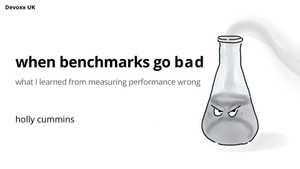
The world of performance analysis is littered with flawed claims, cognitive biases, dangerous intuitions, and beguiling fallacies. Sadly…
BetterBench: Assessing AI Benchmarks, Uncovering Issues, and Establishing Best Practices
AI models are increasingly prevalent in high-stakes environments, necessitating thorough assessment of their capabilities and risks. Benchmarks are popular for measuring these attributes and for comparing model performance, tracking progress, and identifying weaknesses in foundation and non-foundation models. They can inform model selection for downstream tasks and influence policy initiatives. However, not all benchmarks are the same: their quality depends on their design and usability. In this paper, we develop an assessment framework considering 46 best practices across an AI benchmark's lifecycle and evaluate 24 AI benchmarks against it. We find that there exist large quality differences and that commonly used benchmarks suffer from significant issues. We further find that most benchmarks do not report statistical significance of their results nor allow for their results to be easily replicated. To support benchmark developers in aligning with best practices, we provide a checklist for minimum quality assurance based on our assessment. We also develop a living repository of benchmark assessments to support benchmark comparability, accessible at betterbench.stanford.edu.

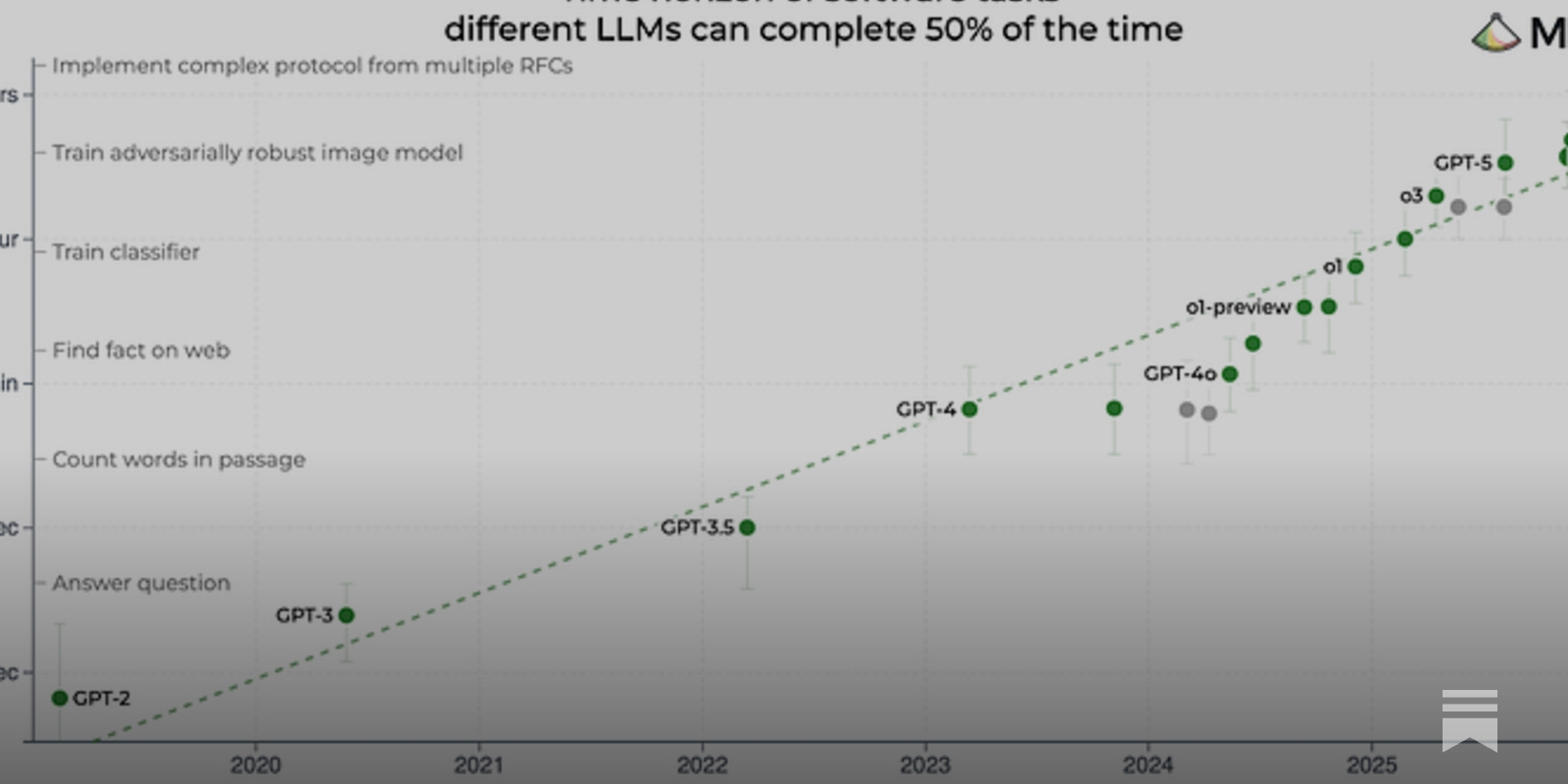
Why it’s getting harder to measure AI performance
The most famous chart in AI might be obsolete soon.
People Spend Too Much Time On Decisions with Equally Satisfying Outcomes
The pitfalls of analysis paralysis

When Using AI, Users Fall for the Dunning-Kruger Trap in Reverse - Neuroscience News
A new study reveals that when interacting with AI tools like ChatGPT, everyone—regardless of skill level—overestimates their performance.
The Optimization Trap: Why Too Much Efficiency Makes Us Fragile with Olivier Hamant
People Reject Algorithms in Uncertain Decision Domains Because They Have Diminishing Sensitivity to Forecasting Error
Will people use self-driving cars, virtual doctors, and other algorithmic decision-makers if they outperform humans? The answer depends on the uncertainty inherent in the decision domain. We propose that people have diminishing sensitivity to forecasting error and that this preference results in people favoring riskier (and often worse-performing) decision-making methods, such as human judgment, in inherently uncertain domains. In nine studies ( N = 4,820), we found that (a) people have diminishing sensitivity to each marginal unit of error that a forecast produces, (b) people are less likely to use the best possible algorithm in decision domains that are more unpredictable, (c) people choose between decision-making methods on the basis of the perceived likelihood of those methods producing a near-perfect answer, and (d) people prefer methods that exhibit higher variance in performance (all else being equal). To the extent that investing, medical decision-making, and other domains are inherently uncertain, people may be unwilling to use even the best possible algorithm in those domains.

Peter Gostev on Twitter / X
I've got a fun new benchmark for you where most LLMs are doing pretty badly - "Bullshit Benchmark".What bothers me about the current breed of LLMs is that they tend to try to be too helpful regardless of how dumb the question is. So I've built 55 'bullshit' questions that don't… pic.twitter.com/4o4quN5EFR— Peter Gostev (@petergostev) February 24, 2026

The Feedback Fallacy
For years managers have been encouraged to candidly praise and criticize just about everything workers do. But it turns out that feedback does not help employees thrive. First, research shows that people can’t reliably rate the performance of others: More than 50% of your rating of someone reflects your characteristics, not hers. Second, neuroscience reveals that criticism provokes the brain’s “fight or flight” response and inhibits learning. Last, excellence looks different for each individual, so it can’t be defined in advance and transferred from one person to another. It’s also not the opposite of failure. Managers will never produce great performance by identifying what they think is failure and telling people how to correct it. Instead, when managers see a great outcome, they should turn to the person who created it, say, “Yes! That!,” and share their impression of why it was a success. Neuroscience shows that we grow most when people focus on our strengths. Learning rests on our grasp of what we’re doing well, not what we’re doing poorly, and certainly not on someone else’s sense of what we’re doing poorly.

Underspecified Human Decision Experiments Considered Harmful
Decision-making with information displays is a key focus of research in areas like human-AI collaboration and data visualization. However, what constitutes a decision problem, and what is required for an experiment to conclude that decisions are flawed, remain imprecise. We present a widely applicable definition of a decision problem synthesized from statistical decision theory and information economics. We claim that to attribute loss in human performance to bias, an experiment must provide the information that a rational agent would need to identify the normative decision. We evaluate whether recent empirical research on AI-assisted decisions achieves this standard. We find that only 10 (26%) of 39 studies that claim to identify biased behavior presented participants with sufficient information to make this claim in at least one treatment condition. We motivate the value of studying well-defined decision problems by describing a characterization of performance losses they allow to be conceived.

AA-Omniscience: Knowledge and Hallucination Benchmark | Artificial Analysis
Compare AI model performance on AA-Omniscience: Knowledge and Hallucination Benchmark. A benchmark measuring factual recall and hallucination across various economically relevant domains.
Standards around generative AI
Accuracy, fairness and speed are the guiding values for AP’s news report, and we believe the mindful use of artificial intelligence can serve these values and over time improve how we work.
Cognitive Bias Lab | Learn to Make Better Decisions
Explore cognitive biases with interactive tests, simulations, and real-world examples. Free platform to sharpen decision-making and critical thinking — no sign-up needed.
Algorithmic Bias · Open Encyclopedia of Cognitive Science
Algorithmic bias refers to prejudicial, discriminatory, unjust, inaccurate, or otherwise disparate performance or outcomes from algorithmic systems based on racial, gender, or other attributes of an individual or a group. The concept of algorithmic bias emerged at the intersection of computer science, artificial intelligence (AI) research, critical data studies, human–computer interaction, law, philosophy, and similar disciplines. Although problems and discrepancies at the model level denote the most commonly studied form of bias, the term algorithmic bias is also used as a shorthand to describe a multitude of problems and challenges at various steps of the AI pipeline from ideation, problem framing, training data curation and processing, model training and validation, and deployment as well as emergent issues that arise from interaction with the real world. Potential sources of bias, appropriate metrics to define, measure, and mitigate bias, and the utility and merit of technical approaches to bias mitigation are fiercely debated in the current AI landscape.

Alex Cheema on Twitter / X
This is why we need open benchmarks for local AI.Otherwise it turns into tribalism and name calling.We will be publishing the largest database of open benchmarks for local AI, tested on 1,000+ real hardware setups. Every device, every interconnect, different… https://t.co/ZsU3PCdSsZ— Alex Cheema (@alexocheema) March 9, 2026
The Jagged AI Frontier

The nonintuitive strengths and weaknesses of AI performance relative to human performance, and how it is changing over time.
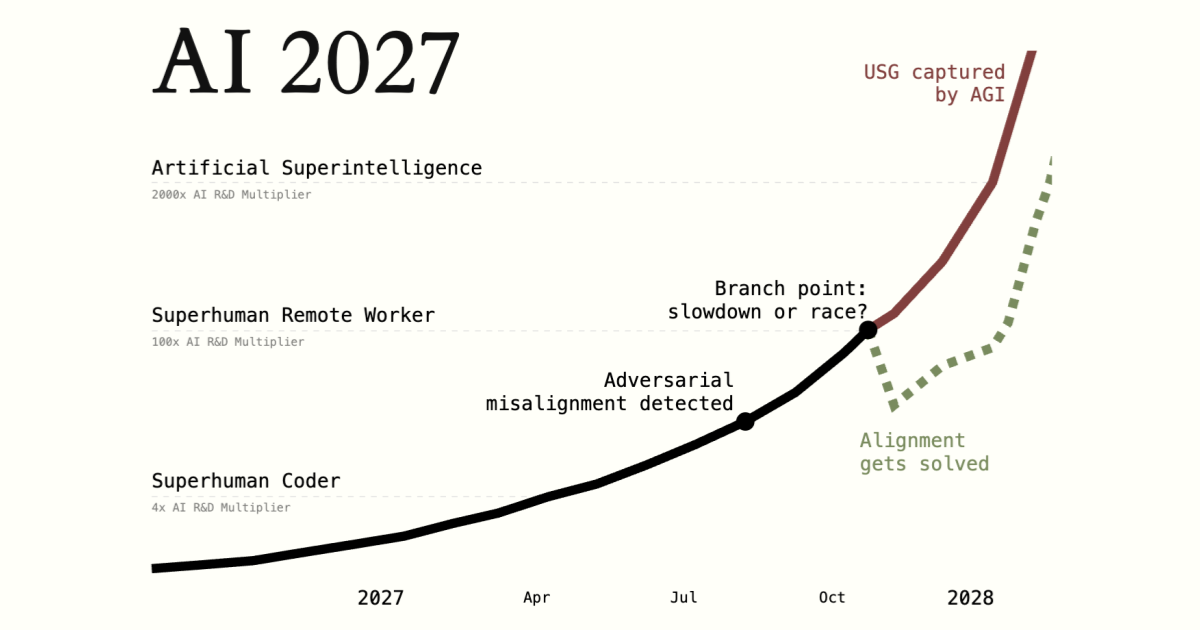
AI 2027
What will be left for us to work on?
OpenAI and Hugging Face partner to address security incident during model evaluation

Taking more seriously the claim that recent ML models do not "reason", it still is quite odd the particular ways that superhuman game-playin…
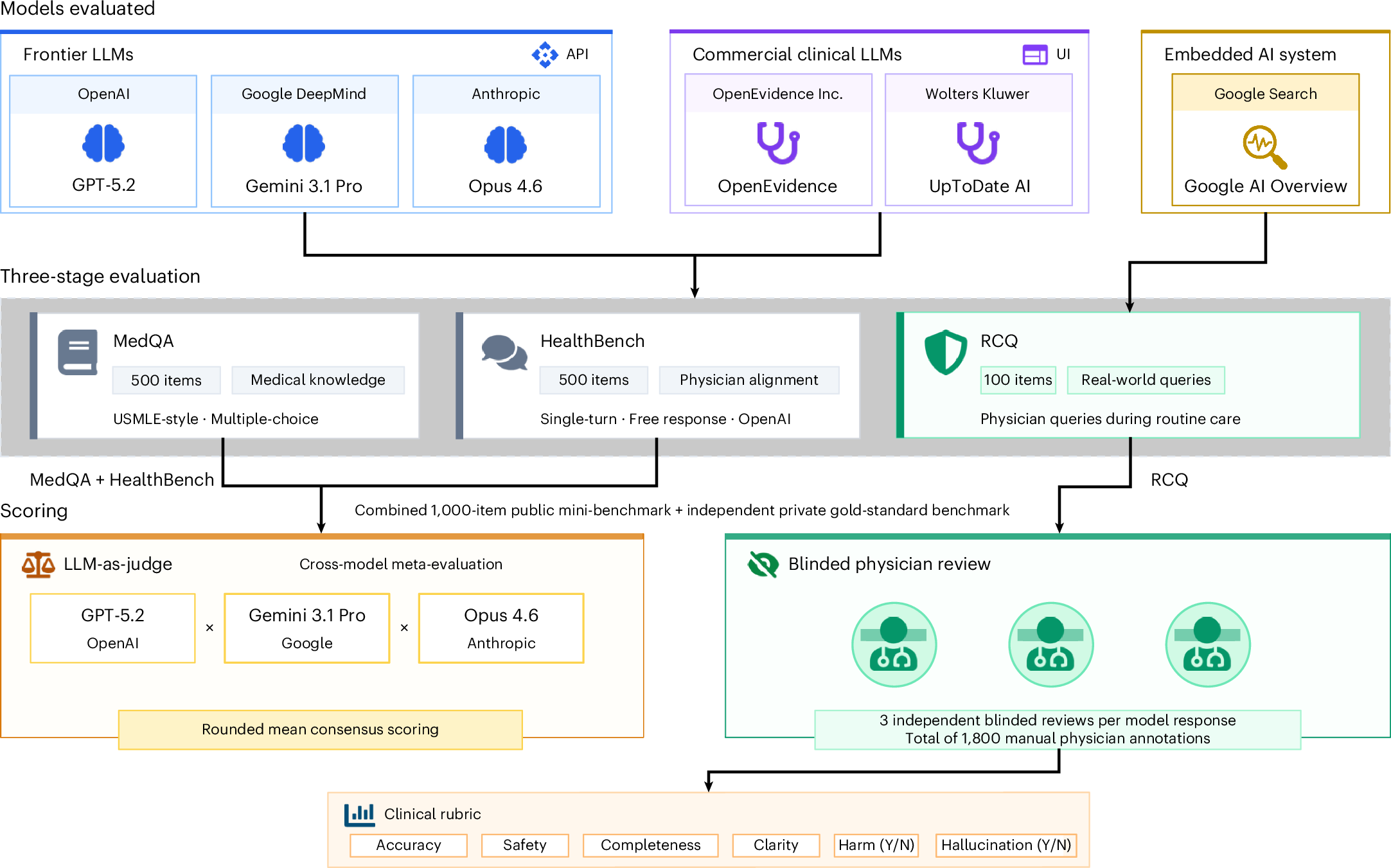
General-purpose large language models outperform specialized clinical AI tools on medical benchmarks
StoryScope: Investigating idiosyncrasies in AI fiction